


How to Check PU Pneumatic Tubing Compatibility with Machine Cleaning Chemicals
Changing the detergent on a packaging machine creates a small purchasing problem that can be easy to miss: the PU air line behind the guard will get wet too. Its replacement costs little compared with a stopped machine. Yet ordering a tube described as “chemical resistant” leaves the essential question unanswered. Which chemical, under what conditions?
To check polyurethane tubing chemical compatibility, pair the tube specification with the cleaning instructions. Add a photograph of the connector if liquid collects there.
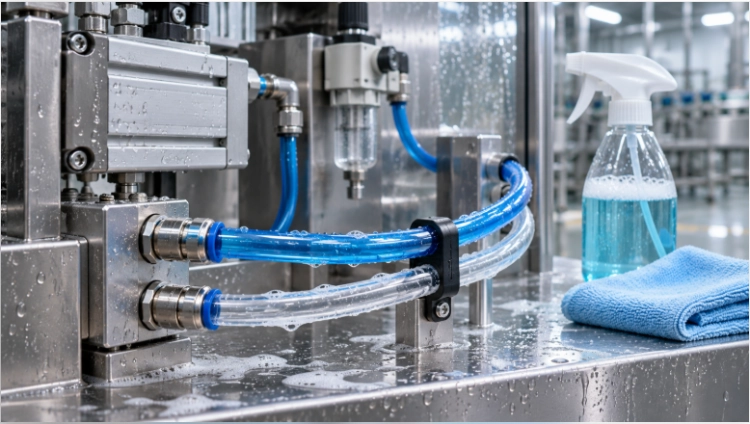
Describe the Actual Cleaning Exposure
The starting point is the bottle on the production floor, including its label and revision. Purchasing records may simply say “factory detergent.” Maintenance needs the product identity and preparation instructions, plus an account of how it is actually used. A stronger mixture reserved for stubborn deposits belongs in that account too.
Identify Concentration, Temperature and Contact Time
Consider this fictional review note: “Cleaner A, 2% solution, applied once per shift with a cloth; a wet patch remains under the lower tube clip.” The numbers are illustrative, not recommended cleaning settings. The note is useful because it separates the intended wipe from the lingering contact. It still needs the actual liquid temperature, contact duration and any rinse or drying stages before a supplier can assess it.
The safety data sheet accompanies that note for identification and handling information. Available composition details matter; pH alone is too little to describe a mixture. A compatibility answer must address the finished tubing. No result for that tubing can be inferred just from the cleaner’s safety sheet.
Separate External Cleaning from Internal Fluid Service
In the example, compressed air stays inside the line and detergent touches its exterior. Pumping detergent through the bore would be a different service. The inquiry should say which is intended, rather than leaving the supplier to guess from a machine photograph.
Aisili’s PU tubing range includes products for compressed air, ordinary industrial water and noncorrosive oils. Confirm the permitted medium for the exact grade; this range description does not approve a cleaning mixture.
Aisili supplies PU air lines for automation equipment, packaging machines and automotive applications. Straight lengths, coils and spiral tubing are available, as are the related pneumatic fittings. The tube is light, flexible and abrasion resistant. The cleaning review must go further than these mechanical properties.
Check Evidence for the Exact Tubing Grade
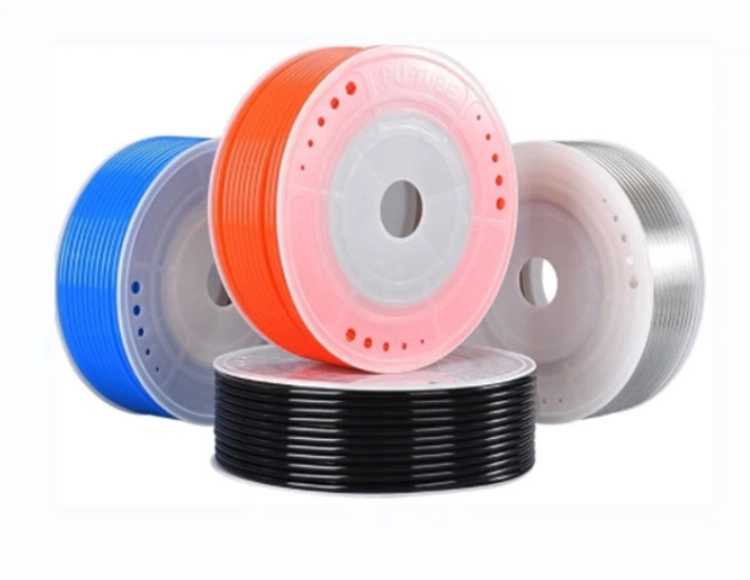
An old invoice, a legible reel label or an approved sample can help establish what is installed. Record the grade and dimensions, together with specified hardness and color. “PU tube” by itself is too broad a description for a repeat order. A purchaser needs enough detail to buy the evaluated product again.
Use Compatibility Charts to Screen Candidates
Suppose the first chart found lists the cleaner’s main ingredient as compatible. Before ordering, the buyer has a few gaps to close: the mixture’s other ingredients, the concentration tested and the temperature. The table’s notes may answer some of them. The specimen matters too. A straight, unstressed piece leaves questions about the bent tube at the machine’s clip. Put the unanswered items in the supplier inquiry alongside the chart rating.
For plastics testing, the ASTM D543 chemical-resistance test practice includes immersion as well as wet-patch or wipe methods. The test provider can help choose the method. In the clip example, the retained wet patch is a detail to discuss at this stage. It would be easy to omit if the request merely said “wipe cleaning.”
For an air line exposed to moisture, one candidate is ether-based PU tubing. Where rubbing or incidental oil contact is a concern, review the ester-based PU tubing option too. Submit the proposed grade with the cleaning exposure details for assessment.
Include Pressure, Bending and the Fitting Interface
The working-pressure limit for Aisili PU tube must be considered with its temperature rating. Higher temperatures require lower allowable working pressure. Too much heat or corrosive chemical exposure can leave the tube cracked or ruptured. Damp conditions and long storage can cause aging or hydrolysis as well. Include these conditions in the review instead of asking about the cleaner in isolation.
Tube dimensions matter at the connection as well. Aisili offers various inside and outside diameters, with custom lengths and colors. Its 5 × 8 mm size means a 5 mm bore inside an 8 mm outside diameter, leaving a nominal 1.5 mm wall. Use the dimensions of the production tube in the evaluation. Don’t silently substitute another size just because a sample of it is on hand.
The tube has a smooth body and uses high rebound polyurethane. Its small bend radius makes installation easier in a confined route. For the evaluation, record the installed bend rather than laying every specimen straight.
Agree a Representative Comparison Before Exposure
Before any samples get wet, the machine owner, supplier and test provider need an agreed question and acceptance criteria. In the fictional review, the concern is repeated exterior contact at a clip. That gives the test provider something specific to reproduce and assess. It also makes clear who must resolve the missing information before production release.
Retain an Unexposed Comparison Sample
An unexposed piece from the same tube provides a comparison. Its lot and starting measurements belong beside those of the exposed specimens. Any rinse and drying stages also need to follow the agreed plan, since they affect the comparison. Keeping these records together saves a later argument about which sample received which treatment.
The following record is a planning aid. It does not supply pass limits or prescribe a test duration.
|
Record item |
Detail to agree |
|
Cleaner |
Product identity and dilution |
|
Contact |
Wipe, spray, wet retention or another defined exposure |
|
Conditions |
Temperature, duration and repetition |
|
Specimen |
Tube grade, dimensions, lot and assembly state |
|
Assessment |
Measurements, timing and agreed rejection criteria |
Examine Changes Beyond Surface Appearance
For swelling, tackiness or cracks, record the location as well as the change. Even a specimen with no visible damage needs the agreed assessment of its mechanical properties. This is where the test provider’s results become part of the release decision.
Aisili screens incoming raw and auxiliary materials against sixteen internal physical and chemical criteria. Quality checks address resistance to bursting, hydrolysis and weathering. They also cover flexibility, bending and the force needed to insert or withdraw tubing. Its quality inspections continue through the production process. Purchasing can use these controls as background when discussing the additional evidence needed for the cleaning exposure.
Chemical handling and any pressure testing belong with trained personnel working to an approved procedure and using suitable equipment. The production workstation is no place to improvise a burst test.
Review the Assembled Air Line Before Production Release
Back at the machine, the lower clip in the example deserves attention. A free specimen on a test bench may never have encountered that pocket of liquid. Photographs before and after cleaning help show the difference. Sleeves, nearby moving parts and the connector position belong in this review as well.
The fitting and its seal need their own material review. Rerouting may reduce the exposure at the clip; protection may help elsewhere. Either proposal needs to leave inspection access and avoid trapping cleaner. The release decision concerns the assembled air line in its proposed position, with those details settled.
An incomplete trial stays on hold. For example, a clean-looking specimen may be available while the required mechanical assessment is still pending. The buyer’s record should identify that missing result and its owner. Once the evidence supports release, the approval identifies the assembly and cleaning process it covers.
Preserve the Accepted Cleaning and Tubing Specifications
Suppose a later order brings a notice that the cleaner’s recommended dilution has changed. The buyer can retrieve the accepted cleaning instructions, compare the change and reopen the review before ordering. A substitution in tube grade or hardness needs the same attention. Keeping both specifications together makes these changes visible to the people who place the next order.
Aisili offers OEM and ODM production with choices in dimensions, hardness, color and performance, plus matching fittings and guidance on using the product. For a quotation, attach the cleaner name and dilution, tube dimensions and a photograph of the wet area. Include the unresolved trial questions.