


Vergleich von einlagigen, flammhemmenden PU-Schläuchen und -Rohrleitungen im pneumatischen Design
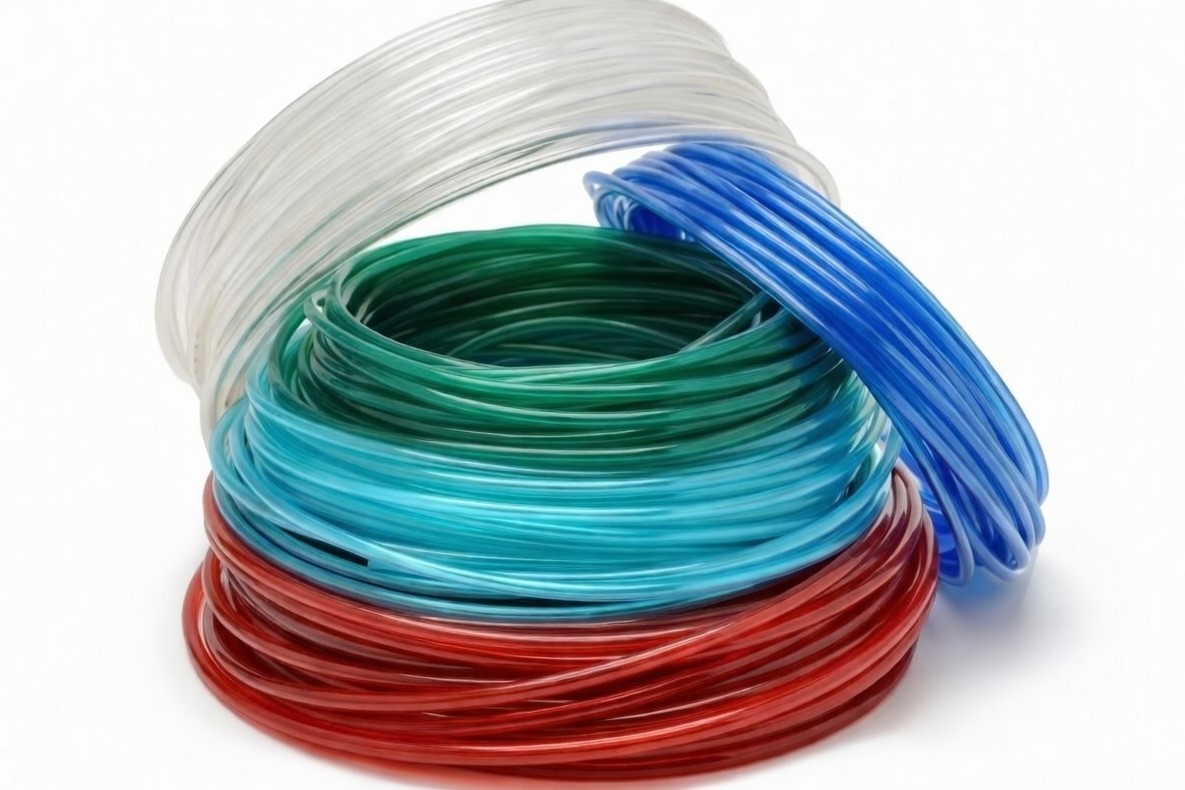
Viele Ingenieure verwenden die Begriffe „Schlauch“ und „Rohrleitung“ synonym, doch sie bezeichnen nicht dasselbe. Das Verständnis der tatsächlichen Unterschiede hilft Ihnen, bei der Konstruktion pneumatischer Systeme bessere Entscheidungen zu treffen. Bevor wir uns dem detaillierten Vergleich widmen, ist es wichtig zu klären, wodurch sich diese beiden Produkte in der Praxis unterscheiden.
Was sind die wesentlichen Unterschiede zwischen einlagigen, flammhemmenden PU-Schläuchen und Pneumatikschläuchen?
Unser einlagiger, flammhemmender Polyurethanschlauch besteht aus einem polyurethanmodifizierten Material. Dieses Material zeichnet sich durch gute Biegsamkeit, Abriebfestigkeit und hohe Zugfestigkeit aus. Der Schlauch enthält integrierte Flammschutzmittel und verfügt über eine PVC-Außenbeschichtung, die das Brandverhalten verbessert. All dies sorgt für hohe mechanische Belastbarkeit und optimalen Schutz. Dank des einlagigen Aufbaus ist der Schlauch besonders leicht und im Vergleich zu mehrlagigen Druckluftschläuchen deutlich einfacher zu handhaben.
Pneumatikschläuche unterscheiden sich in ihrer Konstruktion. Sie enthalten üblicherweise zusätzliche Lagen aus Gewebe oder Stahlgewebe, um höheren Drücken standzuhalten. Diese Verstärkungen erhöhen zwar die Bruchsicherheit, führen aber auch zu höherer Steifigkeit und höherem Gewicht. In kleinen pneumatischen Systemen, wie sie beispielsweise in Robotern oder Steuerplatinen verbaut sind, … PU-Einschicht-Flammschutzschlauch Es sticht besonders hervor. Dank seiner Biegsamkeit kann es auch in engeren Bereichen eingesetzt werden. Und das, ohne sich zu verdrehen oder die Luftzirkulation zu behindern.
Leistungsfähigkeit in pneumatischen Anwendungen
Der einlagige PU-Schlauch sorgt für einen gleichmäßigen und konstanten Luftstrom. Dies ist ideal für komplexe Steuerungssysteme. Die geringe innere Reibung reduziert den Druckverlust, selbst über längere Strecken. Pneumatikschläuche eignen sich besonders für anspruchsvolle Anwendungen, beispielsweise für Druckluftwerkzeuge oder Systeme zur Unterstützung von Hydraulik. Dort ist die Zugkraft auf die Bauteile sehr hoch.
Ein großer Vorteil von flammhemmenden PU-Schläuchen ist ihre hohe Brandsicherheit. Diese Schläuche sind auch unter anspruchsvollen Bedingungen beständig und bieten Sicherheit in Bereichen, in denen Brandschutz höchste Priorität hat. Sie entsprechen den UL 94 V-0-Richtlinien, was bedeutet, dass sie ein Entzünden verhindern und sich nach dem Wegfall der Wärmequelle schnell selbst löschen. Diese Eigenschaft ist entscheidend für Maschinen in geschlossenen Räumen oder Produktionshallen mit elektrischen Bauteilen.
Wie beeinflusst Flammschutz die Sicherheit pneumatischer Systeme?
Flammschutz ist mehr als nur eine Angabe in einem Datenblatt. In automatisierten Systemen beeinflusst er direkt die Betriebssicherheit einer Maschine im Fehlerfall. Ein kleiner Funke oder ein elektrischer Defekt kann sich schnell zu einem schwerwiegenden Zwischenfall ausweiten, wenn die Schläuche die Brandausbreitung begünstigen. Daher ist die Wahl von Schläuchen mit hohen Flammschutzeigenschaften ein entscheidender Faktor für die Sicherheit pneumatischer Systeme.
Flammschutzmittel unterbrechen den Verbrennungsprozess und verhindern so die Entstehung eines Feuers. Sie reduzieren außerdem die Flammenausbreitung. Dies geschieht durch die Bildung einer schützenden Kohleschicht auf der Rohroberfläche. Polyurethanmodifizierte Materialien gewährleisten einen zuverlässigen Brandschutz und verhindern die Ausbreitung von Flammen. Diese Konstruktion trägt dazu bei, dass die Anlage auch unter hohen Temperaturen länger stabil bleibt. Dadurch haben Systeme in Notfallsituationen mehr Zeit, sich gefahrlos abzuschalten.
Die Einhaltung der UL94 V-0-Norm oder vergleichbarer Standards belegt, dass die Schläuche strengen Prüfungen hinsichtlich ihres Brandverhaltens unterzogen wurden. Dies ist ein wichtiger Aspekt bei der Planung pneumatischer Systeme für Bereiche wie die Automobilmontage oder Roboteranwendungen.
Sicherheitsvorteile in industriellen Umgebungen
In beengten Bereichen wie Steuereinheiten oder Produktionszonen kann sich ein kleiner Funke schnell ausbreiten. Dies geschieht, wenn die Materialien nicht feuerhemmend sind. Die Verwendung von einlagigen, flammhemmenden PU-Schläuchen verringert die Gefahr der Brandausbreitung über die Luftwege. Ein weiterer wichtiger Aspekt ist die Rauchentwicklung. Bei Kontakt mit Feuer geben die Schläuche nur wenig Rauch und schädliche Gase ab. Diese geringe Rauchentwicklung schützt die Ausrüstung, verbessert die Sichtverhältnisse im Fluchtweg und verringert die Atemwegsgefährdung für die Mitarbeiter.
Branchen mit strengen Sicherheitsvorschriften, wie die Elektronikfertigung oder der Gütertransport, profitieren von diesen geprüften, flammhemmenden Produkten. Sie tragen zur Einhaltung der Normen bei und gewährleisten gleichzeitig einen reibungslosen Betrieb der Lüftungsanlage.
Warum sind Flexibilität und Gewicht bei der Konstruktion pneumatischer Systeme wichtig?
Eine leichte Bauweise ist entscheidend, um Luftleitungen an Robotergliedern oder beweglichen Teilen vorbeizuführen. Jedes noch so kleine Gewichtszuwachs trägt dazu bei, Luftwiderstand und Energieverbrauch zu reduzieren. Die einlagige PU-Konstruktion vereint Elastizität und Härte. Sie passt sich optimal Kurven an und verhindert ein Einknicken. Dadurch wird ein Luftstau selbst bei wiederholten Bewegungsabläufen vermieden.
Dank seiner starken Federung lässt es sich auch in engen Bereichen leichter führen. Dort wären herkömmliche, stabile Schläuche zu starr. Konstrukteure wählen diese Art von Rohren häufig für variable Fahrzeugbereiche, die regelmäßige Layoutänderungen erfordern.
Schnellere Installation spart Geld. Flammhemmende PU-Schläuche mit einer Lage lassen sich einfacher schneiden, verbinden und austauschen als mehrlagige Schläuche. Der Grund: Es werden keine speziellen Verbinder oder große Befestigungselemente benötigt. Wartungsteams können bei Systemoptimierungen oder Reparaturen schnell reagieren. Dadurch werden Ausfallzeiten minimiert.
In dynamischen Produktionsumgebungen, wie beispielsweise bei der Kommissionierung und Positionierung von Artikeln durch Roboter, erweist sich dieses einfache Management als hilfreich. Es ermöglicht schnellere Anpassungen an den Produktionslinien, ohne die Stabilität zu beeinträchtigen.
Wie unterscheiden sich Druckfestigkeit und Haltbarkeit von Schläuchen und Rohren?
Die einlagige, flammhemmende PU-Schlauchisolierung hält den durchschnittlichen Betriebsdrücken in Steuerleitungen stand. Sie erreicht einen Druck von bis zu 10 bar bei 20 °C. Zum Vergleich: Die Produktdetails geben einen Berstdruck von 25 bar bei 20 °C an. Dies bietet einen ausreichenden Sicherheitsspielraum für übliche Druckluftanwendungen.
Mehrlagige Schläuche eignen sich besser für anspruchsvolle Anwendungen mit höheren Betriebsdrücken. Sie erreichen oft problemlos über 20 bar. Allerdings gehen dadurch Flexibilität und Leistung verloren. Die richtige Wahl hängt von geplanten Lastwechseln, Temperaturschwankungen und der Systemauslegung ab.
Dauerhaftigkeit hängt nicht nur von der Druckfestigkeit ab. Sie umfasst auch die Beständigkeit gegenüber Umwelteinflüssen. Hohe Verschleißfestigkeit und Zugfestigkeit machen diesen Schlauch besonders langlebig und zuverlässig. Er ist unempfindlich gegen Abrieb durch Berührung, Ölnebel von Pumpen und Sonneneinstrahlung im Außenbereich.
Allerdings bieten Schläuche mit mehreren Lagen bei starker Zugbelastung oder anhaltender Biegung unter hohem Druck einen besseren Schutz vor Berstungen. Umgebungsbedingungen wie feuchte Luft oder chemische Gerüche können die Lebensdauer auf unterschiedliche Weise beeinflussen. Daher müssen Konstrukteure die Materialeigenschaften sorgfältig auf die Einsatzumgebung abstimmen.
Wann sollten Ingenieure einlagige, flammhemmende PU-Schläuche gegenüber Schlauchleitungen bevorzugen?
Ingenieure wählen für bestimmte Anwendungen in der Regel einlagige, flammhemmende PU-Schläuche. Sie kommen in kleinen Luftsteuerplatinen zum Einsatz. Auch in Roboterarmen mit beengten Platzverhältnissen sind sie die richtige Wahl. Ebenso eignen sie sich für Anwendungen, bei denen ein geringes Gewicht für schnelle Bewegungen wichtig ist. Auch Bereiche, in denen die Flammenbeständigkeit überprüft werden muss, benötigen sie. Und selbst bei Aufgaben, die eine geringe Rauchentwicklung im Brandfall erfordern, werden sie eingesetzt.
Diese Eigenschaften machen es nützlich in Bereichen wie Mischrobotern, Automobilproduktion, Verpackungsmaschinen und Chipwerkzeugen.
Andererseits sind Druckluftschläuche in bestimmten Fällen die bessere Wahl. Sie halten hohen Drücken von über 10–15 bar stand. Sie eignen sich für die Luftförderung über große Entfernungen. Auch Konstruktionen mit ständiger Biegung unter Last, beispielsweise in beweglichen Maschinen, benötigen Schläuche. Und Bereiche, die vor Stößen oder Kratzern geschützt werden müssen, profitieren ebenfalls von Schläuchen.
In solchen Situationen gewährleistet die mehrschichtige Unterkonstruktion eine hohe Arbeitssicherheit. Auch wenn das Bewegen dadurch etwas schwieriger ist.
Wie unterstützt Yantai Aisili New Material Co., Ltd. zuverlässige pneumatische Lösungen?
Yantai Aisili neue Material Co., Ltd. Das Unternehmen wurde 2007 gegründet. Es agiert als kompetenter Produzent mit Fokus auf Wachstum und Aufbau. Polyurethan-Pneumatikschläuche und zugehörige Luftprodukte. Mit über 17 Jahren Branchenerfahrung betreibt Aisili hochmoderne Produktionsstätten in Yantai und Linyi. Diese verfügen über sieben Produktionslinien, die große Stückzahlen verarbeiten und sich durch gleichbleibend hohe Qualität auszeichnen.
Aisili Pneumatic konzentriert sich auf hochwertige Polyurethan-Pneumatikschläuche und Zubehör. Das Unternehmen hat sich zum Ziel gesetzt, effektive und zuverlässige Druckluftlösungen für die weltweite Automobilindustrie anzubieten. Die Fertigung erfolgt auftragsbezogen und Design- und Fertigungsdienstleistungen Änderungen der Außenmaße sind von 4 bis 16 mm möglich. Die Härtegrade reichen von Shore A 85 bis 98. Die Farben entsprechen den Pantone-Farben. Die Spezifikationen erfüllen die Anforderungen internationaler Käufer.
Aisilis weltweites Versandnetzwerk gewährleistet schnelle Lieferungen in über 30 Länder. Der schnelle technische Support umfasst Einrichtungstipps, Kundendienst und kontinuierliche Produktverbesserungen. Diese Unterstützung hilft Kunden weltweit, die Schläuche reibungslos in ihre Betriebsabläufe zu integrieren. Teams erhalten beispielsweise Beratung zu Best Practices für die Installation in verschiedenen Umgebungen. Das After-Sales-Team kümmert sich umgehend um Anfragen und löst Probleme oft innerhalb weniger Tage. Produktaktualisierungen basieren auf kontinuierlicher Forschung und gewährleisten, dass die Schläuche den sich wandelnden Branchenanforderungen wie strengeren Sicherheitsvorschriften oder neuen Effizienzstandards gerecht werden.
Abschluss
Die Wahl zwischen flexiblen, einlagigen, flammhemmenden PU-Schläuchen und klassischen, mehrlagigen Schläuchen hängt von Faktoren wie Luftdruckbedarf, Platzverhältnissen, Sicherheitsrichtlinien und Umgebungsbedingungen ab. Planern, die nach leichten und gleichzeitig sicheren Lösungen für moderne Automobilanwendungen suchen – von Roboterarmen bis hin zu Präzisionsfertigungsbereichen –, bieten die innovativen Polyurethanprodukte von Yantai Aisili eine zuverlässige Grundlage. Diese basiert auf bewährter Materialkompetenz und einem umfassenden Supportsystem. Konkret bedeutet dies, dass Anwender nicht nur das Produkt erhalten, sondern auch ein komplettes Supportsystem mit Schulungsmaterialien, Fallstudien aus der Praxis und Partnerschaften mit Vertriebspartnern, um die Verfügbarkeit zu gewährleisten. Diese Unterstützung ist besonders hilfreich in Bereichen, in denen eine schnelle Reaktion auf Veränderungen entscheidend ist, beispielsweise bei der Anpassung an neue Vorschriften oder der reibungslosen Produktionsausweitung.
Welche Fragen werden häufig zu einlagigen, flammhemmenden PU-Schläuchen gestellt? (FAQ)
1. Was macht PU-Einschicht-Flammschutzschläuche für pneumatische Systeme geeignet?
Es vereint Biegsamkeit, geringes Gewicht, Kratzfestigkeit und ist nach UL94 V-0 feuerbeständig. Dadurch eignet es sich ideal für enge Leitungswege, wo absolute Sicherheit unerlässlich ist. Dank seiner geringen Rauchentwicklung ist es im Brandfall sicherer als herkömmliche Kunststoffrohre.
2. Kann dieser Schlauch herkömmliche Druckluftschläuche vollständig ersetzen?
Nicht vollständig. Bei den in automatischen Steuerungssystemen üblichen Drücken bis zu 10 bar funktioniert es einwandfrei. Für schwere Förderanlagen oder weit entfernte Druckluftleitungen, die diese Werte überschreiten, sind jedoch weiterhin mehrlagige Schläuche unerlässlich.
3. Wie beeinflusst die Temperatur die Leistung?
Der empfohlene Einsatztemperaturbereich liegt zwischen –30 °C und +80 °C. Innerhalb dieses Bereichs behält das Material seine Elastizität. Längerer Kontakt mit hohen Temperaturen kann es etwas weicher machen. Dies beeinträchtigt jedoch nicht die Stabilität der Struktur bei normaler Nutzung.
4. Sind bei Yantai Aisili Standardgrößen erhältlich?
Ja. Die Außenbreiten reichen üblicherweise von 4 mm bis 16 mm. Sonderanfertigungen sind auf Anfrage über den Bestellservice von Aisili unter aisilipneumatic.com möglich. Kunden fragen diese häufig für spezielle Projekte an. Der Prozess ist unkompliziert und die Lieferzeiten sind kurz.
5. Welche Wartungsmaßnahmen verlängern die Lebensdauer?
Vermeiden Sie enge Kurven unterhalb des angegebenen Mindestdrehwinkels von 10–65 mm (je nach Messung). Schützen Sie das Gerät vor direkter Sonneneinstrahlung, wenn es im Freien nicht überdacht ist. Prüfen Sie die Anschlüsse regelmäßig auf Luftaustritt. Reinigen Sie das Gerät mit milden, für Polyurethan geeigneten Reinigungsmitteln und vermeiden Sie aggressive Produkte, die die Oberfläche beschädigen könnten.