


What Additives Improve Polyurethane Pneumatic Tubing Performance
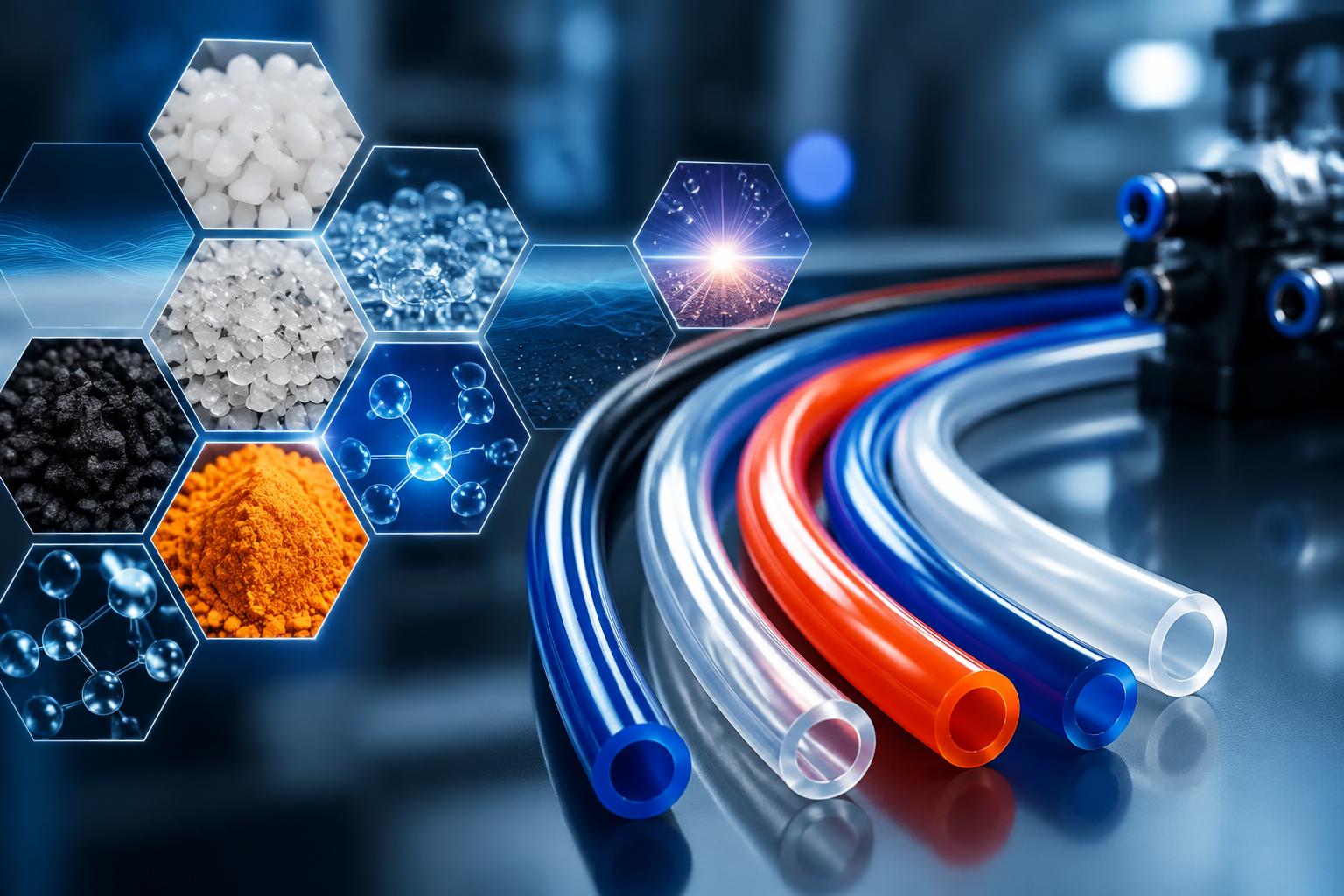
Polyurethan Pneumatik Schlauch Rarely made from base resin only. A variety of stabilizers, processing aids, pigments, lubricants, and modifiers may be added to improve its resistance to heat, moisture, sunlight, chemicals, abrasion, flexing, or other factors. The challenge is that one additive may negate the effect of another, such as by making the material too hard or too flexible. A compound that adds flame resistance could also lower the tensile strength or cause problems like discoloration. Buyers considering multiple additives should ask how they complement each other and what testing was done on the final tubing. It is also important to make sure that a successful formulation can be recreated for future orders.
Which additives address the main weaknesses of polyurethane pneumatic tubing?
Additive selection begins with the service environment. Tubing inside a dry control cabinet does not face the same risks as tubing in washdown machinery, outdoors, or near a heat source.
How do antioxidants and heat stabilizers protect the tube?
Heat and oxygen can significantly affect polymer chains of polyurethane through extrusion and use. The addition of antioxidants and thermal stabilizers into the polyurethane composition can prevent polymer’s discoloration, drying out, brittle nature, reduction of its tensile strength, and change in flexibility. It is crucial to consider this feature when using the material near compressor, motors, ovens, or other objects which make the surrounding temperature higher than the room one.
These additives have little or no effect on a polyurethane’s temperature rating, and working pressure should generally be reduced at higher temperatures. It is the responsibility of the fabricator to specify temperature and pressure ratings for the finished tube: these data usually are not available for an unpolymerized resin.
When are hydrolysis stabilizers needed?
Moisture can attack susceptible polyurethane structures, especially when heat accelerates the process. Hydrolysis stabilizers may slow this breakdown in washdown equipment, warm-water service, humid production areas, and poorly controlled storage.
Base chemistry remains decisive. Polyether-based polyurethane is generally more suitable for wet or hydrolysis-prone conditions, while polyester-based grades may be selected for other mechanical or oil-related priorities. Additives cannot fully correct a resin family poorly matched to the application.
How do modifiers change pressure, flexibility, and fitting performance?
Pressure capability depends on resin strength, wall thickness, diameter, hardness, extrusion consistency, and fitting engagement. Any formulation change should be checked on the finished tube size.
What do chain extenders, fillers, and hardness modifiers change?
Chain extenders and selected reinforcing components can increase hardness, stiffness, tensile behavior, or dimensional stability. A firmer tube may resist expansion and sit more securely in a push-to-connect fitting. It may also become harder to route or less tolerant of repeated bending.
Fillers can influence cost, stiffness, appearance, and processing. Poor dispersion may create weak points, rough surfaces, or unstable dimensions. Hardness alone is not a quality measure; the suitable value depends on bend radius, vibration, wall thickness, and fitting design.
How do plasticizers and processing aids affect flexibility?
Plasticizers or internal flexibilizing compounds may be used to improve low-temperature bending but shall be evaluated for migration/extraction; odor; and long-term effects, such as loss of pull-out resistance, increased kink susceptibility, and/or deformation around fitting teeth.
Processing aids and lubricants may be used to improve extrusion characteristics, but they may adversely affect printability, adhesion of printed segments, or bonding of fittings. Sample approval should include fitting trials as well as pressure testing.
Which additives improve resistance to sunlight, chemicals, and special hazards?
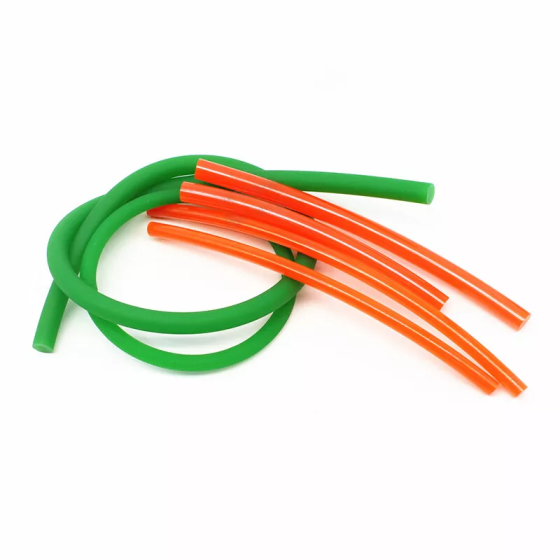
Outdoor, welding, chemical-processing, and electrically sensitive applications may require targeted protection.
How do UV stabilizers and pigments support outdoor use?
Ultraviolet absorbers and hindered amine light stabilizers can slow cracking, fading, and loss of mechanical properties caused by sunlight. Pigments also influence light resistance. Carbon black may provide strong UV screening, while colored formulations require separate qualification because pigment chemistry and carrier resin can change aging behavior.
Outdoor suitability should be supported by tests on the finished color and tube size. Buyers should also consider heat buildup, rain, ozone, and cleaning exposure rather than sunlight alone.
When are flame-retardant, antistatic, or chemical-resistant packages appropriate?
Flame-retardant additives may be designated in areas of welding equipment, electronics, or transport machinery. They might adjust density, hardness, smoke, flexibility, or strength; therefore, the final mixture should be tested regarding the particular standard.
On the other hand, antistatic compounds are applied to prevent surface charging in dust production or electronics. Nevertheless, their efficiency depends on the prevailing humidity and exposure time. In turn, chemical resistant packaging should be checked against the actual operating fluids, coolants, cleaning agents, or solvents. It is necessary to measure the impact of temperature, concentration, and exposure duration on the swelling, hardness, cracking, or pressure resistance properties.
What formulation and production risks should buyers inspect?
A suitable formulation can still fail when raw materials are wet, additives are poorly dispersed, or extrusion conditions drift.
Which defects suggest poor additive control?
Streaks, bubbles, gels, surface roughness, odor, color variation, and unstable diameter may indicate moisture contamination, poor mixing, additive incompatibility, or incorrect processing temperature. Die buildup can change outside diameter or mark the surface. Multilayer tubing adds risks such as uneven layers, weak bonding, and separation after bending.
Pigment changes deserve attention. A new shade may use a different carrier or loading level, affecting hardness, flexibility, or aging. Each color should be treated as a controlled formulation when fitting retention and dimensional tolerances matter.
Which tests provide useful evidence?
Such a test covers the determination of the outside diameter, inside diameter, and thickness. The other features are concentricity, hardness, surface defects, recovery after bending, coil shape, and retention of fitting. In addition, working pressure and a burst test require specification of tube size, conditioning time, temperature, and pressure increase.
The additional tests are usually related to service conditions: thermal aging, hydrolysis aging, exposure to ultraviolet radiation, immersion in chemical solutions, wear resistance, repeated bending, bending at low temperatures, resistance to burning, and antistatic properties. The report shall indicate the formulation, color, size, batch, and conditions. Retained samples give buyers a physical reference for later deliveries.
How should procurement teams evaluate additives and suppliers before ordering?
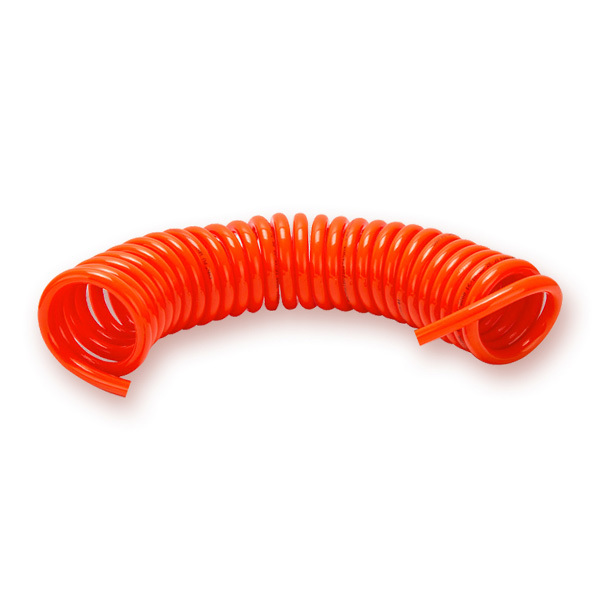
A supplier need not disclose a proprietary recipe, but it should explain the formulation’s purpose and provide evidence tied to the proposed tube.
What should be confirmed during sample approval?
Buyers have to ask whether the polyurethane is polyester- or polyether-based, what operating conditions dictated the choice of materials used, and if different colors require different additive packages. The quotation should specify the dimensions, tolerances, hardness, working pressure, burst requirements, temperature range, minimum bend radius, media compatibility, length of the coil, and packing.
Samples should be installed with the intended fittings and representative bends. Check insertion force, pull retention, sealing, kinking, wall flattening, surface damage, and recovery after pressure cycling. Where heat, moisture, chemicals, sunlight, or flame exposure matters, test those conditions before volume approval.
How can repeat-order consistency be maintained?
Approved drawings should identify tube size, wall structure, hardness range, color, packaging, and inspection items. Buyers should require notification before changes to resin grade, stabilizer package, pigment, filler, processing aid, tooling, or layer construction.
Batch traceability and retained samples help separate production variation from excessive pressure, heat, chemical attack, tight routing, incorrect fittings, or installation damage. Repeat orders should be compared with the approved specification, not accepted solely because the product name is unchanged.
How can a pneumatic tubing manufacturer support formulation selection?
Yantai Aisili neue Material Co., Ltd. supplies polyurethane und pneumatische Mehrmaterialschläuche. Buyers can submit tube dimensions, working pressure, temperature, bend radius, fitting type, color, chemical exposure, outdoorA conditions, and required quantity. These inputs define which resin system and additive targets need evaluation. Samples can then be checked for hardness, dimensional consistency, routing, pressure retention, fitting engagement, and application-specific aging. Quotations should identify the agreed construction, tolerances, coil length, packaging, lead time, and inspection items. Before production, both parties should approve the drawing, sample, test conditions, and change-notification requirements. This keeps later deliveries tied to the same formulation and acceptance criteria.
Abschluss
Additives for polyurethane pneumatic tubing can improve resistance to thermal, oxidative, hydrolytic, UV, chemical, pyrolytic, electrostatic, and processing degradation. Their effectiveness is determined by the compatibility with the polyurethane matrix and the operating environment. Buyers should evaluate pressure capability, flexibility, fitting retention, dimensions, aging behavior, and chemical exposure together. Application-specific samples, declared test methods, controlled formulations, and repeat-order change procedures provide a stronger purchasing basis than unsupported claims about an upgraded compound.
Häufig gestellte Fragen
1. Which additives improve polyurethane pneumatic tubing for outdoor use?
UV absorbers, hindered amine light stabilizers, antioxidants, and suitable pigments may slow sunlight-related damage. Outdoor approval should also consider heat, moisture, ozone, tube color, wall thickness, and exposure time.
2. Can additives increase polyurethane tubing working pressure?
Modifiers may improve stiffness or dimensional stability, but working pressure also depends on resin grade, tube diameter, wall thickness, temperature, extrusion quality, and fitting design. Finished tubing must be tested.
3. Are hydrolysis stabilizers necessary for every polyurethane air tube?
No. They are more relevant in humid, wet, or warm-water service. Base polymer chemistry should be selected first because stabilizers cannot fully compensate for a poorly matched polyurethane type.
4. Do pigments affect polyurethane pneumatic tubing performance?
They can. Pigment chemistry, carrier resin, loading, and dispersion may change hardness, aging, surface finish, or extrusion stability. Each color should be qualified when performance tolerances are narrow.
5. What additive information should a pneumatic tubing supplier provide?
The supplier should explain the targeted performance, material family, service limits, test conditions, dimensional controls, color variation, inspection criteria, and notification process for formulation or raw-material changes.