| ¡No! No! |
Dimensiones (mm) |
Medidor |
Peso (kg) |
| Purb3 |
3 |
100 |
0.85 |
| Purb4 |
4 |
100 |
1.51 |
| Purb5 |
5 |
100 |
2.40 |
| Purb6 |
6 |
100 |
3.40 |
| Purb8 |
8 |
100 |
6.04 |
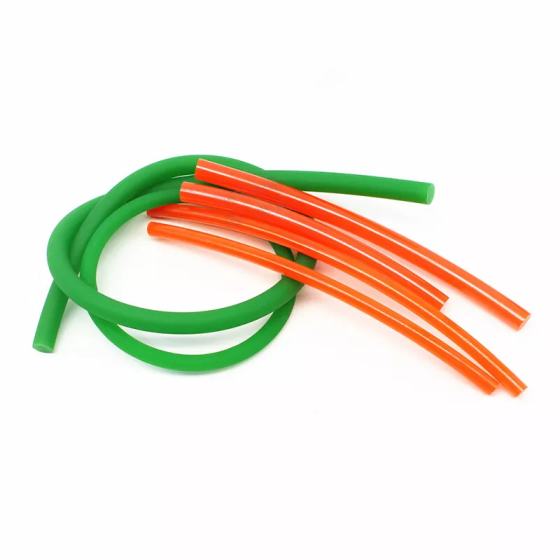
La superficie lisa y áspera se puede hacer, el color según sus necesidades.
Características principales de los cinturones de cordón de poliuretano
Las cintas redondas de poliuretano ofrecen varias ventajas para los sistemas de transporte y transmisión.
Excelente resistencia a la abrasión
El material de poliuretano posee una excelente resistencia al desgaste, lo que permite que la correa funcione durante largos periodos sin una degradación significativa. Esto reduce considerablemente los costos de mantenimiento y la frecuencia de reemplazo.
Alta flexibilidad
Las correas de cordón de poliuretano mantienen una excelente flexibilidad incluso bajo flexiones repetidas. Esto les permite funcionar de manera eficiente en poleas pequeñas y sistemas de transporte compactos.
Fácil soldadura e instalación
Una de las principales ventajas de las correas redondas de poliuretano es que se pueden unir fácilmente mediante soldadura en caliente. Los extremos del cordón se pueden fundir y conectar para formar una correa continua sin fin.
Esta función permite una instalación rápida in situ sin necesidad de desmontar los componentes de la cinta transportadora.
Resistencia química y al aceite
Las correas de poliuretano son resistentes a aceites, grasas y muchos productos químicos, lo que les permite funcionar de forma fiable en diferentes entornos industriales.
Larga vida útil
Gracias a sus sólidas propiedades mecánicas y su excelente resistencia al desgaste, las correas redondas de poliuretano suelen tener una vida útil más prolongada en comparación con las correas de caucho convencionales.
Aplicaciones de los cinturones de cordón de poliuretano
Las correas de cordón de poliuretano se utilizan ampliamente en sistemas de transporte y transmisión industriales.
Las aplicaciones típicas incluyen:
Maquinaria de embalaje
Máquinas de impresión
Máquinas textiles
Líneas de producción de cerámica
Equipos para el procesamiento de alimentos
Sistemas de automatización
Transportadores para manipulación de materiales
La estructura de correa redonda permite una transmisión de potencia fluida entre las poleas y garantiza un funcionamiento estable en entornos de producción continua.
Correas de cable de superficie lisa frente a superficie rugosa
Las correas de cordón de poliuretano suelen estar disponibles con dos opciones de superficie.
Cinta de superficie lisa
Las correas de superficie lisa proporcionan una menor fricción y se utilizan habitualmente en aplicaciones generales de transmisión de potencia.
Cinta para superficies rugosas
Las correas con superficie rugosa aumentan la fricción entre la correa y la polea, lo que las hace adecuadas para aplicaciones donde se requiere un mayor agarre.
Elegir el tipo de superficie adecuado ayuda a mejorar la eficiencia de la transmisión y a reducir el deslizamiento.
Ventajas de la correa de cordón de poliuretano sobre la correa de caucho.
En comparación con las correas de transmisión de caucho tradicionales, las correas de cordón de poliuretano ofrecen varias ventajas importantes.
Las correas de poliuretano poseen mayor resistencia a la abrasión y a la tracción, lo que les permite operar bajo tensión mecánica continua. Además, ofrecen mayor resistencia a aceites y productos químicos, lo que mejora su durabilidad en entornos industriales.
Además, las correas de poliuretano mantienen su flexibilidad a bajas temperaturas y resisten el agrietamiento o la deformación durante un uso prolongado.
Estas ventajas hacen que las correas de cordón de poliuretano sean ampliamente utilizadas en los sistemas modernos de automatización industrial y transporte.
Soluciones personalizadas para cinturones de cordón de poliuretano
En Yantai Aisili Nuevo Material Co., Ltd.Podemos fabricar cinturones de cordón de poliuretano según los requisitos específicos del cliente.
Las opciones de personalización incluyen:
Diámetros personalizados
Diferentes niveles de dureza
Varios colores
Superficie lisa o rugosa
Embalaje especial
Nuestro equipo técnico también puede recomendarle las especificaciones adecuadas en función de su equipo y sus condiciones de trabajo.
Preguntas frecuentes – Cinturón de cordón de poliuretano
¿Para qué se utiliza la correa de cordón de poliuretano?
Las correas de cordón de poliuretano, también conocidas como correas redondas de PU, se utilizan comúnmente en sistemas de transporte y transmisión de potencia ligeros. Se aplican ampliamente en máquinas de embalaje, equipos de impresión, maquinaria textil, líneas de producción de cerámica y diversos sistemas de automatización industrial. Gracias a su excelente flexibilidad y resistencia a la abrasión, las correas de cordón de poliuretano son ideales para aplicaciones de transporte continuo y transmisión de potencia.
¿Cómo unir cinturones redondos de PU?
Las cintas redondas de poliuretano se pueden unir fácilmente mediante soldadura en caliente. Los dos extremos de la cinta se calientan con una herramienta de soldadura hasta que el poliuretano se funde, y luego se presionan para formar una conexión resistente. Tras el enfriamiento, la unión se convierte en una cinta continua sin fin. Este método permite una instalación rápida y un reemplazo sencillo directamente en el sistema de transporte.
¿Qué tamaños están disponibles para las correas de cordón de poliuretano?
Las correas de cordón de poliuretano están disponibles en una amplia gama de diámetros para adaptarse a diversas aplicaciones de transporte y transmisión. Los diámetros más comunes son 3 mm, 4 mm, 5 mm, 6 mm, 8 mm y 10 mm. También se pueden fabricar tamaños mayores para requisitos industriales especiales. Se ofrecen diámetros, colores y niveles de dureza personalizados según las especificaciones del cliente.
¿Cuáles son las ventajas de las correas de cordón de poliuretano?
Las correas de cordón de poliuretano ofrecen una excelente resistencia a la abrasión, flexibilidad y una larga vida útil en comparación con las correas de caucho tradicionales. El poliuretano proporciona una alta resistencia a la tracción y buena resistencia a aceites y productos químicos. Además, las correas de cordón de PU funcionan sin problemas en poleas pequeñas y se pueden soldar fácilmente para formar correas sin fin, lo que las convierte en una solución práctica y fiable para sistemas de transporte y transmisión de potencia.
¿Se pueden personalizar las correas redondas de poliuretano?
Sí, las cintas redondas de poliuretano se pueden personalizar según las necesidades de cada industria. Los fabricantes pueden producir cintas con diversos diámetros, colores, niveles de dureza y tipos de superficie. También se ofrecen longitudes personalizadas y embalajes especiales. Ajustando la composición del material y las dimensiones, las cintas de cordón de PU se pueden optimizar para sistemas de transporte y entornos de trabajo específicos.
Control de calidad y fabricación
Nuestras correas de cordón de poliuretano se fabrican con materias primas de poliuretano de alta calidad y procesos de extrusión estables. Cada lote de productos se somete a una estricta inspección para garantizar dimensiones uniformes y un rendimiento mecánico fiable.
Este proceso de control de calidad garantiza que cada correa entregada a los clientes cumpla con los estándares de aplicación industrial.