


How to Choose Push-to-Connect Pneumatic Fittings for Industrial Equipment
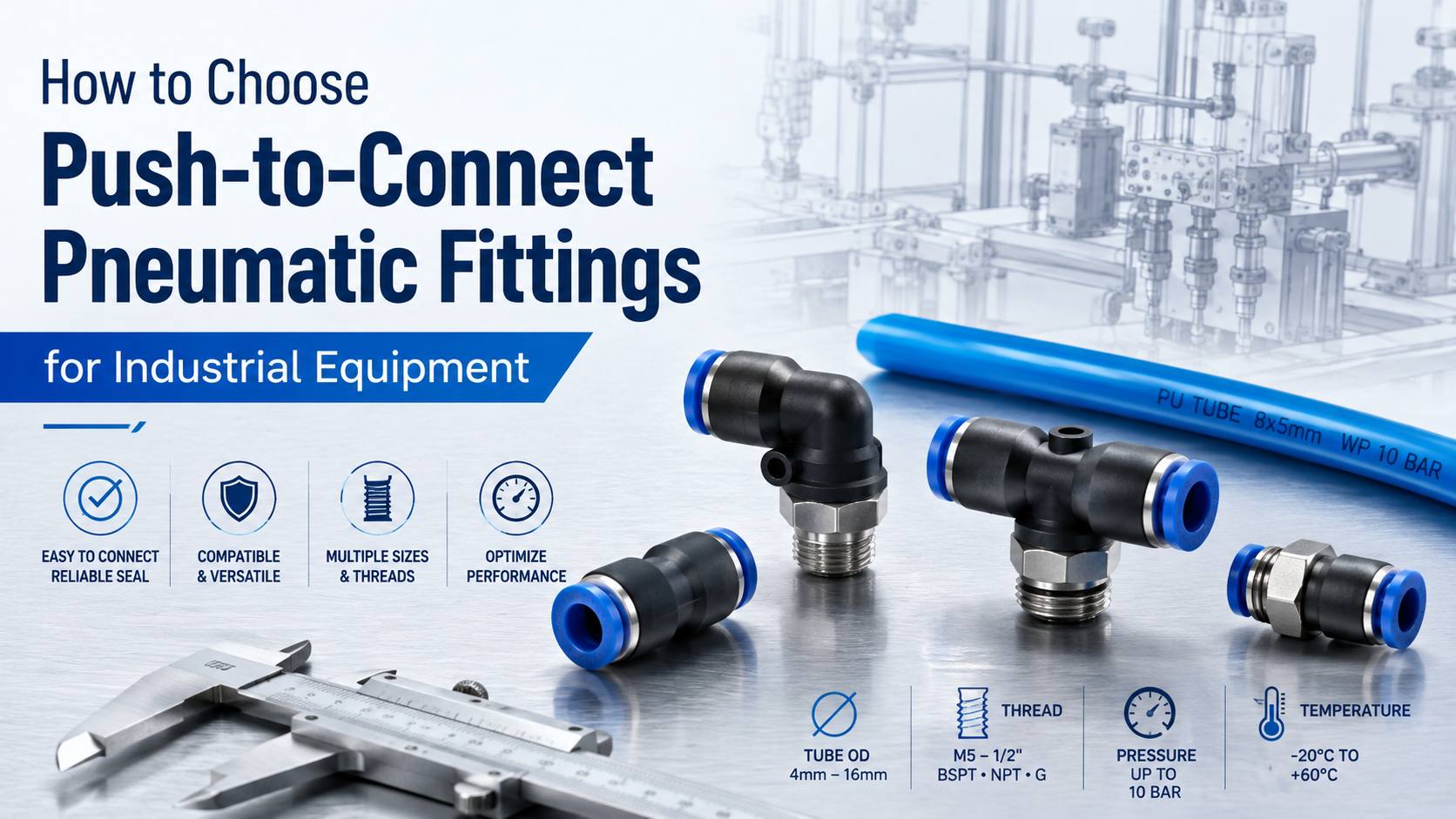
A push-to-connect pneumatic fitting often costs very little. This is true when you compare it to the expensive machine around it. However, just one wrong fitting can halt an assembly job right away. The usual mistakes are not very complicated. People might pick the wrong tube OD or an almost-matching thread. They might leave insufficient installation clearance. Sometimes, they select a fitting from a familiar KJ/KQ2-style name without checking the actual dimensions. Production volumes eventually rise. When this happens, those small errors turn into costly rework. You face extra leakage checks, replacement orders, and bad downtime. Selecting push-to-connect pneumatic fittings requires careful thought. You must do more than find a connector that looks right in a catalog. The chosen fitting has to match the tube and the equipment port. It must also fit the working conditions and maintenance requirements at the exact same time.
Which Tube Specifications Should Be Confirmed Before Choosing a Fitting?
You can narrow down fitting options quickly. To do this, look at the pneumatic tube first instead of the basic fitting shape.
Two specific tube details need your attention right away. These are the outside diameter and the physical material.
Why is tube OD more important than tube ID?
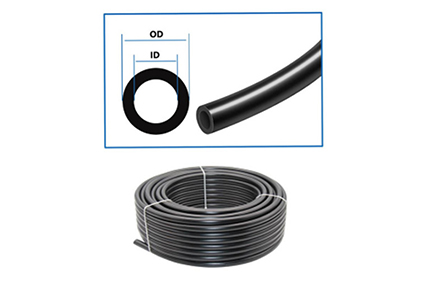
Push-to-connect fittings usually grab the outer surface of pneumatic tubing. Because of this, makers generally specify them by the tube outside diameter.
Suppose a production line uses 8 mm OD polyurethane tubing. In this case, the buyer must pick a fitting made for that exact tube OD. An inch-size tube might look almost the same. But you should never treat it as a direct substitute. Always check the fitting specification first.
This fact matters a lot in international sourcing. Metric and inch tubing might show up in the very same RFQ.
Are you working on replacement projects? If so, do not rely solely on measuring an old tube end. Tubing often becomes oval, scratched, or flat after long service. A machine drawing or a tube marking works much better. The original bill of materials is also a great reference.
How does tube material affect fitting selection?
PU tubing, nylon tubing, and polyethylene tubing act differently. Other pneumatic tube materials also show unique mechanical behavior.
Tuyaux pneumatiques en polyuréthane feels quite flexible. It works great when hoses must route through tight machine spaces. It also helps around moving equipment. Nylon is usually firmer. People might prefer nylon for different pressure levels. It also handles certain temperature or environmental needs well.
The chosen fitting must work nicely with those specific material traits.
The internal gripping mechanism has to hold the tube securely. It must do this without causing damage. At the same time, the seal needs to touch the outside surface evenly.
Because of this, buyers should always test the fitting. Use the tubing you actually plan to run in production. A label saying “works with 8 mm tube” is not very helpful. It is much better to know it “works with this 8 mm OD PU tube under our operating conditions.”
How Do Thread Type and Fitting Shape Affect Compatibility?
You have now figured out the tube side. Next, the machine connection needs that exact same attention.
This specific step is where many good orders go bad.
Why is nominal thread size not enough?
Asking for a “1/4-inch thread” leaves a big question open. Which thread standard do you actually need?
Pneumatic equipment often uses NPT, R or BSPT, G or BSPP, or metric threads. Similar nominal sizes might feature totally different thread shapes. They also use different sealing methods.
Therefore, a supplier needs the full designation. You can find this detail on the equipment drawing.
Pictures certainly help identify the basic fitting style. However, they are bad substitutes for real thread information. You might try to measure an unknown thread. This often requires checking the diameter, pitch, and taper. You also need to look at the sealing arrangement. Just holding a ruler against the outside diameter will not work.
Think about OEM projects. You should put the complete thread specification right into the drawing. Add it to the purchasing description too. This step stops the same confusing question from coming back with every single order.
Which fitting shape works with the available installation space?
A straight connector seems mechanically simple. Even so, it is not always the easiest part to install.
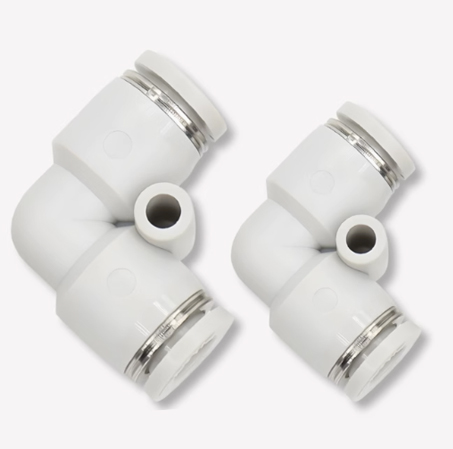
Sometimes the tube must turn right after leaving a valve or cylinder. In this case, a male elbow offers cleaner routing. A union joins two separate tubes together. A tee builds a branch line. A reducing union connects different tube ODs. Bulkhead fittings help pass a pneumatic line safely through an enclosure or panel.
These shape choices affect much more than just basic looks.
Bad fitting geometry can force a tube into a sharp bend. It might also block access to another vital component. Sometimes, it makes the release ring too hard to reach during maintenance.
Do not freeze an OEM design too early. Always check the chosen fitting inside the actual installation space first.
What Should Buyers Understand About KJ and KQ2-Type Pneumatic Fittings?
KJ and KQ2 remain very familiar names in the pneumatic fitting market. This fact makes them quite useful when teams discuss product styles. They should never, however, replace a proper dimensional specification.
Does a KJ or KQ2-style name guarantee interchangeability?
No, it does not.
A whole family of KJ/KQ2-type push-to-connect pneumatic fittings can hold many variations. These include different tube sizes, threads, body shapes, and configurations.
Two male elbows might look almost the same. Yet, they can differ in tube OD or thread standard. They might also have a different overall height or installation clearance.
For replacement sourcing, having the original part number helps a lot. What if that information is missing? You should provide a physical sample. Send it along with measured dimensions and the exact machine-port specification.
Are you working on a new OEM design? Define exactly what the fitting needs to do. Do not rely solely on a basic family name.
For example:
8 mm OD PU tube, R1/4 male thread, 90-degree elbow, compressed-air service.
That clear description gives a supplier a solid technical basis for selection.
“KQ2-style elbow” does not provide enough detail.
When are KJ/KQ2-type options useful for OEM buyers?
These options prove useful for specific reasons. Machine designers often want a familiar, compact push-to-connect format. They also need a broad range of straight, elbow, union, and tee configurations.
The most important step here is thorough qualification.
You might want to replace an existing fitting. Or, you might approve an alternative source. Before doing this, compare the connection dimensions. Check the fitting geometry and tubing compatibility. Look closely at the pressure and temperature requirements. Finally, measure the available installation space.
Perhaps the product is going into repeat production. In that case, the engineering drawing must eventually control the purchase. Do not rely only on the visual appearance of the original sample.
This smart practice protects the buyer. It helps if suppliers, part numbers, or sourcing locations change later on.
Why Do Correctly Sized Push-to-Connect Fittings Sometimes Leak?
A pneumatic connection might leak. When this happens, workers often replace the fitting first. However, that is not always where the problem truly started.
Tube preparation and proper installation deserve a close inspection. Do this before you reject the component.
What tube preparation problems cause leakage?
The tube must enter the fitting properly. It needs a clean, perfectly square end.
A diagonal cut can easily mess up the insertion. Deep scratches on the outside surface might cross the inner sealing area. A crushed tube end can block solid contact with the internal seal.
The insertion depth matters quite a bit as well.
The tube must push past the retaining mechanism. It has to reach the correct internal position. A partly inserted tube might feel secure. Yet, it remains highly vulnerable to sudden leakage or pullout.
Always perform a gentle pull check after installation. This simple action helps confirm proper retention.
Technicians should avoid placing a tight bend right against the fitting. The tubing might constantly pull sideways. If so, the connection is carrying a heavy load it was never designed to handle.
Why can the threaded side leak even when the tube side is correct?
A push-to-connect fitting has two possible leak paths. This happens when it also includes a threaded port.
The tube side might seal perfectly. Meanwhile, the threaded connection could leak. This occurs because someone selected the wrong thread type. Sometimes, workers apply the sealing material incorrectly. In other cases, the fitting was simply tightened the wrong way.
Good troubleshooting must identify the exact leak location. Find this spot before you replace any parts.
This advice sounds very basic. Still, it matters greatly on crowded machinery. Air escaping from one threaded port can easily look like it comes from the neighboring tube connection.
Always depressurize the system before disconnecting any tubing. You might repeatedly pull a pressurized tube from a push fitting. This bad habit damages internal components and creates a serious safety risk.
What Should Procurement Teams Check Before Approving a Supplier?
You should evaluate a pneumatic fitting supplier on consistency. Do not just check if a single sample can hold air.
B2B purchasing requires a forward-looking approach. The approval process must focus on future production quantities.
Which quality checks matter during sample evaluation?
Start your checks with basic dimensions and clear identification.
Confirm the tube OD, thread type, and thread size. Check the body configuration and key installation dimensions. Inspect all threads closely for any damage. Also, verify that the tube-release mechanism operates smoothly.
Next, install the sample carefully. Make sure to use real production tubing.
Test the insertion, retention, disconnection, and leakage. Do this under conditions that match the real machine. Will you use multiple tube materials? If so, test those specific combinations separately.
The physical material must also match your exact order specification.
Standard polymer-and-metal fittings serve certain environments. Meanwhile, 304/316 stainless steel push-to-connect fittings handle totally different spaces. Buyers must know what material forms the body. They also need to understand any limits regarding the internal seals.
A simple visual inspection cannot answer all of those big questions. Reliable technical documentation forms a huge part of proper supplier evaluation.
What information makes an RFQ more useful?
A complete RFQ usually saves a lot of time. It works much better than a long, confusing email chain.
Include:
-
Tube outside diameter
-
Tube material
-
Thread standard and size
-
Fitting configuration
-
milieu de travail
-
Operating pressure
-
Plage de température
-
Required quantity
-
Material requirement
-
Packaging or marking requirement
Are you ordering replacement parts? Include the original model or a drawing. A clearly dimensioned sample reference works well too.
For OEM projects, stating the estimated annual demand is very useful. Sample qualification, packaging, and production planning take time. These steps differ greatly between a small 100-piece repair order and a steady 50,000-piece program.
Clear specifications also make quotations much easier to compare. Without them, two suppliers might price products that merely look similar.
How Can Yantai Aisili New Material Co., Ltd. Support Tube-and-Fitting Sourcing?
Yantai Aisili nouveau matériel Co., Ltd. manufactures high-quality polyurethane pneumatic tubing. The company also makes other pneumatic tubing products. At the same time, it supplies related push-to-connect fittings. Its tubing capability covers many different sizes, colors, and hardness levels. It also meets strict performance requirements. The factory offers solid OEM and ODM support for project-based orders. The company runs modern manufacturing facilities in Shandong. It uses multiple extrusion production lines to meet demand. OEMs, distributors, and equipment makers often purchase tubing together with KJ/KQ2-type or other push-to-connect pneumatic fittings. This helpful product combination brings many benefits. It allows teams to discuss tube OD, tube material, and fitting configuration at once. They can also review the thread specification and application requirements together. They treat everything as one complete connection system. This happens long before samples or final production orders are approved.
Conclusion
Choosing push-to-connect pneumatic fittings becomes much easier. Buyers just need to work from the connection outward. Confirm the exact tube OD and material first. Then, identify the correct thread and fitting geometry. Do not forget the pressure, temperature, and operating environment. KJ/KQ2-type descriptions can certainly narrow the search. However, they never replace careful dimensional verification. Most purchasing risk comes from overlooked details. It rarely comes from complicated technology. Write a precise RFQ and run production-tube testing. Add strict repeatability checks to the process. These steps give OEM and procurement teams a much better basis for approving a fitting supplier.
FAQ
1. How do I choose the correct push-to-connect fitting size for PU tubing?
Start with the actual tube outside diameter. Select a fitting designed for that exact OD. Then, verify the details with the fitting manufacturer. Make sure they allow polyurethane tubing under your required pressure and temperature conditions.
2. Are KJ and KQ2-type pneumatic fittings automatically interchangeable?
No, they are not. Similar series-style fittings can differ greatly. They might have a different tube OD, thread, or basic dimensions. The body shape and operating specifications can also change. Buyers must always compare drawings or physical samples. Do this before approving a replacement for existing equipment.
3. Can metric pneumatic tubing be used in an inch-size push-to-connect fitting?
Do not assume it can work. Even tiny OD differences can ruin sealing and retention. Always use a fitting designed for the exact metric or inch tube dimension. You must follow what is specified in the pneumatic system.
4. Why does a new push-to-connect pneumatic fitting leak after installation?
Look for incomplete insertion or an angled tube cut. Check for damaged tubing or the wrong tube OD. Excessive side loading can also cause trouble. Finally, look for a thread mismatch or incorrect thread sealing. Check all these things before assuming the fitting itself is defective.
5. What details should an OEM include when requesting a quotation for pneumatic fittings?
Provide the tube OD, tube material, and thread type. Include the thread size, fitting shape, and working medium. State the pressure, temperature, material requirement, and exact quantity. Finally, add any drawing, packaging, marking, or documentation requirements.