| - Non, non. |
OD (mm) |
Compteur |
Poids (kg) |
| Purb3 |
3 |
100 |
0.85 |
| Purb4 |
4 |
100 |
1.51 |
| Purb5 |
5 |
100 |
2.40 |
| Purb6 |
6 |
100 |
3.40 |
| Purb8 |
8 |
100 |
6.04 |
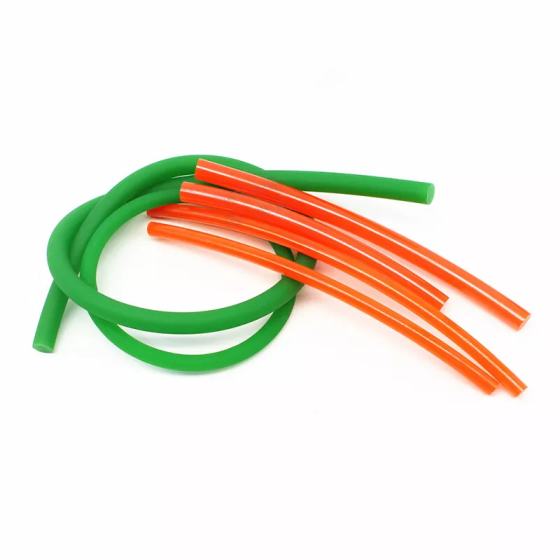
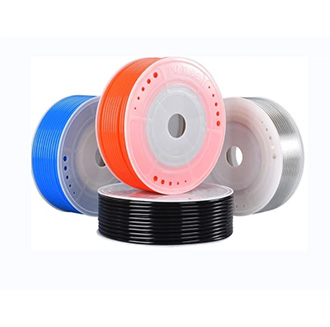
La surface lisse et rugueuse peut être faite, la couleur selon vos besoins.
Caractéristiques principales des courroies en corde de polyuréthane
Les courroies rondes en polyuréthane offrent plusieurs avantages pour les systèmes de convoyage et de transmission.
Excellente résistance à l'abrasion
Le polyuréthane offre une résistance à l'usure exceptionnelle, permettant à la courroie de fonctionner longtemps sans dégradation significative. Ceci réduit considérablement les coûts de maintenance et la fréquence de remplacement.
Grande flexibilité
Les courroies en polyuréthane conservent une excellente flexibilité même en cas de flexions répétées. Cela leur permet de fonctionner efficacement sur des poulies de petite taille et des systèmes de convoyage compacts.
Soudage et installation faciles
L'un des principaux avantages des courroies rondes en polyuréthane est leur facilité d'assemblage par soudage à chaud. Les extrémités du cordon peuvent être fondues et reliées entre elles pour former une courroie sans fin.
Cette fonctionnalité permet une installation rapide sur site sans démontage des composants du convoyeur.
Résistance chimique et oléofuge
Les courroies en polyuréthane résistent aux huiles, aux graisses et à de nombreux produits chimiques, ce qui leur permet de fonctionner de manière fiable dans différents environnements industriels.
Longue durée de vie
Grâce à leurs propriétés mécaniques robustes et à leur excellente résistance à l'usure, les courroies rondes en PU ont généralement une durée de vie plus longue que les courroies en caoutchouc classiques.
Applications des courroies en corde de PU
Les courroies en polyuréthane sont largement utilisées dans les systèmes de convoyage et de transmission industriels.
Les applications typiques comprennent :
machines d'emballage
machines à imprimer
machines textiles
lignes de production de céramique
équipement de transformation des aliments
Systèmes d'automatisation
convoyeurs de manutention de matériaux
La structure de la courroie ronde permet une transmission de puissance fluide entre les poulies et assure un fonctionnement stable dans les environnements de production continue.
Courroies à câbles à surface lisse vs à surface rugueuse
Les courroies en corde de polyuréthane sont généralement disponibles avec deux options de surface.
Courroie à surface lisse
Les courroies à surface lisse offrent une friction réduite et sont couramment utilisées dans les applications générales de transmission de puissance.
Courroie à surface rugueuse
Les courroies à surface rugueuse augmentent la friction entre la courroie et la poulie, ce qui les rend adaptées aux applications nécessitant une adhérence plus élevée.
Choisir le bon type de surface permet d'améliorer l'efficacité de la transmission et de réduire le patinage.
Avantages d'une courroie en polyuréthane par rapport à une courroie en caoutchouc
Comparées aux courroies de transmission traditionnelles en caoutchouc, les courroies en polyuréthane offrent plusieurs avantages importants.
Les courroies en polyuréthane présentent une résistance à l'abrasion et une résistance à la traction supérieures, ce qui leur permet de fonctionner sous contrainte mécanique continue. Elles offrent également une meilleure résistance aux huiles et aux produits chimiques, ce qui améliore leur durabilité en milieu industriel.
De plus, les courroies en polyuréthane conservent leur flexibilité à basse température et résistent aux fissures et aux déformations lors d'une utilisation prolongée.
Ces avantages expliquent l'utilisation répandue des courroies à cordes en polyuréthane dans les systèmes modernes d'automatisation et de convoyage industriels.
Solutions personnalisées pour courroies en polyuréthane
À Yantai Aisili nouveau matériel Co., Ltd.Nous pouvons fabriquer des courroies en polyuréthane selon les exigences spécifiques de nos clients.
Les options de personnalisation comprennent :
Diamètres personnalisés
Différents niveaux de dureté
Couleurs variées
surface lisse ou rugueuse
Emballage spécial
Notre équipe technique peut également vous recommander des spécifications adaptées à votre équipement et à vos conditions de travail.
FAQ – Courroie en cordon de polyuréthane
À quoi sert une courroie en corde de polyuréthane ?
Les courroies à cordons en polyuréthane, également appelées courroies rondes en PU, sont couramment utilisées dans les systèmes de transmission de puissance et de convoyage à faible charge. Elles sont largement employées dans les machines d'emballage, les équipements d'impression, les machines textiles, les lignes de production de céramique et divers systèmes d'automatisation industrielle. Grâce à leur excellente flexibilité et à leur résistance à l'abrasion, les courroies à cordons en polyuréthane sont idéales pour les applications de convoyage continu et de transmission de puissance.
Comment assembler des courroies rondes en polyuréthane ?
Les courroies rondes en polyuréthane (PU) s'assemblent facilement par soudage à chaud. Les deux extrémités de la courroie sont chauffées à l'aide d'un outil de soudage jusqu'à fusion du polyuréthane, puis pressées l'une contre l'autre pour former une liaison solide. Après refroidissement, l'assemblage devient une courroie sans fin. Cette méthode permet une installation rapide et un remplacement aisé directement sur le système de convoyage.
Quelles sont les tailles disponibles pour les courroies en cordon de polyuréthane ?
Les courroies en polyuréthane sont disponibles dans une large gamme de diamètres pour s'adapter à diverses applications de convoyage et de transmission. Les diamètres courants sont 3 mm, 4 mm, 5 mm, 6 mm, 8 mm et 10 mm. Des diamètres supérieurs peuvent également être produits pour des besoins industriels spécifiques. Des diamètres, des couleurs et des niveaux de dureté personnalisés sont disponibles selon les spécifications du client.
Quels sont les avantages des courroies à cordes en polyuréthane ?
Les courroies à cordes en polyuréthane offrent une excellente résistance à l'abrasion, une grande flexibilité et une longue durée de vie, comparativement aux courroies en caoutchouc traditionnelles. Le polyuréthane leur confère une haute résistance à la traction et une bonne résistance aux huiles et aux produits chimiques. De plus, ces courroies fonctionnent sans à-coups sur les petites poulies et se soudent facilement pour former des courroies sans fin, ce qui en fait une solution pratique et fiable pour les systèmes de convoyage et de transmission de puissance.
Les courroies rondes en polyuréthane peuvent-elles être personnalisées ?
Oui, les courroies rondes en polyuréthane peuvent être personnalisées selon les exigences industrielles. Les fabricants peuvent produire des courroies de différents diamètres, couleurs, niveaux de dureté et finitions de surface. Des longueurs sur mesure et des emballages spéciaux sont également disponibles. En ajustant la composition du matériau et les dimensions, les courroies en polyuréthane peuvent être optimisées pour des systèmes de convoyage et des environnements de travail spécifiques.
Contrôle qualité et fabrication
Nos courroies en polyuréthane sont fabriquées à partir de matières premières de haute qualité et selon des procédés d'extrusion précis. Chaque lot fait l'objet d'un contrôle rigoureux afin de garantir des dimensions constantes et des performances mécaniques fiables.
Ce processus de contrôle qualité garantit que chaque courroie livrée aux clients répond aux normes d'application industrielle