


How to Read a Pneumatic Tubing Technical Data Sheet Like an Engineer

In choosing ポリウレタン製空気圧チューブ for use in machinery, the consumer can get an engineering specification full of data regarding materials and numbers. Nonetheless, all this information is only important to the extent that it is relevant to the application. Working pressure, bend radius, temperature range, chemicals exposure, and fittings compatibility are some of the factors that determine how relevant the information will be. Pneumatic tubing datasheets serve the purpose of avoiding complications associated with choosing the wrong tubing.
What information should engineers check first on a pneumatic tubing datasheet?
A technical data sheet generally provides plenty of information, but each specification is not necessarily equally significant in every application. The seasoned buyer begins by looking at the working environment of his machine and then compares the tubing specifications.
How do tubing dimensions affect pneumatic system design?
The size of the tubing is among the first things engineers check since the size directly impacts the installation space and airflow. The specification of the 空気圧チューブ generally consists of information about the outer diameter, inner diameter, and wall thickness.
The outer diameter defines if the tubing can fit the chosen connectors, whereas the inner diameter influences the size of the airflow path. Using the tubing which is too small may lead to reduced airflow, and a too large tubing would unnecessarily increase the installation space.
Before purchasing the tubing, the buyers should ensure that the size is suitable for their fittings, valves, and other pneumatic parts.
Why is working pressure more important than only checking maximum pressure?
Working pressure indicates the pressure range the tubing is designed to handle during normal operation. Many datasheets also list burst pressure, but this value should not be treated as the regular operating limit.
When reviewing a pneumatic tubing datasheet, engineers should compare:
|
仕様 |
なぜそれが重要なのか |
|
作動圧力 |
Shows suitable operating conditions |
|
Burst pressure |
Indicates short-term pressure resistance |
|
チューブサイズ |
Affects airflow and fitting compatibility |
|
温度範囲 |
Determines environmental suitability |
|
材料 |
Influences flexibility and chemical resistance |
A suitable tube should provide enough safety margin for the actual system pressure rather than operating close to its maximum limit.
How can engineers evaluate TPU technical data sheets for pneumatic tubing?
TPU is commonly selected for pneumatic tubing because of its combination of flexibility, abrasion resistance, and mechanical properties. However, buyers should review the complete TPU technical data sheet instead of focusing on one feature.
What does TPU material information tell buyers?
Technical information on a TPU material data sheet is often related to the properties of material, such as hardness, tensile strength, elongation, and thermal properties.
Understanding the behavior of material in specific conditions is important when choosing tubing for pneumatic applications. Thus, tubing with sufficient flexibility can be needed if there is movement in a pneumatic system, whereas abrasion resistance might be necessary if mechanical friction occurs.
It is vital to take into account the material performance in certain environment. One material can be good for one application but fail in another because of exposure to chemicals, heat, or movement.
How does hardness affect pneumatic tubing performance?
It is critical to understand the hardness of the tubing during the selection process because this characteristic can affect flexibility, handling, and deformability.
In some cases, the soft tubing will be better to use in difficult-to-reach areas and in applications where tubing needs to move, whereas the hard tubing will have other mechanical properties. This depends on the equipment configuration, bending needs, and application conditions.
Hardness should be considered together with other characteristics, and not as a separate quality indicator.
Which pneumatic tubing performance specifications should buyers compare?
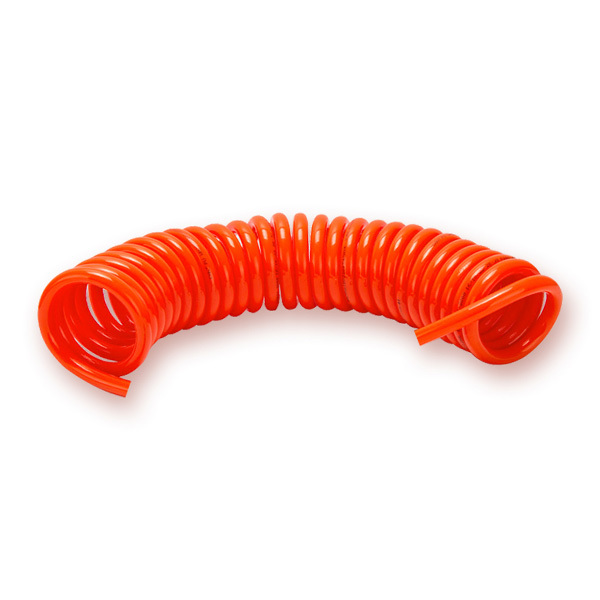
A technical data sheet provides information that helps buyers determine whether a product fits their application. Performance specifications should be reviewed as a group because one property may affect another.
Why is pneumatic tubing tensile strength important?
Pneumatic tubing tensile strength describes the material’s ability to resist pulling forces before failure. It can be useful when evaluating applications where the tube experiences movement, installation stress, or mechanical loads.
However, tensile strength alone does not determine whether a tube is suitable. Engineers should also review flexibility, bend radius, pressure requirements, and installation conditions.
For example, a tube used in automated equipment with repeated movement may require a different balance of properties compared with a fixed pneumatic connection.
How does bend radius affect tube installation?
Bend radius refers to how much the tubing can be bent without compromising the performance of the tube. This parameter becomes important when the equipment has to be compactly designed due to the available installation space.
Overbending a tube will cause stress points, decreased flow efficiency, or even the connection area.
It is important for the engineers to consider the installation space before buying the tubing, and to compare the available space with the bend radius specified in the datasheet.
How should buyers evaluate temperature and chemical resistance?
Pneumatic tubing often operates in environments where temperature changes, oils, cleaning agents, or industrial chemicals may be present. These conditions should be considered before selecting materials.
Why does temperature range matter for pneumatic tubing selection?
The temperature range listed on a datasheet shows the conditions where the tubing is designed to operate.
A tube used in a cold environment may require different characteristics from one installed near heat sources. Temperature can affect flexibility, pressure capability, and long-term material behavior.
Buyers should compare the datasheet temperature range with the actual equipment environment rather than selecting based only on standard operating conditions.
How should chemical resistance information be used?
Tubing exposure to oils, solvents, gases or any other material should be noted for chemical resistance purposes.
The buyer should determine the media that will be involved and check the material information. For special chemicals, more confirmation may be required from the supplier.
Material compatibility reduces risks such as swelling, cracking, or replacement.
How can buyers avoid mistakes when selecting pneumatic tubing?
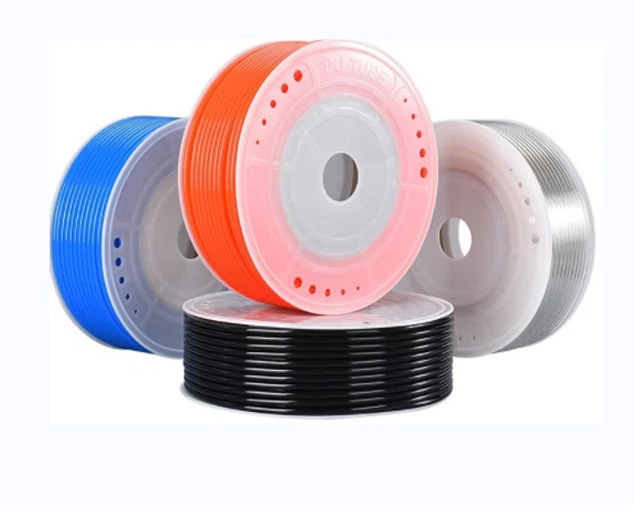
Many tubing problems are not caused by manufacturing defects but by selecting a product that does not match the application.
What questions should engineers ask before placing an order?
Before purchasing, buyers should confirm:
|
Buyer Question |
Purpose |
|
What pressure will the system operate at? |
Match pressure requirements |
|
What temperature conditions exist? |
Confirm material suitability |
|
What fittings are being used? |
Check compatibility |
|
Is the tube moving or fixed? |
Select suitable flexibility |
|
Are chemicals present? |
Evaluate material resistance |
A clear application review helps suppliers recommend more suitable options and reduces unnecessary product changes.
Why should buyers compare supplier documentation carefully?
Different suppliers may present specifications in different formats. Buyers should check whether the listed values refer to the same testing conditions and product structure.
A reliable comparison requires reviewing complete technical information rather than selecting a product based on one specification or a lower price.
How can Yantai Aisili New Material Co., Ltd. support pneumatic tubing selection?
ヤンタイアイスリ新材料株式会社 provides polyurethane pneumatic tubing products for customers requiring pneumatic connection solutions. The company supports buyers through product specification communication, tubing selection discussions, and application-related support based on project requirements. For engineers, distributors, and procurement teams, cooperation may involve reviewing tube dimensions, material characteristics, operating conditions, and delivery requirements. Buyers should still compare tubing specifications, technical documents, pricing, lead time, and service expectations before selecting a supplier.
結論
Interpreting the data sheet for pneumatic tubing is not only about looking at each of the values. It is important to correlate parameters like working pressure, tensile strength, hardness, bend radius, and temperature limits to the conditions in which the tubing will be used. Datasheets of technical characteristics of TPU may aid in the material assessment by purchasers; however, the choice of the material needs to take into account the entire system’s requirements.
よくある質問
1. What is the most important information on a pneumatic tubing datasheet?
The most important information depends on the application, but buyers usually review tube dimensions, working pressure, temperature range, material properties, and fitting compatibility first.
2. How do I read a TPU technical data sheet?
A TPU technical data sheet should be reviewed by comparing material properties, pressure ratings, temperature limits, flexibility, and chemical resistance with the actual operating environment.
3. What does pneumatic tubing tensile strength mean?
Pneumatic tubing tensile strength indicates the material’s resistance to pulling forces. It helps engineers evaluate whether the tube can handle mechanical stress during installation and operation.
4. Why is tubing hardness important?
Tubing hardness affects flexibility, handling, and resistance to deformation. The suitable hardness depends on installation space, movement requirements, and application conditions.
5. How do I choose the correct pneumatic tubing specifications?
Buyers should consider pressure requirements, tube size, temperature conditions, chemical exposure, bend radius, fitting compatibility, and supplier documentation before making a selection.