


Why Nylon-12 Tubing Is the Best Choice for Heavy-Duty Pneumatic Systems
Got a heavy-duty pneumatic setup? Robotic arms pounding away on an assembly line. Or high-pressure air rushing to tools in a packed fabrication shop. Downtime stings bad in these places. A flimsy tube bursts. It kinks. Or it wears out quick under nonstop movement and heavy loads. Nylon-12 tubing handles that abuse without breaking a sweat.
Procurement managers face these issues every day. They hunt for gear that stays solid. No mid-shift failures. No pricey swaps over and over. Nylon-12 brings real muscle. It fights wear. It takes impacts. It holds strong in high-pressure spots with lots of motion. Let’s dig into why it often wins for tough pneumatic jobs.
What Sets Nylon-12 Tubing Apart in Tough Pneumatic Applications?
Nylon-12 goes by PA12 too. It starts with top-grade polyamide granules. Unlike softer stuff like polyurethane, it has a longer carbon chain. That gives it rock-steady sizing. Moisture soak stays tiny—less than 0.5%. So it doesn’t swell or shrink much when humidity jumps around or cold snaps hit.
That counts in actual plants. Imagine a chilly morning in a Midwest factory. Softer tubes might stiffen or puff up a bit from water. Nylon-12 keeps its shape. It stays flexible. No weird pressure drops. No surprise leaks.
Pressure capacity impresses. Common sizes manage 20-30 bar working at room temp. Burst ratings climb to 60-90 bar based on wall thickness. Grab an 8mm OD tube with 1.5mm wall. It takes 30 bar steady. Bursts past 90 bar. Plenty of buffer for heavy air systems where spikes pop up.
Wear resistance comes built-in. The tough surface ignores scrapes against sharp metal or rough drags. In moving setups—think robotic arms hitting millions of cycles—tubes rub nonstop. Nylon-12 lasts longer than many rivals. An automation guy once told me his pick-and-place lines chewed through PU tubes in under a year. Grooves showed up bad. He switched to Nylon-12. Downtime shrank a bunch.
Impact toughness helps in the same spots. Constant starts. Stops. Vibrations. Random bumps. Nylon-12 soaks those hits. It doesn’t crack or stay dented.
Temp swings cover -40°C to +100°C. That fits cold assembly zones and warmer areas near presses or ovens. It shrugs off air, water, oils, and lots of hydrocarbons. Grease splashes or coolant hits don’t wreck it fast.
Core Specs at a Glance
Here’s a table with standard sizes to make sizing quick:
| 部品番号 | OD (mm) | ID (mm) | Wall (mm) | Working Pressure (bar at 23°C) | Burst Pressure (bar at 23°C) | Min Bend Radius (mm) |
|---|---|---|---|---|---|---|
| N12R0427 | 4 | 2.7 | 0.65 | 26 | 78 | 25 |
| N12R0640 | 6 | 4 | 1 | 26 | 78 | 35 |
| N12R0850 | 8 | 5 | 1.5 | 30 | 90 | 45 |
| N12R0860 | 8 | 6 | 1 | 20 | 60 | 55 |
| N12R1075 | 10 | 7.5 | 1.25 | 15 | 45 | 75 |
| N12R1290 | 12 | 9 | 1.5 | 24 | 72 | 70 |
| N12R1613 | 16 | 13 | 1.5 | 12 | 36 | 115 |
| N12R2016 | 20 | 16 | 2 | 14 | 42 | 140 |
These figures offer good safety margins. Derate a bit for hotter temps or pulsing loads. But the starting point looks sturdy for hard work.
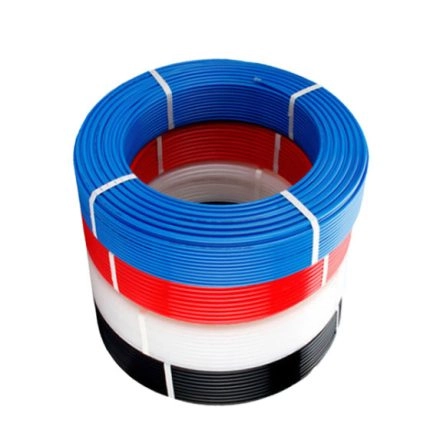
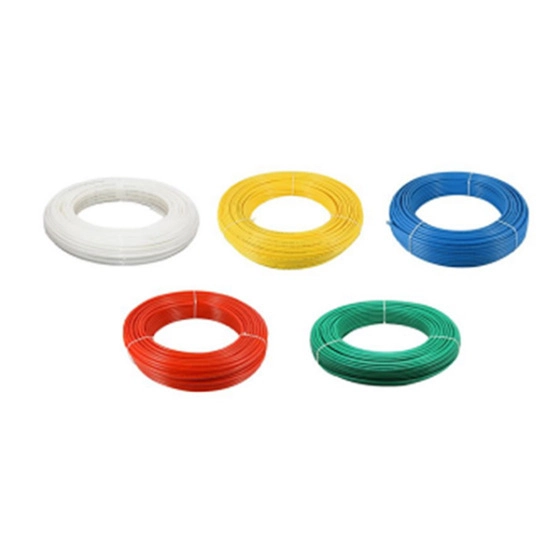
Colors include black, blue, clear, red, yellow, and plenty more. Need an exact match? Pantone works fine.
Real-World Wins in High-Pressure and Dynamic Environments
Heavy pneumatic systems thrive on motion. Robotic weld cells. Auto material handlers. Fast packaging lines. These beat up tubing hard.
In an auto parts factory, high-pressure air fed clamp cylinders on a transfer line. Old tubes fatigued after 18 months of endless cycling. They went to Nylon-12. Life stretched past three years. Wear stayed minimal. The firmer feel kept routing neat—no droops or wild whipping.
Abrasion hits quick in drag chains or carriers. Nylon-12’s rugged outside fights scuffing better. Shops mention way fewer tiny leaks from outer damage.
For impacts, picture tools dropping or parts knocking lines. Nylon-12 springs back. Brittle stuff cracks easy.
High pressure shows in boosted circuits or hydraulic returns. Burst ratings give peace of mind—often double or triple softer tubes.
Low water pickup keeps things steady outdoors or in wash-down spots. No swelling to loosen fittings down the road.
Making the Switch: Practical Tips for Buyers
Size it right. Match OD and wall to flow and pressure needs. Tight bends? Look at min radius. Don’t push smaller or kinks creep in over time.
Use solid fittings. Push-to-connects grip Nylon-12 tight because of its firmness. That hold lasts through shakes.
Upfront cost might top basic PU. But add longer life. Fewer changes. Skipped downtime. In busy lines, payback hits fast.
Lots of buyers test a section in the roughest area first. Run it hard. Watch cycles or wear. Results usually convince quick.
Introducing Aisili Pneumatic: Your Go-To for Reliable Pneumatic Solutions
Aisili 空気 stands out as a professional manufacturer dedicated to the development and production of polyurethane pneumatic tubing and related pneumatic materials. Since kicking off in 2007, they’ve honed their craft in creating high-performance products that tackle real-world industrial challenges. With two state-of-the-art facilities in Shandong, China, and seven advanced extrusion lines, they churn out consistent, durable tubing tailored for automation, robotics, and beyond. Their focus on quality shines through in every coil, backed by international standards like RoHS and REACH. Whether you need custom sizes or specialized features, Aisili delivers with a global reach spanning over 30 countries, making them a trusted partner for B2B needs.
Conclusion
Bottom line, Nylon-12 tubing packs serious perks for heavy-duty pneumatic systems. It stands tall against high pressure. It fights off wear. It takes hits without quitting. It stays steady through tons of motion and rough conditions. Procurement managers chasing dependable runs without endless trouble find it checks the marks. Think about slipping it into your next spec. The gains in uptime and lighter maintenance often catch even doubters off guard.
FAQs
Why pick Nylon-12 tubing over polyurethane for high-pressure pneumatic setups?
Nylon-12 tubing takes higher working and burst pressures—usually 20-30 bar steady with bursts up to 90 bar in regular sizes. It beats abrasion in moving spots. Low moisture soak keeps sizing rock solid. Polyurethane bends nice but wears quicker under big loads or steady rubbing.
How does Nylon-12 tubing perform in frequent-motion robotic applications?
Robotic arms and high-cycle automation love Nylon-12. It brings tough impact strength and abrasion resistance. It avoids kinks in drag chains. It endures millions of bends. Shops get longer service and fewer breakdowns than with softer stuff that tires out fast.
What pressure ratings can I expect from Nylon-12 tubing in heavy-duty use?
Ratings shift by size. But typical working pressures land 15-30 bar at room temp. Burst pressures run 45-90 bar. An 8x5mm size often hits 30 bar working and 90 bar burst. Check exact numbers. Drop them a bit for heat or pulsing.
Does Nylon-12 tubing hold up well against chemicals and oils in industrial environments?
Sure does. Nylon-12 resists oils, hydrocarbons, and many chemicals strong. It runs fine where lubricants or coolants splash. Low water absorption stops swelling that messes with seals.
Is Nylon-12 tubing a good choice for low-temperature heavy-duty pneumatic lines?
You bet. It stays bendy and strong down to -40°C. No stiffening or cracking like some tubes. That suits cold storage automation or outdoor winter jobs where temps tank.