


304 vs 316 Stainless Steel Push-to-Connect Fittings: Which Grade Fits Your Pneumatic System?
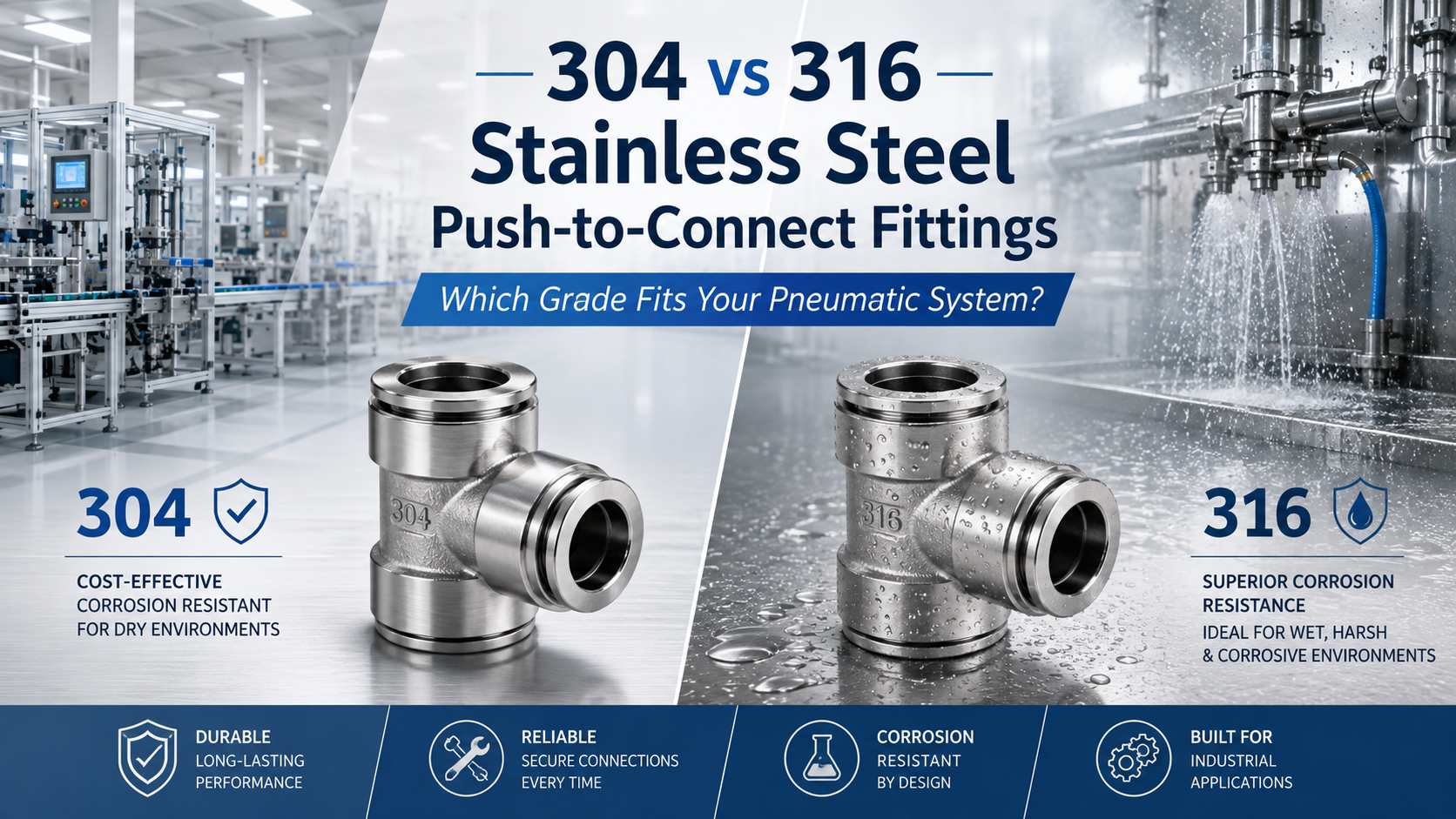
Picking stainless steel push-to-connect fittings often begins with a basic question. Will you use 304 or 316? This choice gets complicated after you install the part on actual machinery. Dampness, strong cleaners, and tube stiffness affect how long the part lasts. Thread styles, pressure shifts, and upkeep schedules also play a huge role. The metal body might fight off rust perfectly. Meanwhile, the inner seal or the tube itself might fail first. OEM engineers and factory buyers must view the metal type as just one detail of the whole joint. It is not the only rule to follow. The best option handles the real surroundings well. It does this without adding extra expenses that your project ignores.
Which Stainless Steel Grade Matches the Actual Working Environment?
Both 304 and 316 are very popular austenitic stainless steels. However, makers do not design them for the exact same settings. Buyers must figure out what touches the joint during daily work. They should do this before they look at prices.
When is 304 stainless steel usually enough?
You should look into 304 stainless steel push-to-connect fittings for indoor machines. They also work well in automatic gear and basic control setups. These parts fit nicely in places where rust risks remain fairly low.
A dry plant is quite different from a unit that gets a chemical wash every day. In the dry setting, the joint mostly just moves compressed air. It only deals with basic air moisture, normal dust, and rare wipe-downs. Spending extra money for peak rust defense will not bring any real daily benefits here.
This exact situation makes 304 a smart business choice. It gives the tough build you expect from a metal part. At the same time, it keeps your spending much lower than 316.
Your final choice must look past just the room temperature and air. Water drops inside the gear can cause trouble. Wet washing methods and nearby harsh fluids also matter a lot. Putting the system outside will shift your needs very fast.
When does 316 become the safer choice?
The 316 metal has molybdenum inside it. This extra element offers stronger defense in many harsh spots. This upgrade becomes vital when pneumatic fittings face strong washing fluids. It also helps against salty ocean breezes, specific chemical tasks, and constant wet conditions.
The key term to remember here is exposed.
A buyer might pick 316 just because a tool runs inside a food plant. Yet, the right call must rely on the true washing fluids used. It must also match the exact daily setting. You should never rely on the broad industry name alone.
Standard 316 stainless steel push-to-connect fittings usually carry a higher price tag. This extra charge makes sense under certain conditions. For instance, swapping out rusty parts might cause long machine stops. It is also worth the money if the joints sit in hard-to-reach spots or need constant repair trips.
Which Specifications Matter Besides 304 or 316 Stainless Steel?
The metal type gets a lot of focus. People like to compare it easily on a price quote. However, the physical sizes and the hidden inner parts matter just as much. They will often create sudden setup issues on the factory floor.
How should tube size and tube material be matched?
Push-to-connect pneumatic fittings generally form a tight seal around the outer wall of the pipe. Therefore, the tube outside diameter stands as a primary detail to check first.
A joint built for 8 mm tubing must pair with a true 8 mm OD tube. Shoppers must never swap in an inch-based size that looks close. The tiny gap will cause big leaks.
The actual tube material plays a huge role too.
Standard ท่อลมโพลียูรีเทน bends easily. Workers use it often when layout room is very tight. On the other hand, nylon tubing feels much stiffer. Other pipe types will show unique firmness levels. They also bring distinct surface textures and size limits.
These varied traits change how the metal teeth grab the plastic line. They also alter how the inner rubber ring touches the pipe wall.
You must test sample fittings carefully for any OEM project. Always use the exact production tubing for these trials. Do not grab a random hose just because it shares the same listed OD.
Why does thread identification cause so many purchasing errors?
The pipe end of the joint might fit perfectly. Meanwhile, the threaded base could be completely wrong.
Threads like NPT, R or BSPT, G or BSPP, and metric types look very alike in pictures. Simple text labels like “1/4 inch” fail to promise a safe fit. You need more details.
Buyers must supply the full thread details. They should pull this exact data straight from the official machine plans.
The physical shape of the joint is highly important. A male straight connector, male elbow, union, reducer, tee, or bulkhead fitting tackles a unique routing task. Picking a bad body style can force extreme pipe bends. It can also block repair access later. This happens even if both port sizes match perfectly.
Why Can Stainless Steel Push-to-Connect Fittings Still Leak or Fail?
Stainless steel fixes many raw material issues. It does not stop human setup mistakes. It also cannot fix weak rubber seals or damaged plastic lines.
You must learn how a push-to-connect joint truly functions. This knowledge makes finding leaks much quicker.
What happens inside the fitting after the tube is inserted?
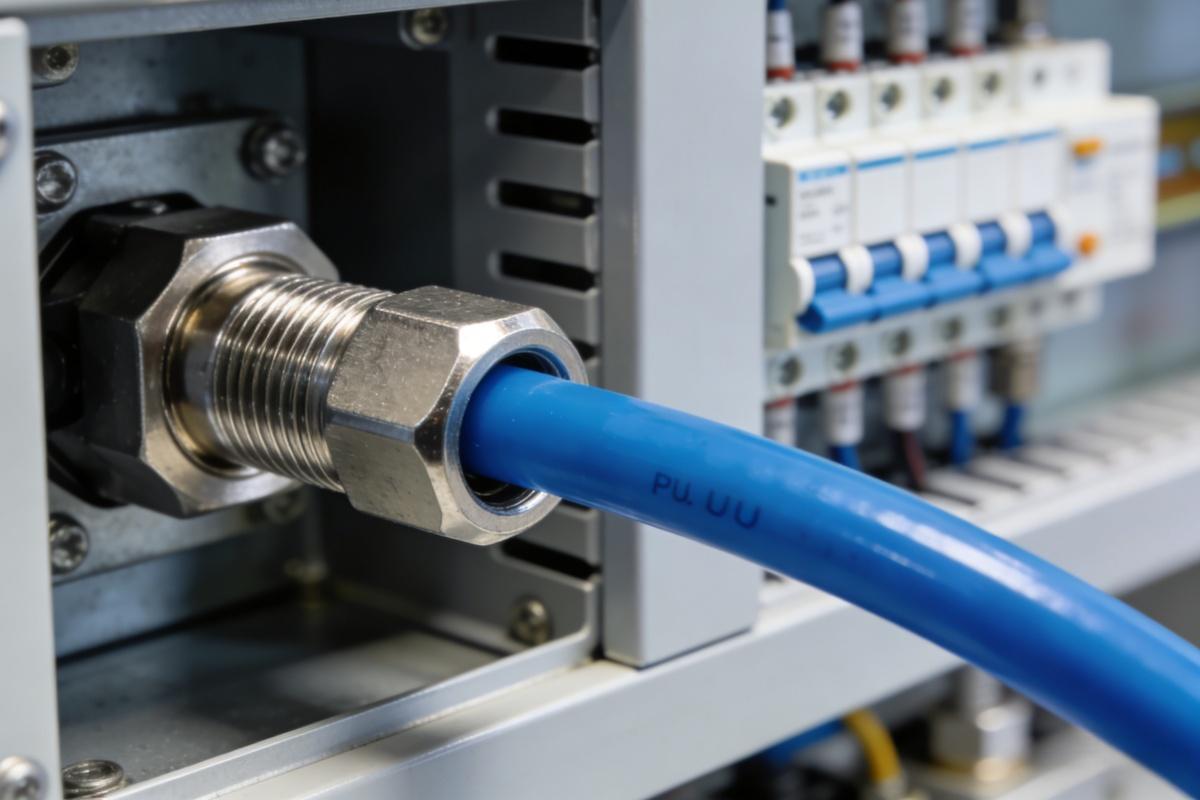
A pipe goes into a push-to-connect fitting and moves past a set of metal teeth. It then enters a tight sealing zone. The metal claws stop the line from slipping backward. At the same time, the hidden ring squeezes the outer pipe wall.
This whole setup relies heavily on a neat, properly sized hose.
A worker might slice the pipe at a slant. The line could suffer deep scratches near the rubber ring. Someone might fail to push the hose all the way down. In these cases, air will escape. This happens even if the metal part has zero factory flaws.
A gentle tug after you push the line in helps a lot. Repair staff must also avoid folding the line right at the exit port. Steady side pressure places bad stress on the whole joint.
Can the seal become the limiting component?
Yes, it absolutely can.
A tough metal shell might survive a harsh room. However, the soft inner ring might break down fast. You must look closely at heat levels and the flowing fluid. Strong washing soaps and long exposure times demand your focus too.
This detail holds massive weight. It matters most when a user pumps something other than basic shop air.
Your system might flow water, thin oil, or special gas. If so, the vendor must know the exact daily working facts. The phrase “stainless fitting” does not promise a perfect match. It does not mean the inner rubber handles every single liquid.
This exact rule covers heat levels as well. The safe heat span of the combined metal-and-plastic pair is crucial. It matters much more than the melting point of the bare steel.
How Should Buyers Check Fitting Quality Before a Volume Order?
A shiny sample on an office desk proves very little. It cannot show how thousands of parts will act on a busy factory floor.
A smart testing plan must copy real life. It should mimic the exact way workers will attach the pieces.
What should be checked during sample approval?
You must begin with simple physical sizes.
Check the pipe hole width, thread style, and thread pitch. Measure the total length and the needed wrench space. You must test elbow or tee fittings carefully. Make sure the metal body turns freely. It must not hit nearby valves, flat walls, heavy bolts, or other pipes.
Next, link the test piece with the planned factory hose.
Feel how smooth the line goes in. Test how tight the teeth hold the plastic. Press the top ring to see if it lets go easily. Watch for escaping air under normal daily pressures. You should plug and unplug the line many times. Do not just do it once.
Looking closely at the part is highly vital. Search for scratched inner walls or jagged outer threads. Spot any sharp metal flakes or dirty spots. Check for messy cutting marks near the working zones.
Some buyers have strict metal rules for 304 and 316 stainless steel fittings. They must ask the maker how they sort and prove the two types. Just looking at the shiny surface cannot safely confirm the exact metal blend.
What should procurement ask about batch consistency?
That first perfect test piece is just the start.
Big factory runs demand strict checks on raw metals, sizes, and threads. They also need tight rules for rubber rings, putting parts together, final tests, and boxing. A buying team must know what shifts the maker allows later. They must learn how the vendor shares these updates.
This fact carries heavy weight. It matters deeply when the joint enters a locked OEM parts list.
A vendor might swap the rubber ring or change the cutting tools. They might sneak in a cheaper metal. You will not see these shifts from the outside. However, they will alter how the part fits or how long it survives.
Making the exact same part every time defines true quality. It goes far beyond the success of a single desk sample.
When Is Paying More for 316 Stainless Steel Commercially Justified?
The buying choice gets much simpler over time. Buyers just need to stop asking which metal is broadly “better.” Instead, they must calculate the true price of a broken machine.
When can 304 reduce unnecessary purchasing cost?
Imagine an air system running inside a tidy indoor plant. It moves standard compressed air. It faces zero harsh soap washes. Workers can reach it easily for quick repairs.
In this exact setting, 304 stainless steel usually works perfectly. It gives the rust defense and physical strength that the daily task demands.
Picking 316 for every single port will drive up your parts bill. It will do this without extending the actual lifespan of the machine.
This price gap grows huge in OEM settings. It hits hard when a factory installs many thousands of joints every single year.
When can 316 reduce lifecycle risk?
Now picture a machine working in a damp or harsh space. In this spot, swapping a broken joint forces the whole plant to stop.
The buying math shifts completely here.
The money gap between 304 and 316 looks very tiny now. It is small compared to paying repair staff or losing daily output. Taking the machine apart and running new pipes costs far more.
This does not mean 316 promises endless life in all cases. The fluid match, rubber type, and pipe health still hold power. The skill of the worker matters deeply too.
It simply means you must weigh the metal price against the risk of a factory halt.
Buying teams should follow facts. The best choice always rests on true daily room conditions. It should never rely on a lazy habit like “we always buy 316.”
How Can Yantai Aisili New Material Co., Ltd. Support Pneumatic Connection Projects?
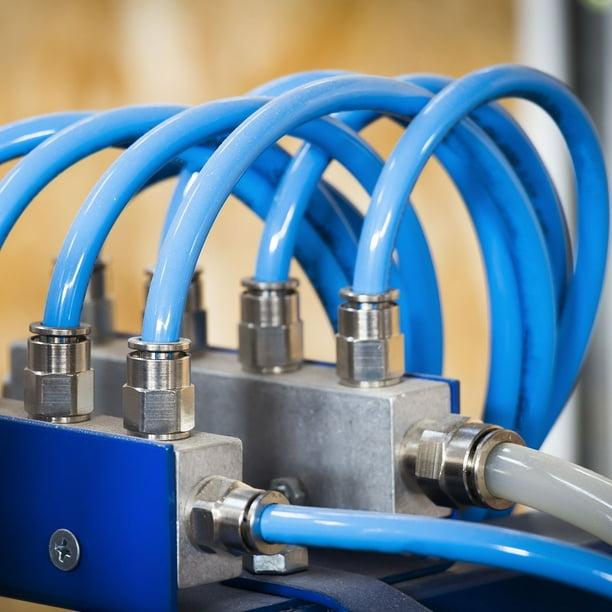
Yantai Aisili บริษัท วัสดุใหม่ จำกัด provides high-quality polyurethane pneumatic tubing. They also offer multi-material pneumatic tubing and matching air joint goods for factory setups. Their factory builds pipes in many sizes, firmness grades, and colors. They provide strong OEM and ODM help for custom project needs. The business runs large plants in Shandong. They use several modern extrusion lines to create air lines. Shoppers often buy hoses and push-to-connect fittings at the same time. These buyers can talk about pipe OD, plastic types, and joint shapes all at once. They can review thread needs and room conditions together. This turns separate parts into one smart, unified system.
บทสรุป
Picking between 304 and 316 stainless steel push-to-connect fittings must start with true daily facts. The 304 metal acts as a smart pick for basic factory setups. Meanwhile, 316 needs serious thought when harsh rust threats exist. Still, neither steel type will fix a bad pipe OD or a wrong thread pitch. They cannot save a weak rubber ring or sloppy worker habits. Smart buyers map out the entire joint system first. They test early pieces using real factory hoses. These careful steps prevent sudden air leaks and blocked schedules. They also stop useless spending on overly fancy metals.
คำถามที่พบบ่อย
1. Are 316 stainless steel push-to-connect fittings always better than 304 fittings?
No, they are not. The 316 style gives stronger rust defense in harsh spots. However, 304 often handles clean indoor air tools perfectly well. The right pick relies on exact room threats and total long-term spending.
2. Can 304 stainless steel pneumatic fittings be used in wet environments?
They work fine in certain damp spaces. Yet, you must check how often they get wet. You must review the cleaning soaps, salt levels, and heat. Look at repair access before you trust 304 to block rust safely.
3. Can stainless steel push-to-connect fittings work with polyurethane tubing?
Yes, they can. The specific joint just needs to match the pipe’s exact outside diameter. It must also suit the plastic type. You must review line stiffness, size limits, and air pressure. Always confirm heat ranges and joint details before you buy.
4. Why can a new stainless steel push fitting leak immediately after installation?
Frequent reasons include a half-pushed pipe or a slanted cut. Scratches on the plastic wall or a bad pipe OD will cause trouble. Heavy side pressure and wrong thread types also create leaks. A poor sealing tape job on the base is another main factor.
5. What information should buyers send when requesting stainless steel pneumatic fittings?
You should share the exact pipe OD and plastic type. List the joint shape, thread style, and thread pitch. State if you need 304 or 316 metal. Mention the flowing fluid, air pressure, and heat levels. Finally, note your total count and any strict testing paper needs.