


How to Prevent Pneumatic Quick Coupler Mismatches in Workshop Air Systems
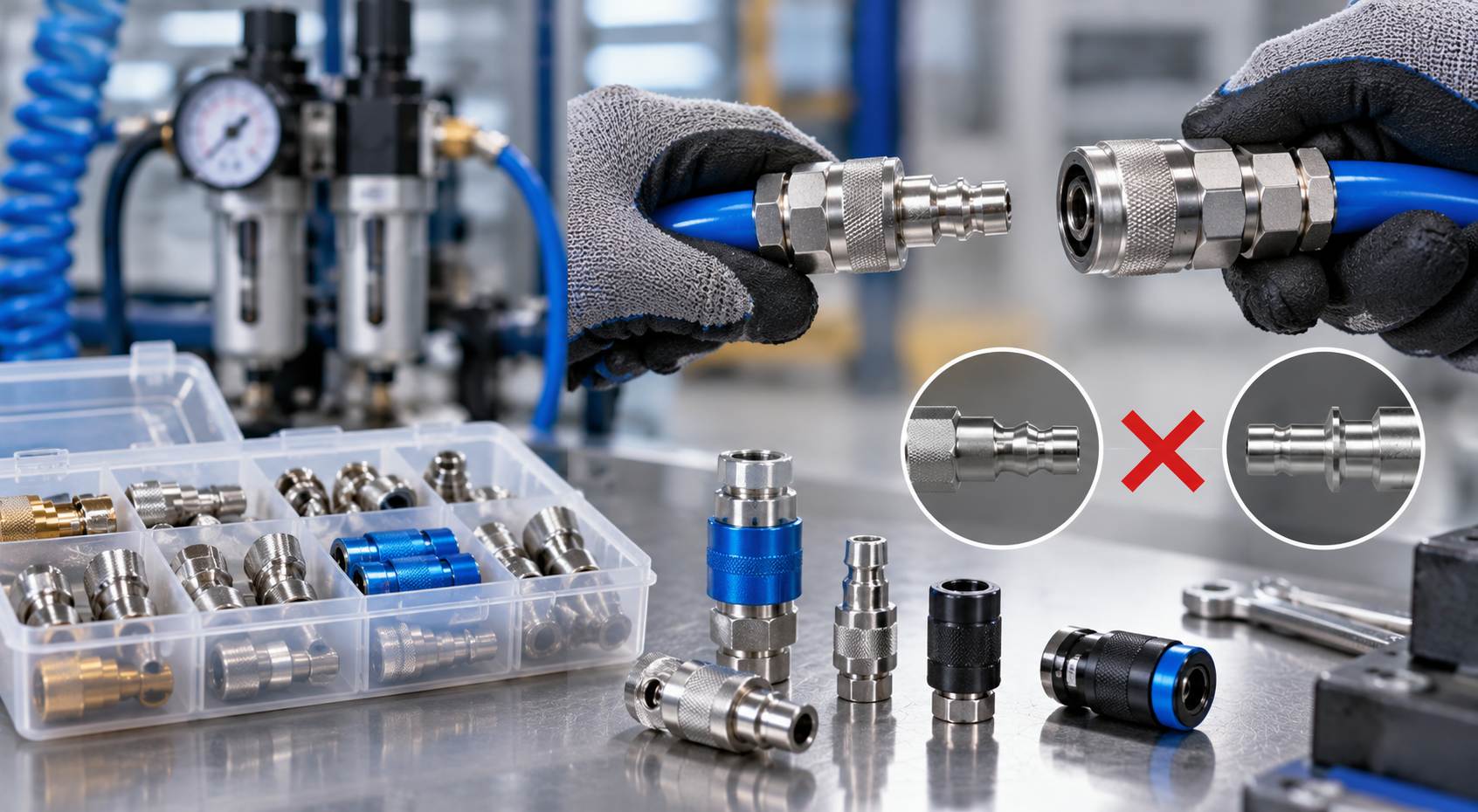
A pneumatic quick coupler should be selected by coupling profile, connection end, hose or tool interface, and service conditions—not by appearance alone. Two couplers can look almost identical yet fail to connect because the plug geometry differs, while a correct profile can still be the wrong purchase if the threaded or hose-barb end does not match the equipment. For maintenance buyers and OEM engineers, the practical challenge is standardization: define a compatible interface, document the end connection, and verify the complete socket-and-plug pair before volume purchasing. That approach reduces mismatched spares and air-line rework.
Why Do Pneumatic Quick Couplers That Look Similar Fail to Interchange?
Quick couplers depend on matched socket and plug geometry. The locking sleeve, retention parts, and plug profile must work together, so visual similarity does not prove compatibility. Confusion is common when plants inherit mixed brands or undocumented workshop air lines.
Why is the plug profile more important than appearance?
A plug must enter the socket correctly and engage the locking mechanism. A different profile may stop early, feel loose, or fail to lock even when the outside diameter seems close. Keep a known compatible socket and plug as reference samples when drawings or model numbers are unavailable.
The C Type Quick Couplers category is useful for defining a coupling family, but the purchasing document should still identify the nominal series and mating interface. A category name should narrow the search; it should not replace physical or dimensional verification.
Which End Connection Should Be Chosen for the Air Tool or Hose?
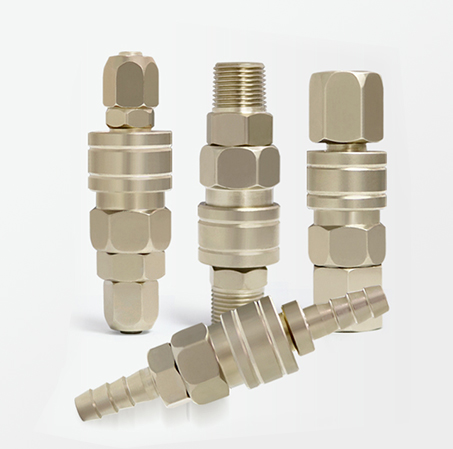
After the coupling profile is fixed, decide how the coupler joins the pneumatic system. Male-thread, female-thread, and hose-barb ends solve different installation problems, and the wrong choice often creates unnecessary adapters.
When is a threaded end appropriate?
Threaded ends suit compressor outlets, valves, manifolds, or air tools. State the full thread standard and size rather than only a nominal diameter. Similar-looking pipe threads can use different geometry or sealing methods, so the equipment drawing should control the purchase.
When does a hose-barb end make more sense?
A hose-barb connection is intended for flexible hose. The hose inside diameter, wall construction, barb size, and clamping method need to be considered together. If reinforced flexible hose is part of the system, buyers can review ท่อลมหลายวัสดุ options before approving the coupler interface.
Adding adapters simply to rescue a wrong end connection increases part count and creates more places to inspect. It is usually better to define the equipment-side connection before issuing the quotation request.
How Should a Plant Standardize Quick Couplers Across Multiple Workstations?
Workshops often accumulate different plugs as hoses and tools are replaced over time. The result can be a cabinet full of similar-looking parts that do not connect. Standardization is therefore a purchasing-control issue as much as a maintenance issue.
What should be included in the plant standard?
Start with the approved coupling profile, nominal size, and connection-end options. Then record which plug is fitted to each tool class and which socket is used on fixed air lines or hose drops. If exceptions are unavoidable, identify them visibly so operators do not force incompatible parts together.
A useful standard also defines replacement references, inspection points, and substitution approval. The broader อุปกรณ์และแอมป์ ตัวเชื่อมต่อ range can help teams separate quick-coupling functions from permanent fittings, reducers, branches, and other connectors in a plant-wide parts list.
Standardization also lets buyers compare quotations against the same technical description instead of a photograph or workshop nickname.
What Should Buyers Check During Quick Coupler Sample Approval?
Test the sample as a complete connection, not as an isolated socket or plug. Fit, locking action, release behavior, end connection, and condition after repeated use all matter.
Inspect the plug for damage or contamination, insert it straight into the socket, and confirm positive locking. Repeatedly connect and disconnect the sample with the intended hose or tool arrangement; one successful bench connection is not enough.
| Approval Item | What the Buyer Should Confirm |
|---|---|
| Coupling profile | Socket and plug are the same approved family |
| End connection | Correct male thread, female thread, or hose barb |
| Locking action | Positive engagement without excessive force |
| Release action | Controlled disconnection with practical sleeve access |
| Condition | No burrs, contamination, or visible damage |
| System fit | Works with the intended hose, tool, or fixed outlet |
If disconnection occurs on a flexible hose, the procedure should account for stored pressure and hose movement. The system design should define how air is isolated before routine disconnection.
What Information Makes a Quick Coupler RFQ Easier to Compare?
A precise RFQ prevents suppliers from pricing different interfaces under the same general description and gives buyers a reusable record for future spare-part orders.
Specify the coupling family or approved reference sample, socket or plug requirement, nominal size, connection-end style, full thread specification where applicable, hose size for barbed versions, working medium, operating conditions, quantity, and packaging or identification needs. If the coupler will be used with handheld tools, describe the tool type and hose arrangement because weight, access, and handling frequency may influence the preferred configuration.
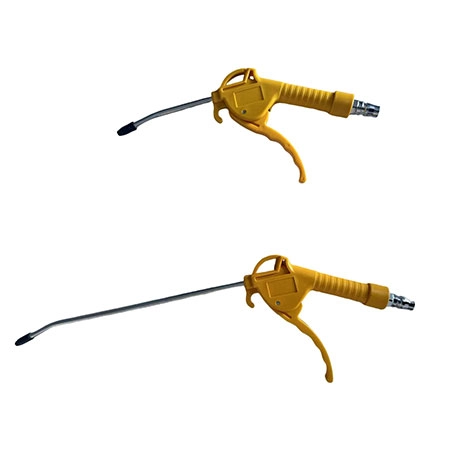
For systems with blow-off stations, buyers can review air blow gun configurations alongside the coupler standard. The full product range can also help consolidate neighboring pneumatic components under one documented purchasing specification.
Need Help Standardizing Quick Couplers for Workshop Air Systems?
Yantai Aisili บริษัท วัสดุใหม่ จำกัด was founded in 2007 and operates two manufacturing facilities in Yantai and Linyi, Shandong, with seven extrusion production lines focused on polyurethane pneumatic tubing and related materials. Its OEM/ODM work includes tubing size, hardness, color, and performance requirements, supporting projects where hoses, tubes, and connectors must be specified together. For detachable workshop air connections, the ข้อต่อปลดเร็วแบบนิวแมติกชนิดล็อคตัวเอง C is offered with male-thread, female-thread, and hose-barb connection options and uses a matching socket-and-plug locking interface. Buyers should confirm the mating profile, nominal size, end connection, hose or tool interface, and sample approval criteria before placing repeat orders.
บทสรุป
Quick coupler problems are often specification problems rather than complex failures. The key controls are a verified socket-and-plug profile, the correct threaded or hose connection, plant-wide standardization, and a sample test that reflects repeated use. Procurement teams should avoid buying from photographs or generic size labels alone. A documented coupling family, end connection, reference sample, and replacement rule gives maintenance staff a clearer basis for stocking spares.
คำถามที่พบบ่อย
1. Are pneumatic quick couplers from different brands automatically interchangeable?
No. Similar-looking couplers may use different plug profiles, locking dimensions, or nominal series. Buyers should verify the socket-and-plug interface with drawings, a known compatible reference, or a physical sample before approving a replacement from another source.
2. Should I choose a male-thread, female-thread, or hose-barb quick coupler?
Choose the end style according to the equipment connection. Threaded ends suit ports on tools, valves, or outlets, while hose-barb ends suit compatible flexible hose. Avoid adding adapters simply because the originally purchased end type was incorrect.
3. What should be checked when a quick coupler will be used with flexible hose?
Confirm hose inside diameter, construction, barb compatibility, clamping method, routing, and the way the hose will be controlled during disconnection. The coupler profile can be correct while the hose-side connection is still unsuitable for the application.
4. Why does a quick coupler connect but fail to lock securely?
The plug may be damaged, contaminated, or from a different coupling profile. Stop using the connection until the socket, plug, and locking action are inspected. Forcing a near-match can damage parts and makes later identification more difficult.
5. What information should a buyer include in a pneumatic quick coupler RFQ?
Provide the coupling family, socket or plug requirement, nominal size, end connection, full thread details or hose size, operating medium, service conditions, quantity, and any identification or packaging requirements. Include a reference sample when interchangeability is uncertain.