


Choosing the Right O-Ring Material for Pneumatic Fittings: NBR, EPDM, or FKM?
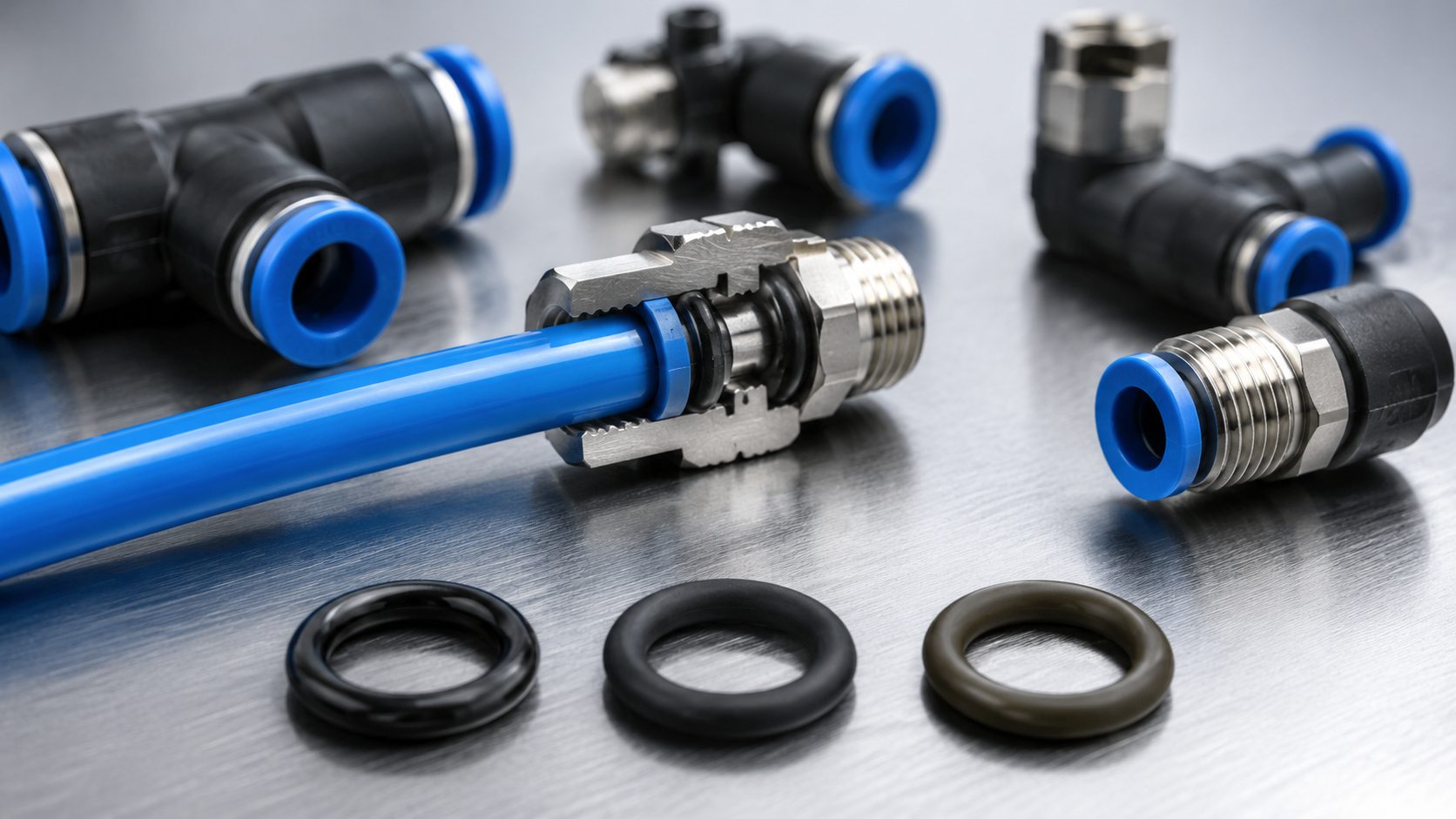
The choice of an O-ring for a pneumatic fitting is primarily dictated by the environment, not the perceived sophistication of the elastomer. NBR is typically used for general compressed-air systems and contact with mineral oil. The use of EPDM is indicated whenever exposure to water, weather, or ozone is a factor, while FKM is the obvious choice for environments with high temperatures, oils, fuels, and aggressive chemicals. However, these categories should be used as a guideline only as the physical properties of the compound itself, plus the amount of compression, temperatures, exposure to lubricants and solvents, materials of construction, and fitting design all play a role in the success of an elastomer under compression.
How Do NBR, EPDM, and FKM Differ in Pneumatic Fittings?
An O-ring has to deform enough to close a leakage path and then maintain contact pressure while temperature, pressure, and surrounding fluids change. Different elastomer families respond differently to oil, water, ozone, heat, and chemicals.
What does a first-pass comparison look like?
The following ranges are useful only for early material screening. Exact service limits vary by compound formulation, hardness, medium, and supplier.
| O-Ring Material | Typical General Screening Range* | Common Strength | Main Selection Risk |
|---|---|---|---|
| NBR | about -30°C to 100°C | Mineral oil and general industrial air | Ozone, weathering, higher heat |
| EPDM | about -50°C to 150°C | Water, ozone and weathering | Petroleum oils and fuels |
| FKM | about -20°C to 200°C | Heat, oils and many chemicals | Cost and some low-temperature/steam conditions |
*These are broad reference ranges, not fitting product ratings. Final limits must come from the exact seal compound and complete fitting specification.
A buyer should therefore begin with operating medium and temperature, then narrow the elastomer choice. Upgrading from NBR to FKM without identifying the actual exposure may increase cost without solving the real problem.
When Should NBR Be Selected for Pneumatic Fittings?
NBR, or nitrile rubber, is widely used in industrial sealing because it offers a practical balance of oil resistance, mechanical properties, availability, and cost. It is often a sensible starting point for ordinary factory compressed-air systems.
Which applications usually favor NBR?
Indoor automation, packaging equipment, assembly machines, control cabinets, and valve systems operating at moderate temperature may fit an NBR-based sealing design. Systems with mineral-oil exposure or compressor lubricant can also make NBR worth considering.
A typical push fitting such as the وصلة تخفيض سلسلة PG مستقيمة للتوصيل بالضغط still needs to be assessed as a complete connection. Tube OD, tube material, pressure, temperature, and seal compatibility matter together; the fitting shape alone does not determine the correct elastomer.
When should buyers question an NBR specification?
NBR deserves closer review when the equipment operates outdoors, near significant ozone exposure, at higher temperatures, or around chemicals outside the compound’s compatibility range. Long-term heat can also increase hardness or compression-set concerns.
If a supplier quotation states only “NBR O-ring,” ask whether that means a defined compound, hardness, and approved temperature range. Two nitrile compounds can have different behavior even when both carry the same general polymer name.
When Is EPDM a Better O-Ring Choice?
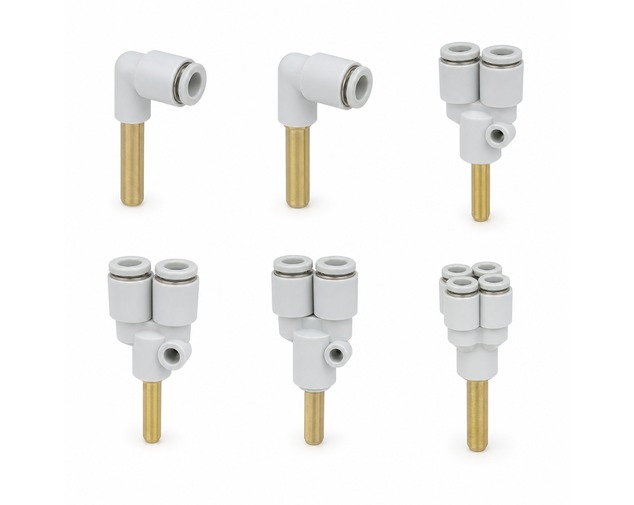
EPDM is often considered where water, hot water, weathering, and ozone exposure matter more than resistance to petroleum-based oils. That makes it relevant to some wet industrial environments and equipment exposed to outdoor conditions.
Which environments make EPDM attractive?
Water-related pneumatic or auxiliary systems, humid areas, outdoor machinery, and selected washdown environments may justify evaluating EPDM. Its resistance to weathering and ozone can be an advantage where an exposed seal would age poorly with another elastomer.
That does not mean every wet machine needs EPDM. Cleaning chemicals and temperature still need to be identified. “Washdown” can describe anything from a cool-water rinse to a hot chemical sanitation process.
Why does oil exposure need special attention?
EPDM generally should not be chosen where petroleum oils or fuels are a significant part of the operating environment. Lubricated compressed air is therefore worth checking before approving it.
The fitting body can introduce another compatibility question. The guide to PBT vs PA vs Brass for push-to-connect fittings explains how body material responds differently to temperature, moisture, chemicals, and mechanical load. O-ring and body selection should be reviewed together when conditions are demanding.
When Does FKM Justify Its Higher Cost?
FKM is usually considered when temperature, oils, fuels, or chemical exposure push beyond what a general-purpose NBR or EPDM compound can comfortably handle. Its value appears when the application actually needs those properties.
Which conditions make FKM worth evaluating?
Equipment near higher-temperature processes, fittings exposed to certain oils or fuels, and chemically demanding industrial systems may justify FKM. It can also be considered where long-term sealing stability at elevated temperature is more important than minimum component cost.
A standard indoor compressed-air circuit at modest temperatures offers a different buying scenario. For example, if NBR already satisfies the pressure, temperature, lubricant, and service-life requirements, you might not be able to justify the purchase of FKM on the basis of its superior temperature resistance.
What limitations should buyers remember?
FKM is not universally resistant to every fluid. Certain steam conditions, amines, ketones, or other chemicals may require a specially formulated grade or another elastomer. Low-temperature flexibility can also become a consideration.
This is why “FKM O-ring” is still incomplete as an engineering specification. Ask what exact compound was evaluated, at what temperature, and against which medium.
What Should Buyers Verify Before Approving an O-Ring Material?
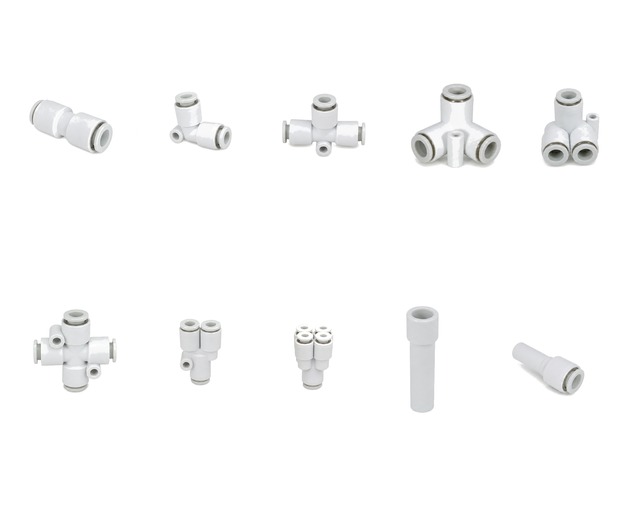
The elastomer family is only the first decision. Hardness, dimensions, compression set, tube condition, lubricant, and seal-groove geometry can all change leakage performance.
Which fitting and tube details belong in the RFQ?
For push-to-connect fittings, the O-ring seals around tubing whose OD and surface condition affect compression. Flexible أنابيب هوائية من البولي يوريثان may interact with the seal differently from a stiffer nylon tube.
A useful RFQ should state:
-
operating medium and whether compressed air is lubricated;
-
minimum, normal, and maximum temperature;
-
normal pressure and expected pressure peaks;
-
cleaning agents or external chemicals;
-
tube OD and tube material;
-
O-ring family or required compound;
-
fitting body material and thread;
-
expected quantity and qualification tests.
Buyers comparing fitting geometries can use the التجهيزات & موصلات category to identify the required straight, elbow, union, reducer, or flow-control configuration before the seal is finalized.
How should samples be qualified?
Test production-intent fittings with the actual tubing and operating medium where practical. Initial inspection should cover seal condition, tube insertion, retention, thread fit, and leakage. If temperature or chemical exposure drove the material choice, those conditions should be included in qualification.
For repeat production, document the approved elastomer specification and determine whether a compound or hardness change requires buyer notification. An O-ring can look identical after a formulation change while compression set, chemical compatibility, or temperature behavior has changed.
How Can Yantai Aisili New Material Co., Ltd. Support Pneumatic Fitting Selection?
يانتاي Aisili المواد الجديدة المحدودة supplies polyurethane and multi-material pneumatic tubing together with fittings for industrial pneumatic systems. OEM and distributor inquiries can include tube OD and material, fitting configuration, thread, operating medium, pressure, minimum and maximum temperature, lubricant exposure, cleaning chemicals, required seal material, quantity, and sample-testing needs. Providing those conditions before component approval allows tubing, fitting geometry, and the sealing interface to be reviewed together. Buyers preparing repeat orders can also define drawing, packaging, labeling, inspection, and change-notification requirements so future production is compared with the same approved configuration instead of relying only on a generic material description.
خاتمة
NBR, EPDM, and FKM each solve a different sealing problem. NBR is often practical for general compressed air and oil exposure, EPDM deserves consideration around water, ozone, and weathering, while FKM becomes useful when higher heat or demanding chemical conditions justify it. Final selection should be based on the exact compound, not only the elastomer family. Before volume purchasing, test the seal with the intended fitting, tubing, medium, temperature, and pressure, then freeze the approved specification for repeat orders.
الأسئلة الشائعة
1. Is NBR suitable for most standard pneumatic fittings?
NBR is suitable for a wide variety of industrial compressed-air systems operating at moderate temperatures contaminated with mineral oil. Its suitability depends on the combination of chemicals, pressure, temperatures, lubrication, and the application in which it is used.
2. Is EPDM better than NBR for wet pneumatic equipment?
EPDM often provides stronger water, ozone, and weathering resistance, but it is generally less suitable around petroleum oils. Check compressor lubricant, cleaning chemicals, temperature, and actual fluid exposure before choosing it.
3. When should FKM be selected for a pneumatic fitting?
FKM is worth evaluating when higher temperatures, oils, fuels, or particular chemical exposures exceed the desired capability of NBR or EPDM. The exact FKM compound should still be checked against the application.
4. Can O-ring material be selected only from operating temperature?
No. Temperature is only one factor. Medium, lubricant, cleaning chemicals, ozone exposure, pressure, hardness, compression set, tube material, and fitting geometry can all affect sealing performance and service life.
5. What information should buyers send when specifying an O-ring?
Provide the operating medium, pressure, temperature range, lubricant or chemical exposure, tube material and OD, fitting configuration, requested elastomer, test conditions, documentation needs, and expected production quantity.