


Wie verstärkte PVC-Schläuche dazu beitragen, Ausfälle von Druckluftleitungen in Werkstätten und Fabriken zu reduzieren
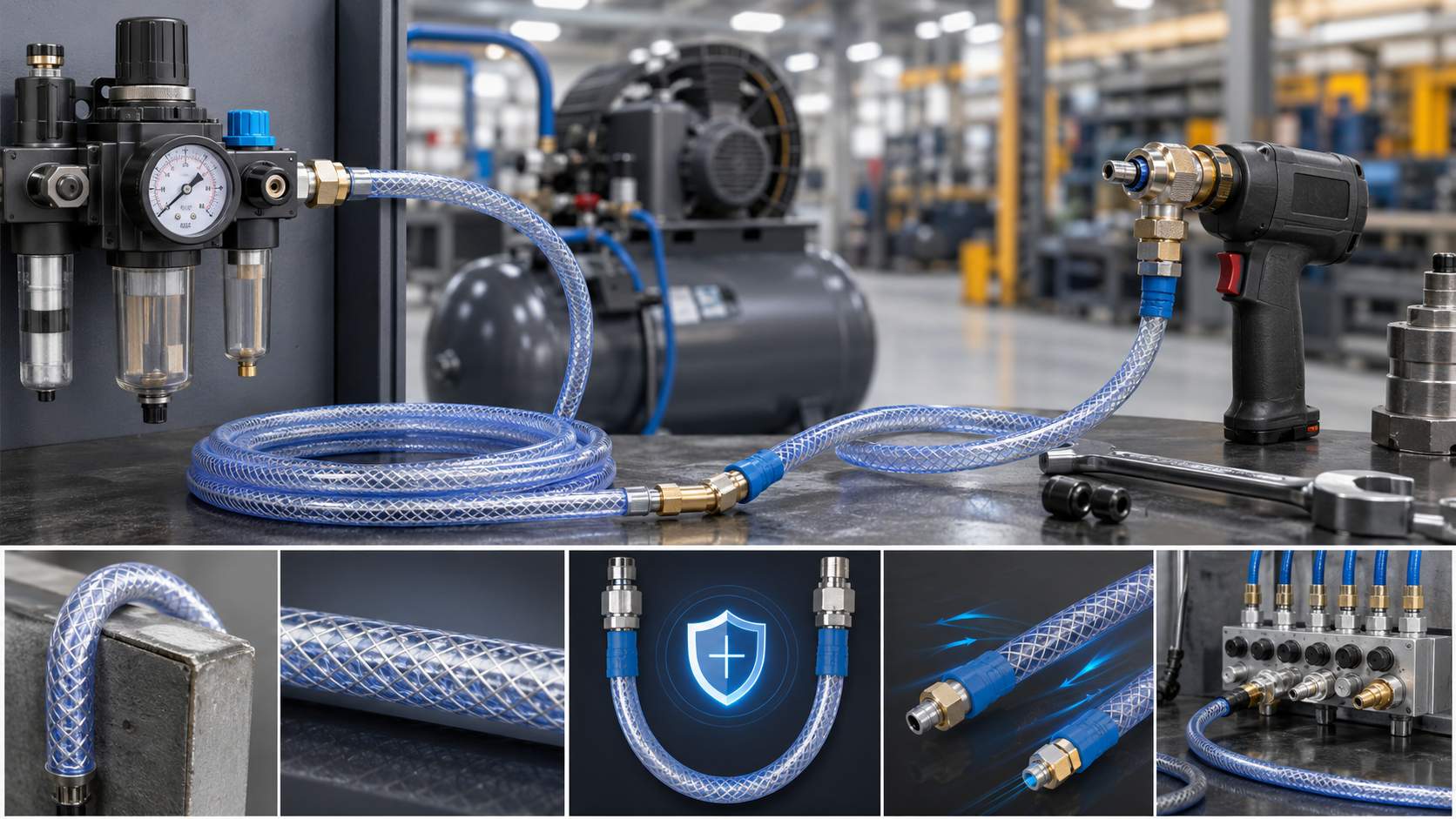
Viele Druckluftsysteme in Werkstätten und Fabriken sind auf Druckluftleitungen angewiesen, um pneumatische Werkzeuge, Automatisierungsanlagen und Produktionslinien mit Strom zu versorgen. Fällt eine Druckluftleitung aus, kann dies kostspielige Folgen haben, zu Unfällen führen und erhebliche Produktionsausfälle verursachen. Schlauchdefekte können durch mechanische Beschädigung, chemische Zersetzung oder durch falsche Auswahl und unzureichende Wartung verursacht werden. In vielen industriellen Umgebungen verstärkte PVC-Rohre PVC-Schläuche sind weit verbreitet, da sie eine robuste und flexible Lösung darstellen, die anderen Schläuchen auf dem Markt überlegen ist. Die verstärkte Verbundstruktur von PVC-Schläuchen besteht typischerweise aus Polyester- oder Nylonverstärkung und bietet gegenüber Standard-Schläuchen viele Vorteile hinsichtlich der Reduzierung von Ausfällen und der Erzielung einer höheren Zuverlässigkeit in anspruchsvollen Anwendungen.
Was sind die Ursachen für Ausfälle von Druckluftleitungen in industriellen Umgebungen?
Bevor wir uns damit befassen, wie verstärkte PVC-Schläuche zur Überwindung dieser Probleme eingesetzt werden können, müssen wir zunächst die Gründe für das Versagen herkömmlicher Druckluftleitungen ermitteln.
Mechanische Spannung und Ermüdung
Selbst bei relativ statischen Druckluftleitungen in der Werkstatt können häufiges Biegen, Vibrationen und Druckschwankungen zu Materialermüdung führen. Schäden am Schlauch können schnell entstehen, wenn minderwertige Schlauchmaterialien verwendet, der Schlauch unsachgemäß mit scharfen Biegungen montiert oder die falschen Schlauchanschlüsse eingesetzt werden. Durch die ständige Ausdehnung und Kontraktion der Druckluftschläuche im Betrieb wird die Schlauchwand sukzessive geschwächt. Schließlich entstehen Risse oder Lecks, und das Druckluftsystem funktioniert nicht mehr einwandfrei.
Chemische und umweltbedingte Belastung
In industriellen Umgebungen eingesetzte Druckluftschläuche sind häufig Ölen, Schmierstoffen und Lösungsmitteln ausgesetzt. Darüber hinaus können sie ultravioletter (UV-)Strahlung ausgesetzt sein. Aufgrund der Materialzusammensetzung von Gummi und Kunststoff, aus denen die meisten Druckluftschläuche bestehen, können diese Substanzen im Laufe der Zeit erhebliche Schäden verursachen. Mit zunehmendem Alter kann der Druckluftschlauch aushärten und spröde werden, was zu Rissen führen kann. Temperaturschwankungen können dazu führen, dass der Schlauch bei Kälte aushärtet und dadurch bricht, während er bei Wärme weicher wird, wodurch seine Fähigkeit, den Druck zu halten, abnimmt.
Unsachgemäße Schlauchauswahl und -wartung
Die Verwendung eines Schlauchs, der nicht für den Systemdruck oder das Fördermedium ausgelegt ist, kann zu übermäßigem Verschleiß führen. Beispielsweise kann die Verwendung eines Standard-Druckluftschlauchs zum Transport ölhaltiger Druckluft zu einer schnellen Abnutzung führen, wenn der Schlauch nicht ölbeständig ist. Darüber hinaus können sich kleine Defekte wie Mikrorisse oder Nadellöcher unbemerkt entwickeln, wenn kein regelmäßiges Inspektionsprogramm durchgeführt wird, bis es zu einem Ausfall kommt.
Wie verbessern verstärkte PVC-Rohre Haltbarkeit und Leistung?
Es wurden verstärkte PVC-Rohre entwickelt Um den Schwächen von Standard-PVC-Rohren entgegenzuwirken, wurden die Struktur und die Eigenschaften der Rohre speziell so konzipiert, dass sie bestimmte Anforderungen erfüllen.
Strukturelle Verstärkung zur Erhöhung der Druckbeständigkeit
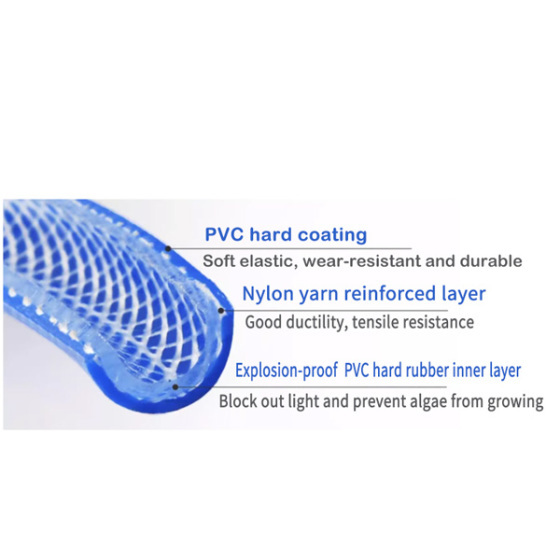
Verstärkte PVC-Schläuche zeichnen sich durch ein in die Schlauchwand eingebettetes Verstärkungsgarn aus, beispielsweise aus Polyester oder Nylon. Der Hauptvorteil dieser Konstruktion liegt in der deutlichen Erhöhung des Berstdrucks, da der Innendruck gleichmäßig über die Schlauchoberfläche verteilt wird. Im Gegensatz zu unverstärkten Schläuchen, die sich unter Last ausdehnen können, behalten verstärkte Schläuche ihre Abmessungen auch bei hohen Betriebsdrücken bei. Dies ermöglicht eine präzise Steuerung des Luftstroms – ein Schlüsselfaktor moderner pneumatischer Systeme.
Überlegene Flexibilität bei gleichzeitiger Dimensionsstabilität
PVC-Schläuche sind flexibel und lassen sich problemlos um Maschinen verlegen, ohne zu knicken oder zusammenzufallen. Die Verstärkung im Inneren der Schläuche verhindert zudem ein Durchhängen oder Zusammenfallen bei Saug- oder Vakuumanwendungen mit Unterdruck. Die einzigartige Kombination aus flexiblem Schlauch und robuster Verstärkung gewährleistet eine einfache Installation und hervorragende Leistung über lange Zeiträume.
Beständigkeit gegenüber Chemikalien und Umweltfaktoren
PVC ist beständig gegen Öl, Säuren, Laugen und viele Industriechemikalien und eignet sich daher ideal für Werkstattumgebungen. Auch bei Witterungseinflüssen ist PVC vielen Gummiarten überlegen. Es widersteht UV-Strahlung und Feuchtigkeitsschwankungen besser als viele andere Materialien. Als verstärktes Material ist PVC-Rohr vielseitig einsetzbar. Ob in der Werkstatt oder Fabrik, im Innen- oder Außenbereich – PVC ist eine ausgezeichnete Wahl.
Warum werden verstärkte PVC-Schläuche gegenüber herkömmlichen Druckluftschläuchen bevorzugt?
Verstärkte PVC-Schläuche bieten mehr als nur Langlebigkeit. Kostengünstig, vielseitig und einfach in der Anwendung – PVC-Schläuche sind die idealen Schläuche für moderne pneumatische Systeme.
Ausgewogenheit zwischen Kosteneffizienz und Langlebigkeit
Im Vergleich zu Gummischläuchen Verstärkte PVC-Rohre sind eine kostengünstigere Option. Ohne Einbußen bei Funktionalität oder Lebensdauer. Die robuste Konstruktion der Rohre minimiert den Bedarf an Austausch aufgrund von Verschleiß und/oder Bruch. Im Werkstatteinsatz ergeben sich dadurch zahlreiche Vorteile, darunter weniger Wartungsausfall, was langfristig zu höherer Produktivität führt.
Kompatibilität mit pneumatischen Mehrkomponentensystemen
Verstärkte PVC-Schläuche sind für die Verwendung mit verschiedenen Verbindungsstücken wie Hybridverbindern und Schnellkupplungen konzipiert und ermöglichen so den Aufbau flexibler pneumatischer Systeme für verschiedene Materialien. Die Schläuche eignen sich für eine Vielzahl von Medien, darunter Druckluft, Wasser, Leichtöle und Inertgase, und sind besonders geeignet für diverse Fertigungsprozesse, bei denen mehrere Fluide durch dasselbe System gefördert werden.
Einfache Installation und Wartung in Werkstattumgebungen
Verstärkte PVC-Schläuche sind so leicht, dass sie sich im Vergleich zu schwereren Gummischläuchen problemlos installieren oder austauschen lassen. Transparente PVC-Schläuche bieten zudem den Vorteil, dass die Leitungen visuell auf Feuchtigkeit oder Partikelverunreinigungen überprüft werden können. Dies ist ein entscheidender Faktor für den Betrieb mit sauberer Druckluft an vielen empfindlichen pneumatischen Geräten.
Wie verbessert die Mehrkomponenten-Pneumatikschlauchtechnologie die Systemzuverlässigkeit?
Fortschritte bei pneumatischen Schlauchprodukten aus mehreren Materialien haben in jüngster Zeit Entwicklungen ermöglicht, die die Zuverlässigkeit von Konstruktionen verbessern, indem relevante Materialeigenschaften in einer einzigen Konstruktion kombiniert werden.
Integration verschiedener Materialschichten für optimierte Funktionalität
Die meisten pneumatischen Mehrkomponentenschläuche bestehen aus flexiblen Polymerwerkstoffen wie PVC, die mit hochfesten Fasern wie Polyestergewebe verstärkt sind. Die Polymerschicht sorgt für Flexibilität und einfache Handhabung bei Installation und Wartung, während die Verstärkungsfasern den Schlauch widerstandsfähig gegen hohe Drücke machen. In beengten Fabriken ist die einfache Handhabung der Schläuche unerlässlich. pneumatische Mehrmaterialschläuche Genau das erfüllen.
Anpassungsfähigkeit an verschiedene industrielle Anwendungen
Mehrkomponenten-Pneumatikschläuche eignen sich dank ihrer robusten Bauweise und des stabilen Luftstroms, auch unter wechselnden Betriebsbedingungen, für diverse Automatisierungssysteme und Produktionslinien, Roboterantriebe, Spritzpistolen usw. Sie funktionieren in dynamischen Umgebungen ebenso zuverlässig wie im statischen Zustand.
Warum Yantai Aisili New Material Co., Ltd. ein zuverlässiger Lieferant von pneumatischen Schläuchen aus verschiedenen Materialien ist
Yantai Aisili neue Material Co., Ltd. Yantai Aisili New Material Co., Ltd. ist spezialisiert auf die Herstellung von verstärkten PVC-Rohren, PU-Schläuchen und pneumatischen Verbundleitungen für industrielle Anwendungen weltweit. Dank fortschrittlicher Extrusionsverfahren werden eine gleichmäßige Wandstärke und eine optimale Haftung zwischen den einzelnen Schichten gewährleistet. Strenge Qualitätskontrollen vom Materialeinkauf bis zur Endproduktprüfung sichern die hohe Produktqualität. Yantai Aisili New Material Co., Ltd. arbeitet kontinuierlich an der Verbesserung der Produktleistung. Als zuverlässiger Lieferant bietet Yantai Aisili New Material Co., Ltd. seinen Kunden weltweit langlebige pneumatische Schläuche und Leitungen aus verschiedenen Materialien.
Abschluss
Mit Fasern wie Polyester oder Kevlar verstärkte PVC-Schläuche bieten die optimale Kombination aus Berstfestigkeit, Chemikalienbeständigkeit und Flexibilität und minimieren so das Risiko von Druckluftleitungsausfällen in dynamischen Werkstätten. Die Wahl des richtigen Mehrkomponenten-Pneumatikschlauchs gewährleistet nicht nur den sicheren Betrieb Ihres Pneumatiksystems, sondern maximiert auch dessen Lebensdauer durch minimalen Verschleiß im Dauerbetrieb. Wir bieten Ihnen Produkte höchster Qualität von führenden Herstellern wie Yantai Aisili New Material Co., Ltd. aus China, die ihre Schläuche speziell für die extremen Anforderungen industrieller Umgebungen entwickeln und fertigen.
Häufig gestellte Fragen
Was ist der Hauptvorteil von verstärkten PVC-Schläuchen gegenüber herkömmlichen Luftschläuchen?
Unsere verstärkten PVC-Schläuche bieten eine höhere Berstdruckbeständigkeit als herkömmliche Gummischläuche und behalten gleichzeitig ihre hervorragende Flexibilität.
Können verstärkte PVC-Schläuche sowohl Druckluft als auch andere Flüssigkeiten aufnehmen?
Je nach verwendeter Zusammensetzung können mit diesem Schmierstoff Druckluft, Wasser, leichte Öle und Inertgase sicher transportiert werden.
Wie oft sollten verstärkte PVC-Rohre im industriellen Umfeld überprüft werden?
Um den Druckluftschlauch weiterhin sicher verwenden zu können, sollten Sie ihn alle 3 bis 6 Monate auf Anzeichen von Verschleiß, Risse im Schlauch oder Kupplungsdefekte überprüfen.