


Comment choisir la taille et la pression nominale appropriées pour votre tube pneumatique en polyuréthane (PU) ?
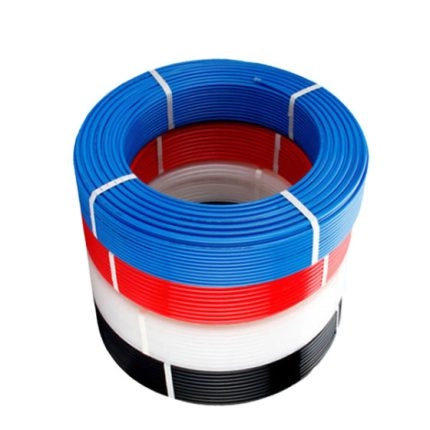
Avez-vous déjà observé un système pneumatique qui peine à fonctionner ? Il gaspille de l'air et risque de s'arrêter brusquement. Choisir le mauvais tube pneumatique en polyuréthane est souvent la cause de ces problèmes. Le système fonctionne alors de manière inefficace et la sécurité peut parfois en pâtir.
J'ai vu ça se produire à maintes reprises. Les tubes se plient sous la charge. Le débit est bloqué. Les temps d'arrêt s'accumulent rapidement. C'est précisément pourquoi il est si important de bien choisir la taille et la pression nominale.
Ce guide vous explique tout simplement. Nous aborderons les étapes pratiques. Vous découvrirez des formules. Un tableau de pression pratique est également fourni. Des conseils concrets, tirés d'installations courantes, vous seront proposés. Nous mettrons en avant les solutions intelligentes d'Aisili. Partagez vos coordonnées. Vous pourriez recevoir des échantillons gratuits à tester.
Comprendre les tubes pneumatiques en polyuréthane
Avant toute chose, clarifions de quoi il s'agit. Les tubes pneumatiques en polyuréthane (PU) sont le choix privilégié pour les systèmes pneumatiques car ils sont à la fois robustes et flexibles. Ils supportent les courbures sans se fissurer, résistent aux huiles et aux produits chimiques et assurent le fonctionnement optimal des systèmes dans des environnements difficiles comme les usines ou les ateliers.
Qu'est-ce qui distingue les tubes en PU ?
Contrairement aux modèles plus rigides, les tubes en polyuréthane reprennent leur forme initiale après avoir été soumis à des torsions et des virages. Imaginez un bras robotisé se déplaçant rapidement sur une chaîne de montage : le tube doit pouvoir fléchir sans interrompre l’arrivée d’air. Le polyuréthane excelle ici grâce à son élasticité. De plus, sa légèreté facilite grandement l’installation.
D'après mes échanges avec des spécialistes de l'automatisation, leurs principaux atouts sont la durabilité et la facilité d'utilisation. Ces tubes résistent mieux aux environnements abrasifs, comme dans les équipements miniers où la poussière corrode les matériaux les plus fragiles. Ils sont transparents ou disponibles en plusieurs couleurs pour un repérage rapide dans les configurations complexes. Et surtout, contrairement à certaines autres solutions, ils ne jaunissent pas et ne durcissent pas avec le temps.
Mais tous les tubes en polyuréthane ne se valent pas. Il existe des tubes à base d'ester pour un usage général, à base d'éther pour les environnements humides afin de lutter contre l'hydrolyse, et même des modèles ignifugés pour les zones à haut risque. Le choix du type de tube dépend directement des exigences de votre application.
Facteurs clés pour choisir la bonne taille
La taille ne se limite pas à la compatibilité des raccords ; elle influe aussi sur le débit. Un raccord trop étroit risque de provoquer des pertes de charge dans votre système. Un raccord trop large, en revanche, entraîne un gaspillage de matériau et d'espace. Commencez par évaluer visuellement le diamètre intérieur (DI) et le diamètre extérieur (DE). Les tailles courantes vont de 4 mm DE (2,5 mm DI) à 16 mm DE (12 mm DI), mais cela dépend de vos besoins en débit.
Calcul du diamètre de tube requis
C’est là qu’un peu de mathématiques s’avère utile. Pour déterminer la taille exacte, utilisez cette formule de base pour le débit d’air :
Débit (Q) = (π × r² × V) / 4
Où:
-
Q est le débit volumique en litres par minute
-
r est le rayon intérieur du tube (ID/2) en mètres
-
V représente la vitesse de l'air, généralement de 10 à 20 m/s pour les systèmes pneumatiques afin d'éviter le bruit et l'usure.
Prenons un exemple concret. Imaginons un cylindre nécessitant 50 litres par minute à 6 bars. Introduisez les valeurs numériques. Si la vitesse est de 15 m/s, calculez r, puis doublez pour obtenir le diamètre interne.
Pour des vérifications rapides, tenez compte de la perte de charge. Utilisez l'équation de Darcy-Weisbach simplifiée pour les conduites d'air :
ΔP = (f × L × ρ × V²) / (2 × D)
-
ΔP : Chute de pression (Pa)
-
f : Coefficient de frottement (environ 0,02 pour un PU lisse)
-
L : Longueur du tube (m)
-
ρ : Densité de l'air (1,2 kg/m³)
-
V : Vitesse (m/s)
-
D : Diamètre intérieur (m)
Maintenez la différence de pression (ΔP) en dessous de 10 % de la pression du système. J'ai déjà réussi à obtenir ce résultat avec des installations où une conduite de 10 m à 8 bars nécessitait un diamètre intérieur d'au moins 8 mm pour rester efficace. Procéder par essais et erreurs ? Non, il vaut mieux faire les calculs.
-
Liste à puces des tailles courantes :
-
4 mm OD (2,5 mm ID) : Idéal pour les outils à faible débit comme les petits actionneurs.
-
6 mm OD (4 mm ID) : Standard pour les vannes de régulation dans les lignes d'emballage.
-
8 mm OD (5,5 mm ID) : Gère des débits modérés dans l'assemblage automobile.
-
10 mm OD (6,5 mm ID) : Pour les travaux plus lourds, comme les marteaux pneumatiques.
-
12 mm et plus de diamètre extérieur : Applications à volume élevé, par exemple pour les systèmes de convoyage.
-
Veillez également à choisir des raccords adaptés : des tailles incompatibles peuvent entraîner des fuites.
Explication des valeurs de pression
La pression est un facteur déterminant. Une mauvaise pression peut entraîner l'éclatement ou l'affaissement des tubes, interrompant les opérations et générant des dangers. Les tubes pneumatiques en polyuréthane sont conçus pour une pression de service (utilisation continue en toute sécurité) et une pression d'éclatement (point de rupture).
Pression de service vs. pression d'éclatement
Visez une pression d'éclatement au moins trois fois supérieure à la pression de service. Par exemple, un tube conçu pour une pression de service de 10 bars pourrait éclater à 30 bars. Tenez compte de la température : la chaleur ramollit le polyuréthane, ce qui réduit la résistance à l'éclatement de 20 à 30 % au-delà de 40 °C.
Franchement, dans un entrepôt où il faisait très chaud, j'ai dû négliger la température pour qu'un tube cède à la moitié de la pression prévue. La sécurité avant tout : il faut toujours réduire la pression nominale en cas de chaleur, de produits chimiques ou de coudes.
Tableau de conversion de pression
Pratique pour passer d'une unité à l'autre. En voici un exemple rapide :
| PSI | Bar | kPa | MPa |
|---|---|---|---|
| 50 | 3.45 | 345 | 0.345 |
| 100 | 6.89 | 689 | 0.689 |
| 150 | 10.34 | 1034 | 1.034 |
| 200 | 13.79 | 1379 | 1.379 |
| 250 | 17.24 | 1724 | 1.724 |
Utilisez cette méthode lorsque les spécifications mélangent les unités. Par exemple, si votre compresseur fonctionne à 120 PSI (environ 8,27 bars), choisissez un tube dont la pression nominale est supérieure pour plus de marge de sécurité.
Applications courantes et scénarios concrets
Imaginez une usine d'emballage alimentaire : l'air circule dans des tubes en polyuréthane pour sceller les sachets. Mauvaise taille ? Le flux se bloque, la production chute. Avec la bonne taille, tout continue de tourner à plein régime.
En robotique, les tubes flexibles en polyuréthane suivent les mouvements des bras sans se plier. J'ai entendu des techniciens affirmer que des tubes de 6 mm offrent un contrôle précis pour les robots de prélèvement et de placement.
Les conduites automobiles utilisent des tubes plus gros pour les pistolets à peinture (10 mm ou plus) afin de maintenir une pression constante et d'éviter les gouttes ou les obstructions.
Dans le secteur de la construction, les poignées en polyuréthane ignifugé résistent aux marteaux-piqueurs, aux étincelles et à l'abrasion. Selon des rapports sectoriels, un choix judicieux permet d'augmenter la disponibilité des machines de 15 à 20 %, réduisant ainsi les coûts de réparation.
Un exemple concret : une entreprise minière est passée à des tubes en polyuréthane sur mesure, réduisant ainsi les fuites de 40 %. Tout est une question d’adaptation du tube à la tâche.
Éviter les pièges courants de la sélection
Le principal problème ? Choisir au hasard. Des tubes sous-dimensionnés entraînent des chutes de pression importantes et ralentissent les actionneurs. Surdimensionnés ? Coût et encombrement supplémentaires.
Des risques pour la sécurité existent également : les tuyaux qui éclatent projettent de l’air ou des débris. J’ai vu des incidents évités de justesse où des spécifications ignorées ont provoqué des coups de fouet dans les tuyaux.
Les courbes sont importantes : les rayons de courbure serrés favorisent le sertissage. Veillez à ce que les courbes soient douces, au moins 10 fois le diamètre extérieur.
Exposition aux produits chimiques ? Le polyuréthane à base d’éther est plus résistant à l’eau que celui à base d’ester. Si vous négligez ce point, l’hydrolyse corrode le tube de l’intérieur.
Testez dans votre configuration. Effectuez un test, mesurez les chutes. Mieux vaut prévenir que guérir.
Outils et ressources pour une sélection intelligente
Ne vous lancez pas seul. Aisili propose un outil de personnalisation où vous entrez le débit, la pression, la longueur et les facteurs environnementaux. Il génère des recommandations sur mesure.
Soumettez vos paramètres via leur site (diamètre extérieur, seuils de pression, etc.) et ils pourraient vous fournir des échantillons gratuits. J'ai vu des équipes gagner des semaines de cette façon, en obtenant des tubes parfaitement adaptés sans essais préalables.
À associer aux calculs ci-dessus pour une double vérification. Des ressources telles que les manuels de pneumatique confirment cela, mais l'avantage d'Aisili réside dans la rapidité du traitement douanier.
À propos d'Aisili Pneumatic
Aisili pneumatique se distingue par un fabricant professionnel dédié au développement et à la production de tubes pneumatiques en polyuréthane et les matériaux pneumatiques associés. Fondée en 2007 en Chine, cette entreprise est devenue un acteur mondial grâce à ses lignes d'extrusion de pointe et son expertise en matière de solutions sur mesure. Son engagement envers la qualité – répondre aux exigences les plus strictes – est au cœur de son activité. Normes RoHS et REACH— Fournit des tubes fiables pour l'automatisation, la robotique et bien plus encore. Présente dans plus de 30 pays, Aisili allie innovation et rapidité de livraison pour assurer le bon fonctionnement de vos systèmes.
Conclusion
En résumé, le choix du tube pneumatique en polyuréthane adapté se résume à dimensionner correctement le débit et la pression nominale, en tenant compte de votre configuration spécifique. Évitez les pertes d'efficacité et les problèmes de sécurité grâce à des formules, des tableaux et des outils comme ceux d'Aisili. Un choix judicieux garantit le bon fonctionnement de votre système : opérations plus fluides et temps d'arrêt réduits. Envie d'une solution sur mesure ? Contactez-nous.
FAQ
Quels facteurs dois-je prendre en compte lors du choix de la taille d'un tube pneumatique en polyuréthane ?
Pour choisir le diamètre d'un tube pneumatique en polyuréthane, tenez compte du débit nécessaire, de la longueur du circuit et des pertes de charge. Utilisez la formule du débit pour calculer le diamètre intérieur en fonction du volume et de la vitesse de l'air. Dans des cas concrets, comme pour un vérin de 50 L/min, un diamètre extérieur de 6 à 8 mm est souvent recommandé pour un bon compromis entre performances et encombrement.
Comment les pressions nominales affectent-elles la sécurité de mon application de tube pneumatique en polyuréthane ?
Les pressions nominales sont essentielles pour éviter les ruptures ou les fuites dans votre système de tubes pneumatiques en polyuréthane. Utilisez des pressions de service inférieures à la pression maximale nominale et assurez-vous que la pression d'éclatement soit trois fois supérieure. En environnement chaud, réduisez la pression nominale de 20 % ; j'ai constaté des défaillances dues à un oubli de ce paramètre, transformant des opérations mineures en risques majeurs.
Puis-je obtenir des conseils personnalisés concernant la pression et la taille des tubes pneumatiques en polyuréthane ?
Absolument, des outils comme le sélecteur de personnalisation d'Aisili permettent d'adapter les options de tubes pneumatiques en polyuréthane. Indiquez la pression, la taille et l'application ; Aisili fournit souvent des échantillons gratuits pour tester la compatibilité, ce qui réduit les approximations et améliore la fiabilité du système.
Quelle est la différence entre la pression de service et la pression d'éclatement dans les tubes pneumatiques en polyuréthane ?
La pression de service représente la limite journalière de sécurité pour votre tube pneumatique en polyuréthane. La pression d'éclatement correspond au seuil de défaillance ; visez une pression trois fois supérieure. Par exemple, un tube conçu pour une pression de service de 10 bars peut éclater à 30 bars. Consultez toujours un tableau de conversion si les unités de mesure sont différentes, par exemple entre PSI et bar.
Quel est l'impact de la température sur les performances des tubes pneumatiques en polyuréthane ?
La chaleur peut fragiliser les tubes pneumatiques en polyuréthane, entraînant une baisse de pression pouvant atteindre 30 % au-delà de 40 °C. Dans les usines à forte température, privilégiez les modèles résistants à la chaleur afin de maintenir l'efficacité et d'éviter les problèmes de sécurité liés au ramollissement du matériau.