


Tubes en polyuréthane à base d'éther ou à base d'ester : lequel se détériore le plus rapidement en milieu industriel humide ?
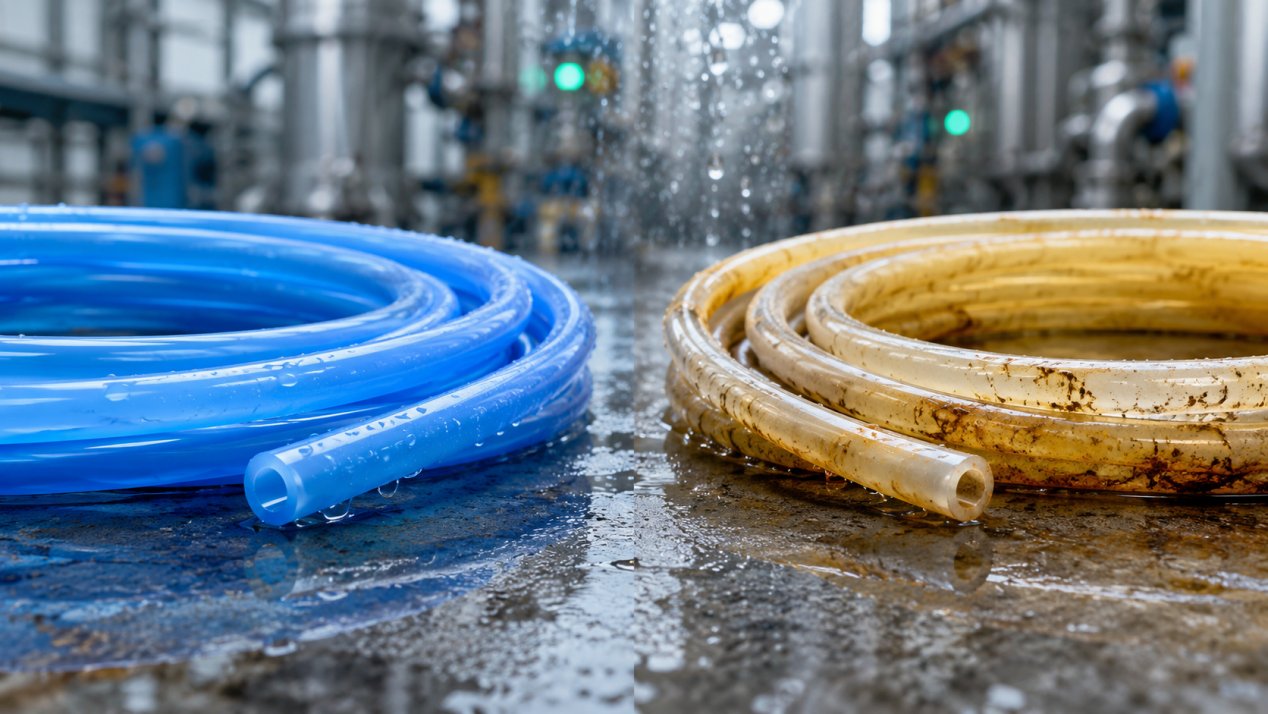
Les tubes en polyuréthane (PU) jouent un rôle essentiel dans les systèmes pneumatiques modernes. Ils offrent un bon compromis entre flexibilité, résistance et protection contre les dommages physiques. Les usines les utilisent largement pour les conduites d'air et les systèmes de contrôle qui nécessitent un fonctionnement continu. Les deux principaux types sont :tubes en PU à base d'éther et à base d'esterLeur composition varie. Cette composition influence leur comportement dans différents environnements. Dans les zones humides, la vitesse de dégradation de ces éléments a un impact considérable sur les plans de maintenance, la consommation d'énergie et la stabilité globale du système. Par conséquent, le choix du type de tuyauterie approprié pour les travaux de tuyauterie d'air en milieu humide est essentiel à la réussite durable des opérations.
Quelles sont les principales différences chimiques entre les tubes en polyuréthane à base d'éther et ceux à base d'ester ?
Avant d'examiner leurs performances, il nous faut vérifier comment leur composition de base détermine leur robustesse et leur réaction à l'environnement.
Composition et structure moléculaire
Tubes en PU à base d'éther Les tubes en polyuréthane (PU) à base d'esters contiennent des parties en polyéther qui résistent à la dégradation par l'eau. Ceci est dû à la forte adhérence des liaisons éther aux molécules d'eau. En revanche, les tubes en PU à base d'esters utilisent des parties en polyester, plus susceptibles de se fissurer sous l'effet de l'humidité. Ce phénomène est dû aux attaques à base d'eau. La principale différence réside dans la nature des liaisons : les liaisons ester, polaires, attirent plus facilement les molécules d'eau, contrairement aux liaisons éther. Cette différence de conception détermine la façon dont chaque plastique réagit à l'humidité et à la poussière souvent présentes dans les systèmes d'air comprimé d'origine.
Caractéristiques physiques influencées par la chimie
Leur composition influence directement leur comportement physique. Les tubes à base d'éther conservent leur flexibilité longtemps, même en cas d'humidité élevée ou d'accumulation d'eau passagère. En revanche, les tubes à base d'ester se rigidifient ou se fendent à mesure que l'eau se décompose. Il en résulte une diminution de leur élasticité et des surfaces rugueuses. Des signes d'usure comme le jaunissement, la perte de transparence ou une surface extérieure bosselée sont souvent révélateurs. De plus, des odeurs lors d'une utilisation prolongée peuvent indiquer une oxydation du plastique ou une fissure dans le cas des tubes à base d'ester.
Comment l'humidité affecte-t-elle les performances des tubes en polyuréthane ?
L'humidité exerce une contrainte silencieuse mais constante sur les pièces en polyuréthane dans les systèmes pneumatiques. Ses effets vont de minuscules modifications chimiques à d'importantes ruptures mécaniques.
Mécanismes d'absorption et d'hydrolyse de l'humidité
Des particules d'eau s'infiltrent petit à petit dans la structure en plastique. tubes en PU à base d'esterCes particules ciblent les liaisons ester par des réactions de dissociation de l'eau. Ces réactions fragmentent les chaînes en morceaux plus courts. Par conséquent, la résistance à la traction diminue et l'allongement est réduit. La fragilité augmente. Une température plus élevée accélère ce processus en augmentant la vitesse de déplacement et de réaction des particules. En revanche, les tubes en polyuréthane à base d'éther résistent à cette usure. Leurs liaisons éther ne réagissent pas facilement avec les particules d'eau.
Effets à long terme sur les systèmes de lignes aériennes
Lorsque la décomposition de l'eau se développe dans les conduites d'air comprimé à base d'ester, de minuscules fissures se forment sur leurs parois internes. Ces défauts entraînent une perte d'air progressive, ce qui contraint les compresseurs à travailler davantage et à consommer plus d'énergie. Le rendement pneumatique diminue alors, ce qui, à terme, provoque une pression irrégulière dans les outils connectés. Dans les mêmes configurations, les tubes à base d'éther offrent une meilleure stabilité dimensionnelle, assurant un débit d'air constant et réduisant les temps d'arrêt dus aux fuites ou aux ruptures.
Quel type de tube en polyuréthane se détériore le plus rapidement dans les usines humides ?
Des tests réalisés dans des conditions d'humidité contrôlées apportent des preuves solides quant à la durée de vie de chaque produit.
Comportement comparé du vieillissement en conditions d'humidité élevée
Des analyses en laboratoire montrent que les polyuréthanes à base d'ester perdent plus rapidement de leur résistance que ceux à base d'éther sous l'effet de contacts répétés avec l'humidité. Des tests de prise de poids prouvent que les polyuréthanes à base d'éther absorbent moins d'eau sur une même durée, ce qui explique leur usure plus lente. Des tests de résistance indiquent également que les polyuréthanes à base d'éther conservent une meilleure résistance à la traction après de longs cycles d'exposition à l'humidité.
Observations pratiques en milieu industriel
Les données recueillies sur le terrain confirment les résultats des analyses en laboratoire. Les équipes de maintenance constatent souvent des ruptures prématurées des conduites d'éther près des compresseurs ou des pièces de refroidissement, là où l'eau s'accumule. Les fissures au niveau des coudes et des raccords sont fréquentes. Elles sont dues à une combinaison d'infiltration d'humidité et de contraintes mécaniques. Les conduites d'éther installées aux mêmes endroits nécessitent moins de remplacements, même après une utilisation prolongée. Elles résistent mieux à l'usure causée par l'humidité.
Quels sont les autres facteurs, outre l'humidité, qui influencent la durée de vie des tubes ?
Bien que l'humidité soit le principal facteur de dégradation des matériaux, d'autres contraintes de fixation jouent également un rôle important dans la durée de vie des tubes à base d'éther et d'ester.
Fluctuations de température et exposition aux produits chimiques
Dans les installations industrielles, les conduites pneumatiques sont souvent placées à proximité d'huiles, de liquides de refroidissement ou de produits de nettoyage. Ces derniers peuvent accélérer l'usure des esters par contact chimique. Les variations de température aggravent ce phénomène en élargissant les microfissures dues à l'électrolyse de l'eau et en favorisant l'oxydation à haute température. Les éthers et les esters ramollissent tous deux à haute température. Cependant, ces derniers subissent des dommages plus durables en raison de leur fragilité chimique intrinsèque.
Contraintes mécaniques et pratiques d'installation
Une mauvaise installation peut réduire considérablement la durée de vie des tubes, quel que soit leur type de plastique. Des coudes trop serrés créent des points de tension où des fissures se forment sous l'effet des variations de pression. De même, des joints trop serrés provoquent des dommages par compression, entraînant des fuites prématurées. Utiliser des tracés adaptés, avec une tolérance de contrainte suffisante, améliore considérablement la robustesse des tubes à éther et à ester dans les installations en milieu humide.
Comment les ingénieurs peuvent-ils choisir le tube en polyuréthane approprié pour les environnements humides ?
Choisir le bon tube en polyuréthane Cela implique de comparer son efficacité à son coût. Parallèlement, il faut tenir compte des facteurs de configuration précis du site.
Critères de sélection fondés sur les conditions environnementales
Avant de choisir un type de polyuréthane, les ingénieurs doivent vérifier le taux d'humidité moyen, la plage de températures de fonctionnement, la longueur de contact et la proximité des sources d'eau. Pour une utilisation stable en milieu humide, notamment dans les usines agroalimentaires ou les chantiers navals, le polyuréthane à base d'éther offre une meilleure fiabilité. Contrairement à son homologue à base d'ester, il résiste bien à la fissuration par l'eau.
Analyse coûts-avantages pour la planification de la maintenance
Les tubes à base d'ester sont généralement moins chers à l'achat. Cependant, leur faible durée de vie augmente le coût total sur plusieurs années, en raison des arrêts fréquents et des frais de maintenance. Les tubes à base d'éther, malgré leur coût initial plus élevé, offrent une durée de vie plus longue et un fonctionnement pneumatique stable, même en milieu humide.
Pourquoi devenir partenaire de Yantai Aisili New Material Co., Ltd. ?
Yantai Aisili nouveau matériel Co., Ltd. Yantai Aisili New Material Co., Ltd. est un fournisseur de confiance de tubes pneumatiques en polyuréthane. Reconnue mondialement pour son savoir-faire exceptionnel, l'entreprise propose des solutions complètes pour les systèmes d'air comprimé industriels dans divers environnements. Spécialisée dans la fabrication de tubes pneumatiques en polyuréthane de haute qualité pour les applications exigeantes, elle garantit flexibilité et résistance à l'humidité. Sa gamme de produits comprend des tubes à base d'éther et d'ester. Fabriqués selon un processus de fabrication précis, ils présentent une stabilité dimensionnelle et une surface extérieure lisse, caractéristiques essentielles à un flux d'air constant. De plus, Yantai Aisili New Material Co., Ltd. offre un service de conseil technique, aidant ses clients à choisir les produits les mieux adaptés à leurs besoins spécifiques, tels que les niveaux d'humidité ou les contraintes thermiques. Ceci assure une fiabilité optimale du système tout au long de la durée de vie du produit.
Conclusion
Les tubes en polyuréthane à base d'ester se dégradent plus rapidement que ceux à base d'éther dans les environnements industriels humides. Ceci est dû à leur sensibilité à l'usure causée par l'eau, les liaisons ester réagissant avec les molécules d'eau à haute température. Les tubes à base d'éther conservent leur flexibilité et leur résistance sur de longues périodes d'utilisation dans ces environnements. Ils réduisent les besoins de maintenance tout en optimisant la consommation d'énergie des systèmes pneumatiques pour les applications de tuyauterie en milieu humide. Ces systèmes présentent souvent des défaillances avec les tubes en ester classiques. De bonnes pratiques d'installation et un choix judicieux des produits permettent d'allonger leur durée de vie. Ceci est valable quel que soit le type de plastique choisi pour les applications industrielles.
FAQ
Pourquoi les tubes en polyuréthane à base d'ester se dégradent-ils plus rapidement que ceux à base d'éther ?
Les liaisons ester réagissent davantage avec l'eau que les liaisons éther. Cette réaction amorce la décomposition de l'eau. Sous l'effet de la chaleur ou de l'humidité, les chaînes plastiques se fragmentent en petits morceaux. À terme, cela entraîne une perte de résistance et de souplesse.
Les revêtements protecteurs peuvent-ils prolonger la durée de vie des tubes en polyuréthane à base d'ester ?
Oui, l'ajout de revêtements étanches spéciaux ou de constructions multicouches peut ralentir la pénétration de l'eau dans la structure plastique. Cependant, ces mesures ne font que freiner, et non stopper, l'usure due à l'eau inhérente à la composition du polyester.
Le polyuréthane à base d'éther est-il toujours recommandé dans toutes les conditions d'usine ?
Pas toujours. Il est plus performant en milieu humide grâce à sa forte résistance à la fissuration par l'eau. Cela permet d'éviter les ruptures fréquentes dans les systèmes de tuyauterie d'air en milieu humide utilisant des matériaux à base d'ester. Cependant, il peut ne pas être optimal lorsqu'une plus grande dureté ou une meilleure tenue sont nécessaires dans des environnements de travail secs. Dans ce cas, les matériaux à base d'ester sont plus adaptés.