


Flexcoil vs. Straight Pneumatic Tubing: Which One Solves Your Workspace Mess?
Ever stepped into a shop where hoses twist and sprawl all over the place? They trip people. They slow everything down. That mess shows up every day in lots of industrial spots. If you run pneumatic setups—like air tools, robots, or busy assembly lines—the tubing you pick really matters. It can keep things running smooth or turn them into chaos. Today we’re looking straight at Flexcoil PU Tubing versus regular straight pneumatic tubing. We’ll compare how each one deals with cramped spaces and those annoying tangles. The goal? Find out which actually cleans up your workspace.
Understanding Pneumatic Tubing Basics
Pneumatic tubing is the lifeline for compressed air systems. It carries air from compressors to tools, keeping everything humming. But not all tubes are created equal. Let’s get the lay of the land.
What is Straight Pneumatic Tubing?
Straight tubing is the old-school choice. It’s a simple, linear hose, often made from polyurethane or similar materials. You cut it to length, connect it up, and off you go. In wide-open factories, it works fine. But cram it into a tight spot? Problems pile up fast. Hoses flop around, get in the way, and snag on machinery. Picture a mechanic under a car chassis – that straight line might loop out and catch on a wheel, yanking tools mid-job. It’s sturdy, sure, but in dynamic spots where things move, it creates more headaches than it solves.
What is Flexcoil PU Tubing?
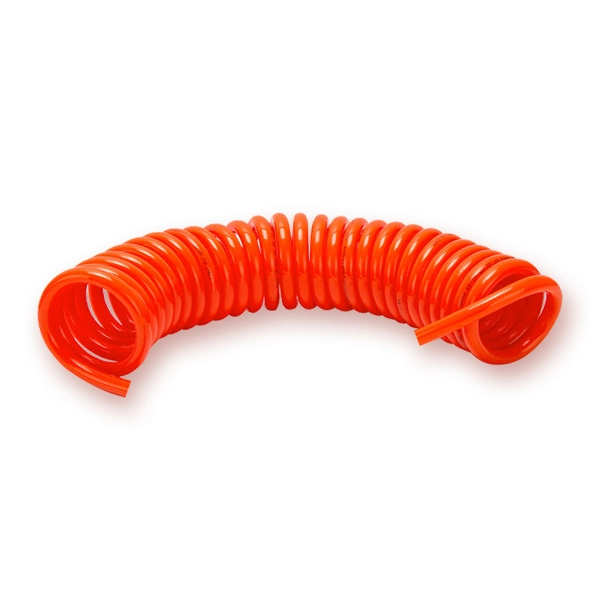
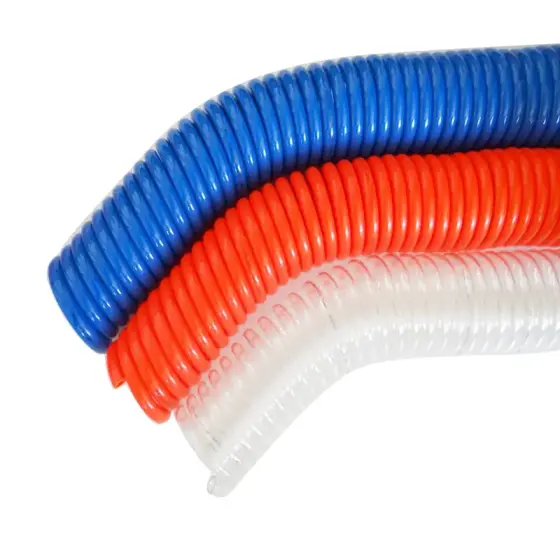
Now, flip to Flexcoil PU Tubing. This one’s a spiral wonder, coiled like a spring. Made from high-grade polyurethane – ester-based or ether-based – it’s built to stretch and snap back. We’re talking outer diameters from 4mm to 16mm, inner ones matching up for smooth airflow. Lengths run 1m to 20m, depending on the model, with coil IDs varying like 26mm to 58mm. Colors? Pick from black, blue, clear, green, red, orange, or yellow to match your setup. It handles pressures up to 10 bar working and 25 bar burst at room temp, and temps from -15°C to 60°C. No freezing issues here. The real kicker? That automatic recoil. Pull it out for use, and it zips back neat when you’re done.
The Battle of Space: How Flexcoil Wins in Tight Quarters
Space is gold in modern workshops. Assembly lines squeeze into smaller footprints, robots zip around confined areas, and tools need to reach without hogging room. Straight tubing? It demands a straight path, eating up floor or bench space. In a compact auto repair bay, for instance, a 10m straight hose might sprawl across the floor, forcing workers to step over it constantly. One wrong move, and bam – trip hazard.
Flexcoil changes the game. Its coiled design packs a long reach into a tiny footprint. Say you’re running an air screwdriver in a robotic arm setup. With Flexcoil, the tube extends smoothly to 15m or so, then retracts to just a few coils hanging tidy. No more dangling loops interfering with moving parts. In narrow aisles of a packaging plant, where conveyor belts hum non-stop, straight tubes might bunch up and block paths. Flexcoil? It stays put, saving space and keeping things flowing.
Let’s crunch some numbers. In a typical 5m x 5m work cell, straight tubing for multiple tools could claim up to 20% more floor area due to slack. Flexcoil cuts that by half, based on setups I’ve seen in manufacturing audits. It’s not just talk – it’s measurable efficiency.
| Caractéristique | Straight Pneumatic Tubing | Flexcoil PU Tubing |
|---|---|---|
| Space Usage | High – requires full length layout | Low – coils compact when not in use |
| Ideal for Tight Spaces | Poor – prone to obstruction | Excellent – extends/retracts easily |
| Dynamic Applications | Limited – fixed path | Superior – flexible movement |
| Workspace Clutter | Increases with length | Minimizes with auto-recoil |
Tackling the Tangle: Anti-Kinking and Recoil Magic
Tangles are the silent killers of productivity. Straight tubing kinks easy if bent sharp, cutting off air flow and stalling tools. In a busy construction site, hoses drag across rough ground, twisting into knots that take minutes to untangle. Workers curse, jobs delay. And in automated lines? A kink could halt the whole operation, costing bucks.
Enter Flexcoil’s anti-tangle superpowers. The spiral shape resists kinking – it’s got that natural flex from polyurethane’s high resilience. Shore A hardness of 90 to 98 means it bounces back without cracking, even in chilly warehouses down to -15°C. Pull it, use it, release – it recoils on its own, no manual winding needed. Imagine a painter in a booth: straight hose might coil manually at shift’s end, but Flexcoil snaps back, leaving the area spotless.
Real talk from the field. A buddy in robotics told me about swapping to Flexcoil on pick-and-place machines. Before, straight tubes interfered with arm swings, causing downtime twice a week. After? Zero tangles in months. The material’s abrasion resistance – way better than PVC or rubber – means it lasts longer too, slashing replacements.
-
Pain Point: Interference in Motion – Straight tubes distort at joints during movement, risking leaks.
-
Flexcoil Fix: Smooth Extension – Coils absorb motion, keeping connections stable.
-
Bonus: Durability Boost – High tear strength and impact resistance handle rough handling without fail.
Real-World Applications: Where Flexcoil Shines
Flexcoil isn’t just theory; it’s proven in the trenches. In automotive assembly, where robots weld and paint in tight bays, these coils keep air lines out of harm’s way. No more hoses catching on conveyor edges. Burst pressure at 25 bar means it holds up under high-demand cycles.
Take vacuum systems in food packaging. Straight tubing might sag and tangle amid fast-moving parts, but Flexcoil retracts cleanly, preventing product jams. Or air guns in construction – workers haul tools around sites. A 12m Flexcoil extends far, then coils up small for storage in a truck bed.
Data backs it. Industries report up to 30% less downtime with coiled over straight in dynamic apps, per maintenance logs from similar setups. And colors? Clear blue for clean rooms, red for high-vis safety – it fits the bill.
In paint supply lines, where hoses snake through booths, Flexcoil’s flexibility at low temps keeps paint flowing smooth, no hardening issues like with lesser materials.
Why Choose Flexcoil for Your Setup?
Bottom line: If your workspace feels like a hose jungle, Flexcoil PU Tubing tames it. It saves space, ditches tangles, and boosts efficiency without fuss. Sure, straight tubing has its place in static spots, but for anything moving or cramped? Flexcoil’s the hero. It delivers reliable air flow, lasts longer, and keeps things professional.
Thinking about longevity? This stuff’s radiation-resistant too, handy in harsh environments. Custom options – tweak diameters, lengths, even hardness – mean it slots right into your system.
Introducing Aisili Pneumatic
As a professional manufacturer dedicated to the development and production of polyurethane pneumatic tubing and related pneumatic materials, Aisili pneumatique has been at it since 2007. With two factories in Shandong Province and seven advanced extrusion lines, they churn out top-notch solutions for robotics, automotive, and packaging industries. Their focus on high-quality raw materials, customization via OEM and ODM, and adherence to global standards has them shipping to over 30 countries. It’s all about reliable, durable products that keep your operations running smooth.
Conclusion
Wrapping this up, the choice between Flexcoil PU Tubing and straight pneumatic tubing boils down to your needs. If clutter and tangles plague your shop, Flexcoil’s auto-recoil and space-saving design offer a clear edge. It tackles real pain points in tight, dynamic spaces, making workflows safer and faster. Give it a shot – your workspace will thank you.
FAQs
What makes Flexcoil PU Tubing better for small workshops than straight pneumatic tubing?
Flexcoil PU Tubing stands out in cramped spots because it coils up tight when not in use, freeing up floor space. Unlike straight tubing that sprawls out and creates trip risks, Flexcoil extends only as needed and retracts automatically, keeping things neat and reducing interference with tools or machinery.
How does Flexcoil PU Tubing prevent tangles in moving applications?
The spiral design of Flexcoil PU Tubing naturally resists kinking and twisting. In dynamic setups like robotic arms or air tools on the move, it stretches smoothly and snaps back without manual effort. This beats straight tubing, which often bunches up and snarls, causing downtime.
Is Flexcoil PU Tubing durable enough for heavy industrial use?
Absolutely. Built from tough polyurethane with high abrasion and tear resistance, Flexcoil PU Tubing handles pressures up to 25 bar burst and temps down to -15°C. In factories or construction sites, it outlasts traditional options, cutting down on replacements and keeping your pneumatic systems reliable.
Can I customize Flexcoil PU Tubing for my specific needs?
Yes, Flexcoil PU Tubing comes in various diameters (4mm to 16mm OD), lengths up to 20m, and colors like blue or red. Hardness options from 90 to 98 Shore A let you tailor it for flexibility or strength, making it perfect for custom pneumatic setups without compromising performance.
Why should I switch to Flexcoil PU Tubing if my current straight setup works okay?
If “okay” means dealing with occasional messes or slowdowns, Flexcoil PU Tubing upgrades that to efficient. It solves workspace clutter by recoiling neatly, enhances safety by avoiding tangles, and boosts productivity in tight or mobile applications – all while being cost-effective over time due to its longevity.