


Why Air Permeability Matters When Choosing Pneumatic Tubing
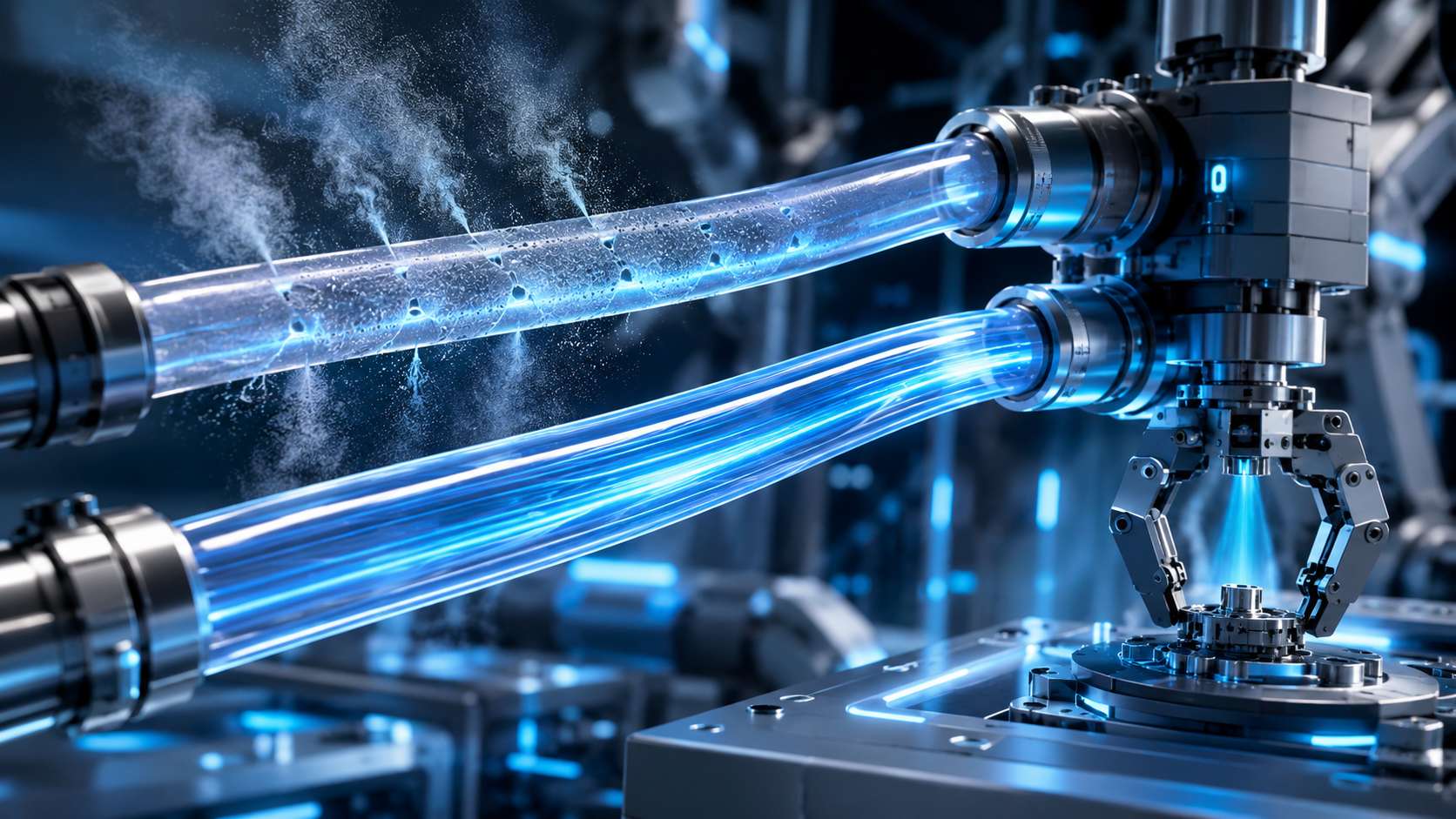
Tuyauterie pneumatique is often selected by outside diameter, pressure rating, color, and price.That may be the case for many standard airlines, but it ignores one critical characteristic that may be of great importance in the case of vacuum systems, high-voltage circuits, and low-flow instruments: air permeability. In other words, gas molecules are highly likely to flow through an untarnished polymer membrane, thus, reducing pressure on the designed side and degrading the system’s performance. The extent of permeation depends on the plastic material, wall thickness, temperature, pressure differential, and gas type. Therefore, permeability has to be considered along with the bending ratio, burst pressure, chemical resistance, and fitting compatibility before buying a product.
How does air permeability influence pneumatic system performance?
Air permeability describes gas movement through the tube wall. It differs from leakage through a cut, loose fitting, cracked tube, or damaged valve. In a polymer tube, gas molecules enter the inner surface, move through the material, and leave from the lower-pressure side.
Why can pressure fall when no leak is visible?
A short line feeding a large cylinder may lose too little gas through the wall to affect operation. A long pilot line or closed test circuit has less tolerance. Gradual transmission can contribute to pressure decay, extra compressor cycling, unstable readings, or shorter vacuum holding time.
Permeability should not be blamed first. Technicians normally check fittings, tube cuts, valves, seals, and physical damage before reviewing the tubing wall.
Why does the effect vary by application?
A continuously cycling machine may replace lost air before the operator notices a change. A fixture expected to hold pressure during a long pause behaves differently. The same applies to vacuum grippers, remote control lines, and analytical equipment.
The allowable loss matters more than the material name. A tube suitable for general automation may not suit a circuit with strict pressure-retention limits.
Which tubing properties control gas transmission?
Material chemistry sets the starting point, but final performance also depends on construction. Polyurethane, nylon, polyethylene, fluoropolymer, and multilayer tubing do not interact with gases in the same way.
How do material and wall structure affect permeability?
Polyurethane Tubing, in contrast to nylon, offers greater flexibility and space-saving routing capability. Nylon is harder, which can be beneficial for certain pressure, thermal, or chemical applications. Fluoropolymer and layered constructions can be applied when the need for gas-tightness, cleanliness, thermal resistance, or chemical resistance is of particular importance.
A tubing’s thicker wall reduces the cross-section of the tubing in all dimensions but also affects the flexibility of the hose, its grip on fittings, and its overall diameter. The hose’s durometer, additives, reinforcement, and adhesion of construction layers also affect performance. Therefore, buyers should evaluate specific design features and not only the type of polymer.
Why must temperature and gas type be specified?
Permeability of the membrane depends on temperature and type of transported gas. The obtained values of permeability are typical for compressed air at room temperature, while a gas such as CO2, O2, N2, or another process gas, and at a higher temperature, will have different characteristics.
In addition, the temperature affects the pressure resistance and the expansion of the tubing, so it must be taken into account if the tube is located near a heat source, a compressor, an oven, or in a closed mechanism.
When should permeability become a purchasing priority?
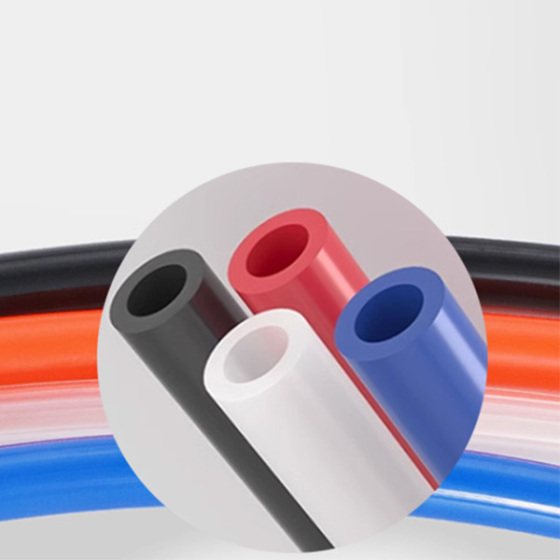
Not every pneumatic circuit needs a low-permeability tube. The issue becomes more important when the system has long tubing runs, low flow, extended idle periods, tight pressure limits, or a gas other than ordinary compressed air.
Which applications need closer review?
Pressure-decay testers, vacuum handling equipment, gas analyzers, laboratory instruments, remote pilot lines, and sampling systems are typical examples. Small losses that are irrelevant in a high-flow actuator circuit can affect calibration or holding time in these applications.
The conveyed medium should be identified before samples are requested. A tube intended for shop air is not automatically suitable for oxygen or specialty gases. Chemical compatibility, contamination, moisture absorption, and safety requirements may take priority over permeability.
What other specifications remain essential?
Low gas transmission does not compensate for poor bend behavior or weak fitting retention. Buyers should still compare working pressure, burst pressure, temperature range, minimum bend radius, hardness, dimensional tolerances, and resistance to oil, water, cleaners, abrasion, and ultraviolet exposure.
Routing matters too. Tight bends can flatten the bore, while repeated movement can fatigue the wall near a fitting. The tube must survive the actual installation, not only a straight laboratory test.
What quality problems can increase system losses?
Variation in extrusion and handling can undermine a suitable material. A tube may meet the average wall-thickness requirement while one side remains thinner because the bore is off-center.
Which defects should incoming inspection identify?
Inspection should cover outside diameter, inside diameter, wall thickness, ovality, surface condition, hardness, color, and coil shape. Bubbles, inclusions, scratches, flattened sections, and inconsistent layer bonding deserve attention because they can affect strength and gas retention.
Samples should also be installed with the intended fittings. Check insertion force, pull retention, sealing, recovery after bending, and whether the tube remains round near the connection.
How should permeability and pressure retention be tested?
A pressure-hold test evaluates the assembled circuit, not the tube wall alone. Plugs, fittings, gauges, and valves must first be verified.
Meaningful comparisons require the same gas, tube length, wall thickness, pressure, temperature, conditioning time, and test duration. A permeability value without these conditions gives buyers little basis for judging the proposed size or application.
How should buyers evaluate a pneumatic tubing supplier?
A useful supplier evaluation starts with technical clarity. Descriptions such as “low leakage” or “high pressure” do not define how the tubing will behave in a specific circuit.
Which documents and samples reduce purchasing risk?
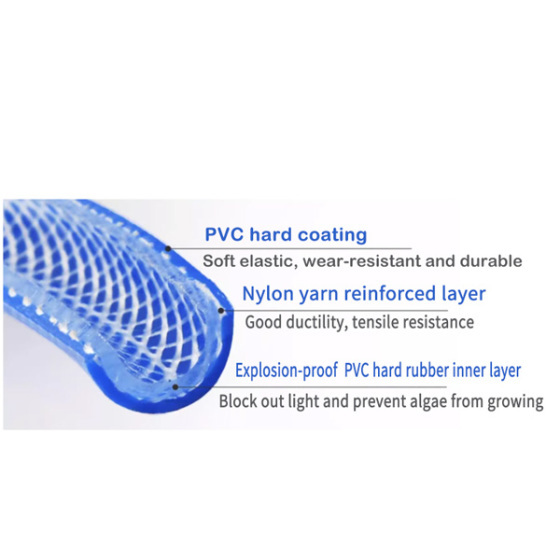
The quotation should state material grade, dimensions, tolerances, hardness, pressure and temperature limits, minimum bend radius, compatible media, color, coil length, and packaging. Multilayer tubing should identify each layer and its function.
Samples should be tested with the actual fittings and routing. For permeability-sensitive applications, buyers should request data tied to the intended gas, wall structure, pressure, and temperature.
What controls are needed for repeat orders?
Approved drawings, retained samples, batch identification, and agreed inspection points help control later deliveries. The supplier should notify the buyer before changing resin, additives, hardness, tooling, dimensions, or layer construction.
Packaging should prevent crushing, contamination, and sharp bends. Repeat-order consistency is easier to verify when one part number links to one controlled specification.
How can a pneumatic tubing manufacturer support material selection?
Yantai Aisili New Material Co., Ltd. supplies polyurethane and multi-material pneumatic tubing for industrial buyers. A technical inquiry should include the gas, operating pressure, temperature, tube dimensions, fitting type, bend radius, chemical exposure, and required quantity. Samples can then be checked carefully for routing, dimensional consistency, pressure retention, and fitting engagement. For applications sensitive to wall transmission, buyers should request permeability data under stated test conditions. Quotations should identify material structure, tolerances, coil length, packaging, lead time, and inspection items. Approved drawings and samples should remain controlled for repeat orders, with material or tooling changes submitted for review before production.
Conclusion
Air permeability of tubing is unlikely to affect a short, high-flow circuit but is critical in vacuum service, long lines at pressure, and low-flow instruments. The parameter is affected by material, thickness, gas, temperature, pressure difference, and time. A buyer needs to consider permeability in relation to pressure, bend radius, chemical resistance, size and fitting retention before making a choice. In particular, defining the former under controlled conditions is a more informative starting point than material specifications.
FAQ
1. Is air permeability the same as a pneumatic tube leak?
No. A leak uses a direct path through a crack, fitting, valve, or seal. Permeability is the slower movement of gas through an intact polymer wall.
2. Does polyurethane tubing have low air permeability?
It depends on the grade, hardness, wall thickness, temperature, pressure, and gas. Buyers should compare data for the exact polyurethane construction rather than rely on the material name.
3. When should buyers request permeability data?
Request it for vacuum circuits, long static lines, gas sampling, low-flow instruments, or systems with strict pressure-retention limits. Test conditions should match the intended application.
4. Can a thicker tube wall reduce gas transmission?
A thicker wall increases the transmission path, but it also affects internal diameter, flexibility, bend radius, and fitting behavior. The complete tube geometry should be reviewed.
5. What should a pneumatic tubing quotation include?
It should clearly identify material grade, dimensions, tolerances, hardness, pressure and temperature limits, bend radius, compatible media, coil length, packaging, inspection criteria, and change-control requirements.