


PBT vs PA vs Brass: How Material Selection Shapes Push-to-Connect Pneumatic Fitting Performance
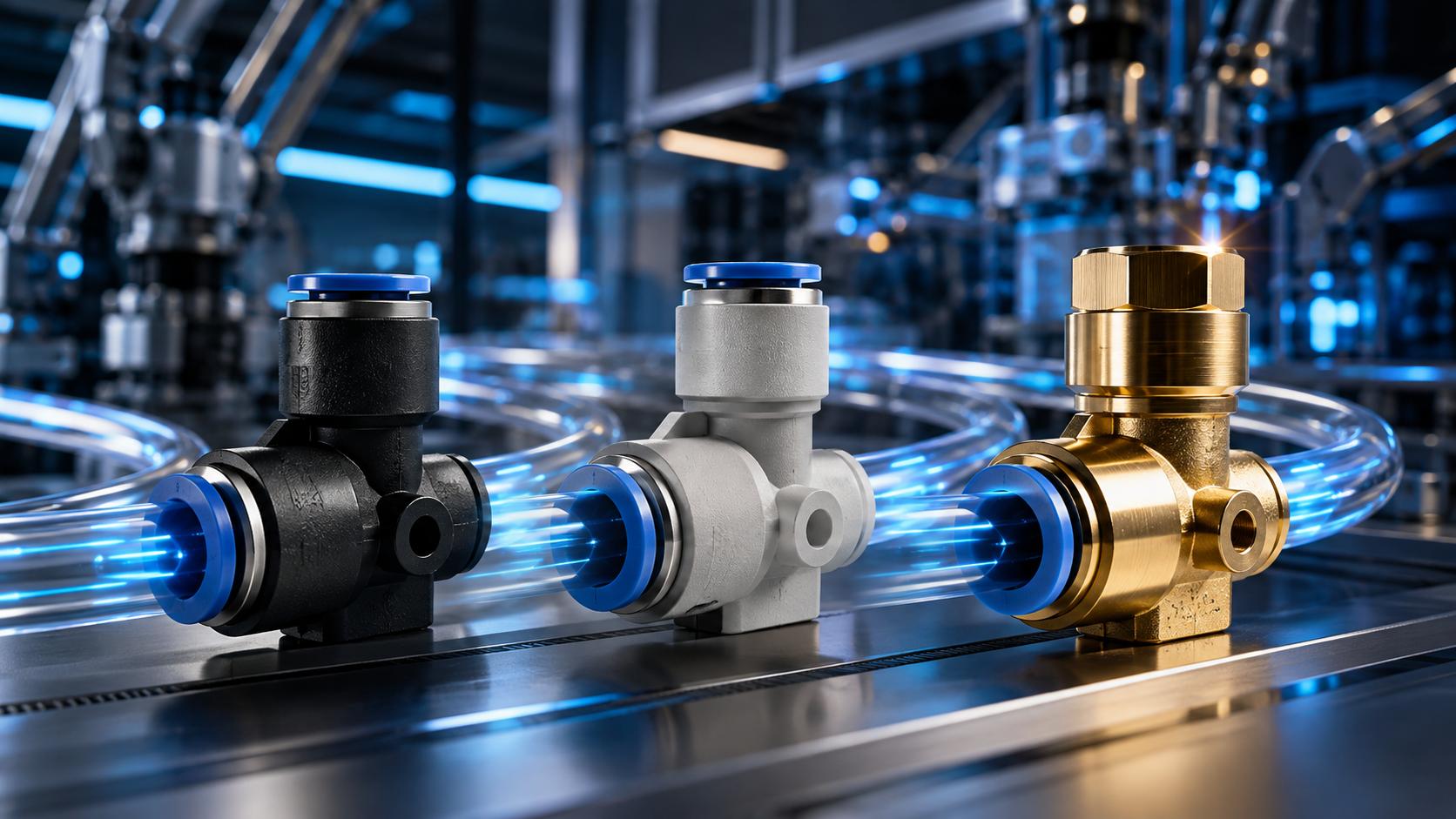
A push-to-connect fitting can pass a bench leak test and still be wrong for the machine. Body material changes how the fitting responds to heat, impact, chemicals, thread load, vibration, and repeated tube removal. PBT, PA, and brass all solve different problems. The useful comparison is not “plastic versus metal,” but how each material behaves in the actual port, pressure, temperature, and maintenance environment. For KJ and KQ2 type fittings, material selection belongs in the connection design rather than the appearance specification.
How Do PBT, PA, and Brass Behave Differently Under Mechanical Load?
The fitting body carries thread stress, tube side load, and the reaction force created by internal pressure. The same connection may see light cabinet service or repeated impact on moving machinery.
Where Does PBT Perform Well?
PBT is valued for dimensional stability, low moisture absorption, and a relatively rigid feel. Those traits help molded threads, release collars, and seal pockets hold their geometry in ordinary factory environments. It suits compact fittings where low weight and repeatable molding matter.
Its limitation is abuse. A small plastic elbow can crack if installers over-tighten the thread, use the body as a lever, or leave unsupported tubing pulling sideways. PBT should be installed by its wrenching surface, not twisted through the molded body.
How Do PA and Brass Respond to Shock and Side Load?
PA generally offers more toughness and flexibility than PBT, which can help under vibration or occasional impact. Moisture absorption is the trade-off. Depending on grade and environment, dimensions and stiffness can shift as the material conditions.
Brass tolerates thread torque and concentrated load well, making it useful at manifolds, cylinders, and ports that are frequently handled. It is heavier, conducts heat, and can transfer more load into a weak plastic port. A metal fitting is not automatically safer when the mating component is fragile.
Which Material Better Handles Temperature, Moisture, and Chemicals?
Material data becomes useful only when tied to the environment. Compressor oil, coolant mist, washdown agents, humid air, and nearby heat all affect long-term behavior.
Why Does Moisture Matter More for PA?
PA can absorb moisture. That may improve toughness but can also change dimensions, stiffness, and thread feel. In a stable indoor cabinet, the effect may be minor. In humid processing areas or equipment moving between dry and wet conditions, it deserves attention.
PBT generally absorbs less moisture, so molded geometry remains more consistent as humidity changes. This helps small sealing features and release mechanisms. The seal and tubing still need separate compatibility checks.
When Does Brass Have an Advantage—or a New Risk?
Brass handles a wider range of mechanical and temperature conditions than many unreinforced polymers. It is often selected near heat sources or where cleaning routines would soften or embrittle plastic.
Corrosion behavior depends on alloy, plating, moisture, and chemicals. Ammonia-containing environments, aggressive cleaners, or corrosive vapors may attack brass or its finish. Nickel plating can improve surface protection, but damaged or inconsistent plating leaves local exposure.
How Does Material Choice Affect Sealing and Tube Retention?
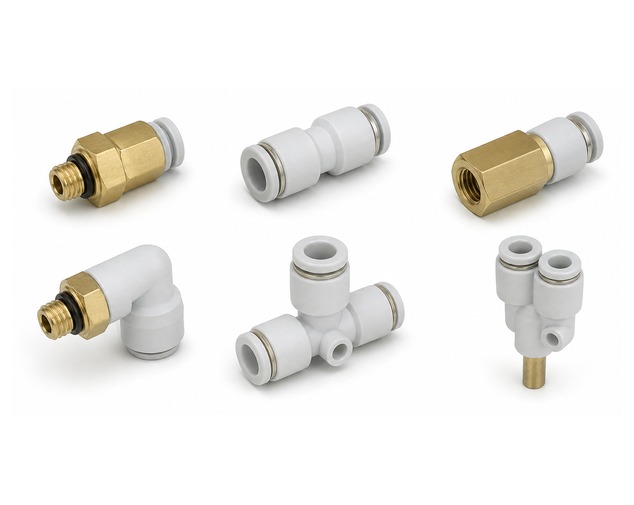
Push-to-connect fittings seal around the tube with an elastomer while a gripping ring resists pullout. The body material controls how accurately those parts are supported.
What Happens When the Body Flexes or Distorts?
If the seal pocket changes shape, the O-ring may not compress evenly. Excessive body flex can also alter the gripping ring or release collar position. These effects are most likely near high temperature, heavy side load, or damaged threads.
PBT’s rigidity can help maintain alignment. PA’s toughness can reduce brittle damage but may allow more deformation, depending on grade and wall thickness. Brass offers strong support but places greater importance on machining accuracy, burr control, and clean assembly.
Does the Material Change Tube Pullout Performance?
Pullout resistance depends mainly on gripping-ring geometry, tube hardness, outside diameter, insertion depth, and pressure. Body material matters indirectly by holding those components in position.
A poorly molded plastic fitting may have flash, inconsistent pockets, or release-collar drag. A poorly machined brass fitting may have sharp internal edges or contamination. Test each candidate with the intended polyurethane, nylon, polyethylene, or PTFE tube.
Where Should Each Material Be Used in an Automation System?
A machine rarely needs one material everywhere. Dividing the system by environment and connection duty usually produces a better result than standardizing blindly.
Which Locations Favor PBT or PA Bodies?
PBT fittings often suit control cabinets, compact valve islands, and dry assembly equipment where low mass and quick installation matter. PA may be worth considering on moving equipment or where impact tolerance matters more than maximum dimensional stability.
Neither belongs near radiant heat, welding spatter, or aggressive chemicals without verified material data. Tubing should be supported so elbows and tees do not carry hose weight or repeated bending.
Which Locations Favor Brass Bodies?
Brass is practical at fixed equipment ports, near moderate heat, on exposed machinery, and where installers need a robust threaded interface. It also suits larger sizes or connections serviced repeatedly.
The trade-off is weight, cost, and the possibility of damaging weaker mating threads. Brass fittings on vibrating equipment still need support. A rigid body does not prevent loosening when a long tube run acts as a lever.
How Should Buyers Compare Material Quality and Supplier Control?
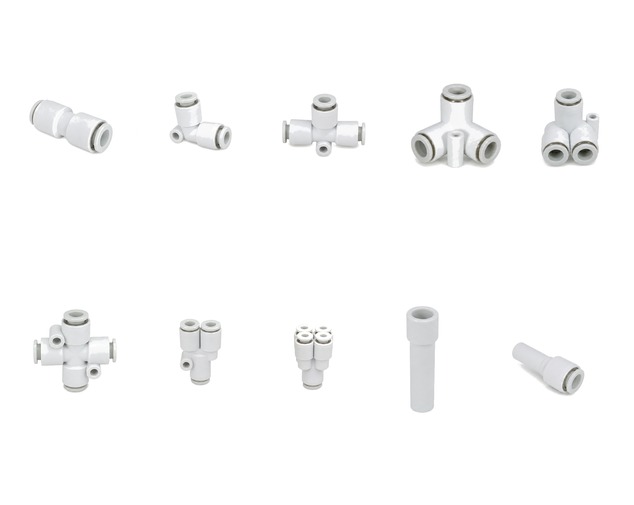
Material names are too broad for approval. PBT, PA, and brass each include grades, fillers, stabilizers, and processing variations that affect performance.
What Should Be Verified on Samples?
Check dimensions, thread form, molding or machining quality, seal condition, insertion depth, release action, and cleanliness. Assemble samples with the actual tube and port, then test leakage, pullout, rotation, pressure cycling, and relevant temperature or chemical exposure.
For plastic bodies, inspect weld lines, sink marks, cracks, and thread damage. For brass, inspect plating, burrs, machining marks, and contamination. Samples should come from production-intent tooling and materials.
Which Repeat-Order Controls Matter Most?
The approved specification should identify resin grade, filler level where applicable, brass alloy, plating, O-ring material, gripping ring, thread standard, tube range, pressure limit, and temperature range. Lot identification and retained samples help investigate field failures.
Changes to resin source, mold, plating process, seal hardness, gripping-ring geometry, or thread tooling should require notice. Small substitutions can alter sealing, torque resistance, or chemical behavior without changing the catalog number.
How Can a Pneumatic Fitting Supplier Support Material Selection?
Yantai Aisili New Material Co., Ltd. supplies KJ and KQ2 type push-to-connect pneumatic fittings for industrial automation. A project inquiry can include tubing material and diameter, thread standard, working pressure, temperature, media, port material, vibration, chemical exposure, and installation space. Samples should be checked for thread fit, tube insertion, retention, release action, leakage, flow, and material compatibility. Quotations should identify body material, seal material, dimensions, packaging, lead time, and inspection items. Before volume ordering, buyers should approve drawings, physical samples, measurable tolerances, labeling, change-notification requirements, and incoming inspection plans so production lots remain consistent with the qualified connection at the buyer’s site.
Conclusão
PBT, PA, and brass push-to-connect fittings each bring a different balance of rigidity, toughness, temperature resistance, corrosion behavior, weight, and thread strength. PBT suits many compact automation connections, PA can be useful where impact tolerance matters, and brass is often chosen for robust fixed interfaces. The right decision depends on the complete operating environment and mating components. Material approval should include tube testing, thread fit, chemical exposure, and repeat-order controls rather than relying on a generic material label.
Perguntas frequentes
1. Is PBT Better Than PA for Push-to-Connect Fittings?
PBT usually offers lower moisture absorption and stronger dimensional stability. PA may provide greater toughness. The better choice depends on humidity, impact, temperature, fitting geometry, and the required service life.
2. When Should Brass Push-to-Connect Fittings Be Used?
Brass is useful at fixed ports, exposed machinery, larger sizes, and moderate-heat locations. Port strength, corrosion exposure, fitting weight, and the risk of over-tightening still require review.
3. Can PBT or PA Fittings Be Used With Hot Compressed Air?
Only when the specific resin grade, seal compound, tubing, pressure, and ambient temperature are rated for the condition. Catalog material names alone do not establish suitability.
4. Does Brass Provide Better Tube Retention Than Plastic?
Not automatically. Tube retention mainly depends on gripping-ring design, tube diameter, hardness, insertion depth, and pressure. The body material supports those parts but does not replace proper geometry.
5. What Should Buyers Test When Comparing PBT vs PA vs Brass Fittings?
Test thread fit, leakage, pullout, insertion and release force, pressure cycling, tube compatibility, temperature response, chemical resistance, vibration behavior, dimensions, and consistency across production-intent samples.