


Quais são as matérias-primas utilizadas na fabricação de tubos pneumáticos de poliuretano?
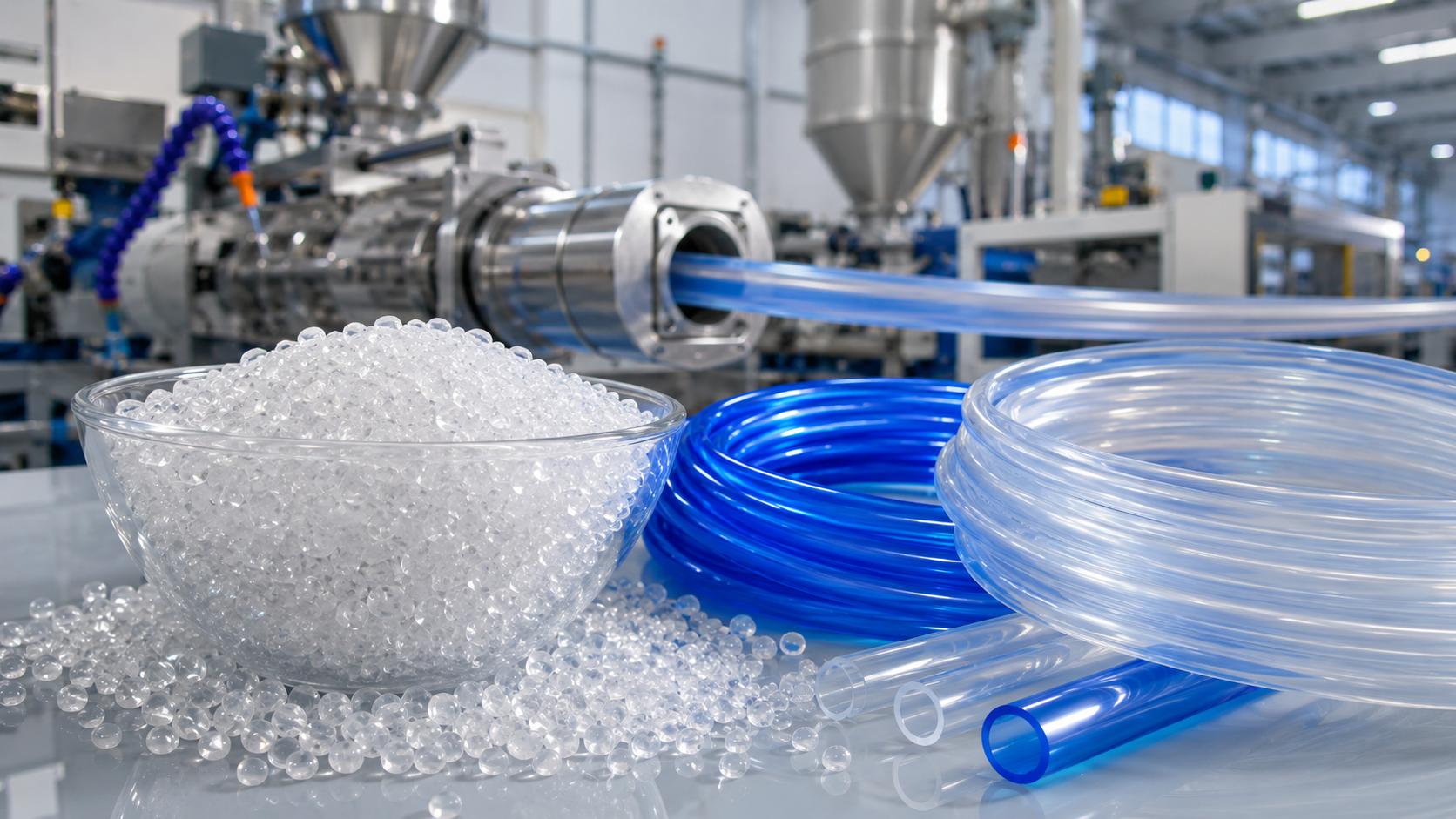
Tubos pneumáticos de poliuretano Comumente conhecido como tubo de PU, é um componente crítico em muitos sistemas automatizados, robôs industriais e também é usado em uma ampla variedade de outros sistemas de transferência de fluidos em toda a indústria. Sua flexibilidade, resistência superior à abrasão e ampla resistência química permitem que o tubo de PU seja usado em praticamente qualquer tipo de ambiente industrial. Ao analisar a qualidade e a vida útil do tubo pneumático de PU, deve-se atentar para a fórmula dos materiais utilizados em sua produção. Cada matéria-prima é utilizada para obter características mecânicas específicas e diversas propriedades químicas.
Quais são as principais matérias-primas utilizadas na fabricação de tubos pneumáticos de poliuretano?
Para explorar os aditivos e métodos de processamento de tubos de PU, é aconselhável primeiro revisar os materiais usados na fabricação desses tubos.
O papel dos polióis na formação de tubos
Os polióis, a fração macia do poliuretano, determinam a elasticidade e a flexibilidade do material. No mercado, existem principalmente duas categorias de polióis: os poliésteres polióis e os poliéteres polióis. Os poliésteres polióis, por exemplo, possuem excelente resistência à abrasão e também apresentam ótima resistência mecânica. Por isso, são utilizados na produção de produtos sujeitos a alto desgaste, como os usados em ferramentas pneumáticas ou em componentes dinâmicos de automação. Os poliéteres polióis, por sua vez, possuem excelente estabilidade à hidrólise. Isso significa que, mesmo após longo período em ambientes úmidos, o tubo permanece 100% funcional. Combinando ambos os tipos de polióis em uma proporção adequada, os fabricantes conseguem desenvolver o material ideal para a aplicação desejada.
A função dos isocianatos na estrutura dos polímeros
Os isocianatos, além de constituírem componentes rígidos, reagem com os polióis para formar ligações uretânicas que constituem a estrutura principal do poliuretano. Para alcançar as propriedades desejadas, isocianatos como o TDI (diisocianato de tolueno) e o MDI (diisocianato de difenilmetano) são utilizados em diversas combinações. Os sistemas à base de TDI são geralmente muito flexíveis e utilizados em aplicações dinâmicas, enquanto os sistemas à base de MDI são muito rígidos, possuem excelente estabilidade térmica e são utilizados em uma ampla variedade de aplicações industriais.
Como os aditivos influenciam o desempenho dos tubos de PU?
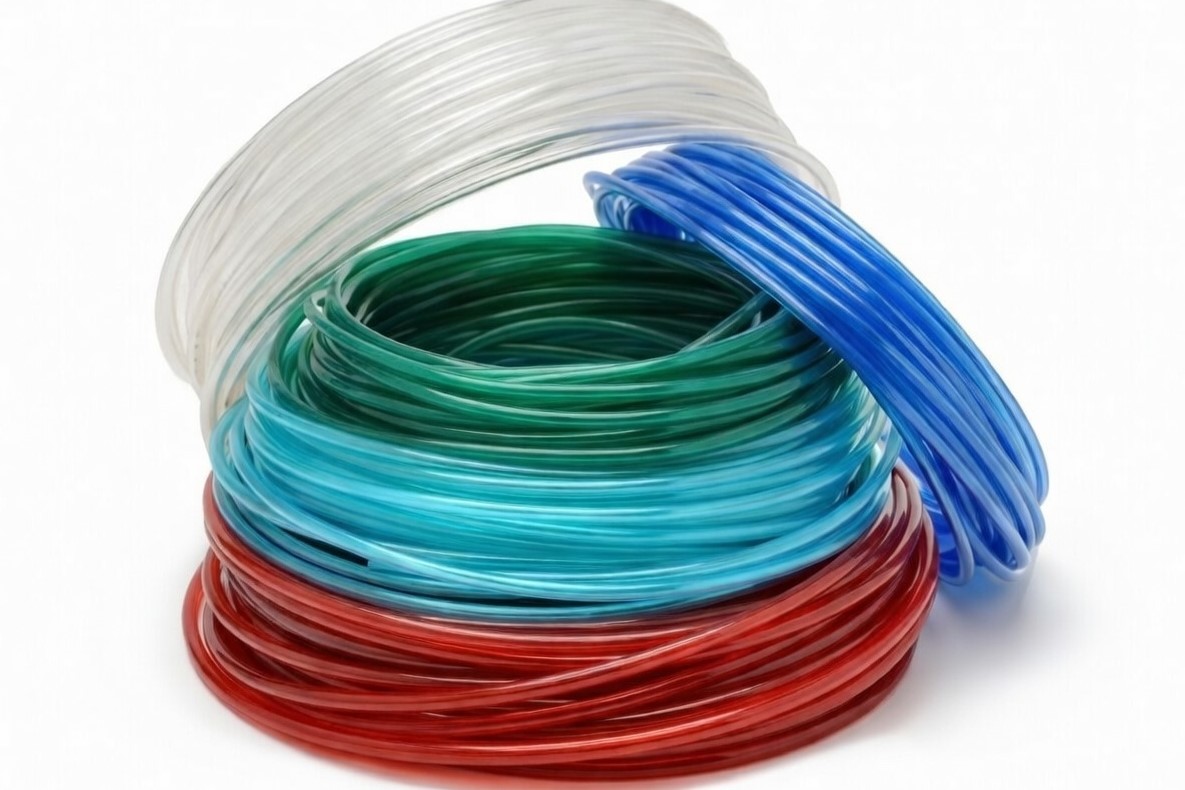
A estrutura central de um material é definida pelos materiais de base, enquanto os aditivos são usados para ajustar as características de processamento e melhorar o desempenho do material na aplicação final.
Catalisadores e seu papel no controle de reações
Os catalisadores são essenciais para controlar a reação de isocianatos com polióis. Os catalisadores mais comumente usados para esse tipo de reação são os catalisadores de estanho. A seleção do catalisador é crucial para controlar a velocidade da reação de cura. Um catalisador adequadamente selecionado permitirá obter uma espessura de parede consistente em tubos extrudados, uma superfície lisa e resultados consistentes em testes mecânicos em lotes de produção.
A importância dos extensores de cadeia e dos agentes de reticulação.
Extensores de cadeia, como o butanodiol, atuam como pontes moleculares que ajustam a dureza, a resistência à tração e as propriedades de alongamento. Enquanto isso, agentes de reticulação aumentam a estabilidade dimensional quando a tubulação é exposta a alta pressão ou temperaturas elevadas. Ao modificar o comprimento da cadeia ou a densidade de reticulação, os fabricantes podem adaptar a tubulação de PU para atender aos requisitos exatos de classificação de pressão ou raios de curvatura sem comprometer a flexibilidade.
Pigmentos, estabilizadores UV e outros modificadores
Pigmentos para codificação por cores, estabilizadores UV para exposição ao ar livre e antioxidantes para resistência ao amarelamento e à perda de brilho. Os aditivos são projetados para garantir a funcionalidade duradoura dos componentes.
Como as proporções dos materiais afetam as propriedades mecânicas?
A proporção de formulação de matérias-primas para mangueira pneumática de poliuretano Determina sua capacidade de desempenho sob diversas condições operacionais.
Equilibrando Flexibilidade e Força Através de Ajustes na Formulação
Uma maior proporção de segmentos rígidos — derivados do teor de isocianato — normalmente aumenta a resistência à tração, mas reduz a flexibilidade. Por outro lado, o aumento do teor de segmentos macios provenientes de polióis melhora a capacidade de curvatura, à custa da rigidez. O ajuste da massa molecular do poliol também influencia o desempenho do raio de curvatura; massas moleculares mais baixas criam tubos mais firmes, adequados para instalações estáticas, enquanto massas mais altas produzem tubos mais macios, ideais para movimentos dinâmicos.
Influência na resistência à temperatura e na compatibilidade química
Elastômeros com maior densidade de ligações cruzadas apresentam melhor estabilidade térmica. No entanto, a otimização excessiva para estabilidade pode resultar em uma perda inaceitável de elasticidade. Formulações podem ser desenvolvidas para conferir resistência a óleos, solventes e umidade, dependendo da aplicação final. Por exemplo, Tubos de PU para sistemas de controle pneumático No setor de fabricação automotiva, é formulado com aditivos para conferir resistência ao óleo sem perda de transparência e flexibilidade.
Por que a pureza do material é fundamental na produção de tubos de poliuretano?
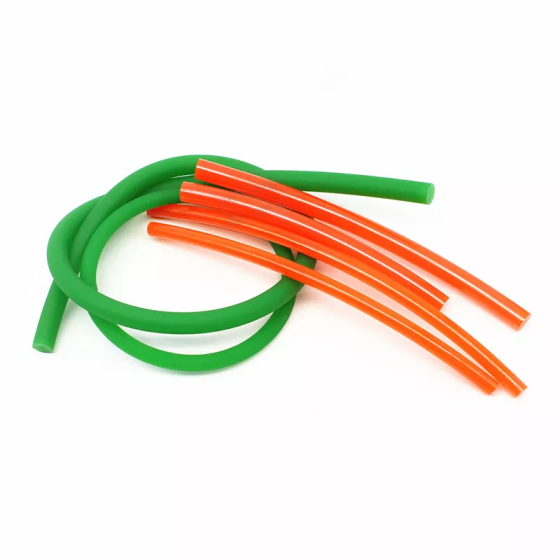
A pureza do material é crucial, pois pode afetar a fabricação e a qualidade do produto final.
Efeitos das impurezas na cinética da reação e na qualidade do produto
O tipo mais comum de contaminação durante a fabricação é a umidade. A umidade, por sua vez, pode reagir com os isocianatos presentes no polímero e causar o efeito mais indesejável para um plástico: bolhas na matriz. Essas bolhas comprometem severamente a resistência à tração do material e também geram irregularidades na superfície, que afetam negativamente a vedação de tubulações pneumáticas. Outras impurezas também podem levar a variações na dureza Shore e contaminação visível, como opacidade na superfície do tubo.
Medidas de controle de qualidade para a seleção de matérias-primas
A secagem dos polióis antes da mistura pode mitigar o risco de adição de água à mistura. A análise de lotes individuais durante a produção, por meio da viscosidade e do índice de hidroxila, garante qualidade constante para a produção em larga escala em sistemas de automação industrial.
Como a Yantai Aisili New Material Co., Ltd. garante o fornecimento confiável de tubos de PU?
Yantai Aisili New Material Co., Ltd. A Yantai Aisili New Material Co., Ltd. é uma fabricante profissional de tubos pneumáticos. Com experiência na produção de tubos pneumáticos à base de poliuretano para automação, oferece soluções para sistemas de automação, integrando tecnologia avançada de extrusão de tubos pneumáticos com um sistema de gestão de alta qualidade para produzir peças pneumáticas precisas e com dimensões exatas. O departamento de P&D da Yantai Aisili New Material Co., Ltd. desenvolve continuamente tubos com formulações personalizadas, de acordo com as necessidades dos clientes. A empresa também prioriza o fornecimento sustentável, selecionando apenas materiais puros e de alta qualidade de fornecedores do mundo todo. Com seu rigoroso controle de processos e equipamentos de inspeção automatizados, a Yantai Aisili New Material Co., Ltd. mantém uma cadeia de suprimentos estável para atender à demanda do mercado global.
Conclusão
Principais informações sobre matérias-primas para a produção de tubos pneumáticos de poliuretano
As propriedades dos tubos pneumáticos de poliuretano são determinadas principalmente pelas respectivas proporções de mistura das matérias-primas, como polióis, isocianatos, catalisadores, extensores de cadeia e corantes. Com uma ampla gama de proporções de mistura possíveis, é possível selecionar a mistura adequada para durabilidade e flexibilidade, bem como resistência a meios químicos, transparência e resistência térmica. Com o estado atual da arte em química de polímeros, as possibilidades da tecnologia de tubos de PUOs tubos de poliuretano (PU) estão sendo cada vez mais utilizados e expandidos em diversos setores industriais ao redor do mundo. Da robótica à distribuição de ar comprimido na indústria, existem inúmeras aplicações possíveis para as diversas propriedades dos tubos de PU.
Perguntas frequentes
Qual o tipo de poliol mais indicado para ambientes com alta umidade?
Os polióis de poliéter são geralmente preferidos devido à sua resistência superior à hidrólise em comparação com os polióis de poliéster.
O poliuretano reciclado pode ser usado na produção de tubos pneumáticos?
O poliuretano reciclado pode ser misturado em novas formulações, o que pode, no entanto, afetar a uniformidade mecânica dos produtos; para minimizar esse efeito, é necessário recombiná-lo completamente com o uso de métodos e controles apropriados.
De que forma a adição de pigmentos influencia o desempenho dos tubos?
Os pigmentos em sistemas pneumáticos são normalmente usados para coloração, identificação ou por razões estéticas. No entanto, quando se adiciona pigmento em excesso a um composto de borracha, isso pode reduzir as propriedades mecânicas da borracha ou sua transparência, dependendo da forma como o pigmento é incorporado à mistura.