


Why Are 316 Stainless Steel Push-To-Connect Fittings Preferred in Food Processing and Pharmaceutical Equipment?
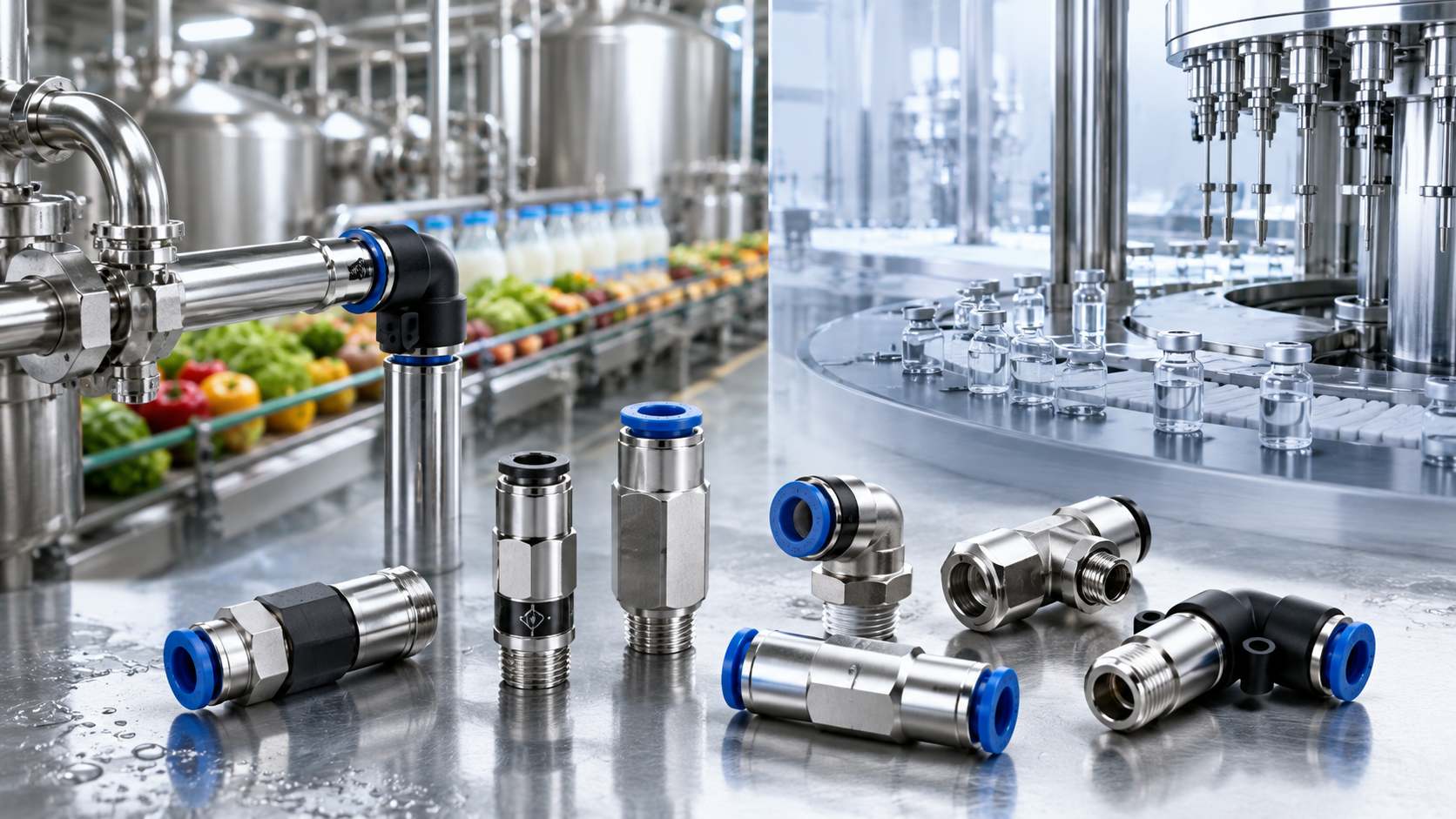
In the realm of food-processing and pharma machinery, 316 stainless steel push-to-connect fittings are standard solutions for pneumatic system circuits subjected to moisture, washdown, cleaning chemicals, and repeated cleanings. While the utilization of a stainless alloy offers greater protection against corrosion, fittings of this type are nonetheless not inherently sanitary or compatible with product contact. Further qualification is required, including tubing, seals, threads, pressure ratings, temperatures, surfaces, and certifications. For OEM engineers and buyers, the more crucial consideration is the degree to which a fitting can be applied to the hygiene level and exposure risks of their machinery.
Why Does 316 Stainless Steel Suit Washdown and Corrosion-Prone Equipment?
It is part of the Cr-Ni-Mo group. The addition of molybdenum makes it reasonably resistant to corrosion in a challenging environment, which explains why 316/316L is common in food and beverage equipment, pharma machinery, flanges, and valves. Still, such an occasion does not imply that every fitting made of this alloy is automatically sanitary because some applications only involve the dry area around the equipment. Therefore, using 316 valves for wetted parts is an overkill, but an alloy is suitable for the machine’s parts exposed to frequent cleaning and chemicals.
A cabinet for a dry control room can be made of 304 stainless-steel. The necessity for 316 arises when fittings are located near the washing zone, in a humid environment, around the cleaning station, or in a process area calling for replacements because of corrosion. It is worth listing not only the media passing through fittings but also those contacting them from the outside. For example, compressed-air lines have clean air on one side and detergents, sanitizers, condensate, or salt solution on another.
When Should Buyers Treat a 316 Fitting as a Pneumatic Component Rather Than a Hygienic Process Fitting?
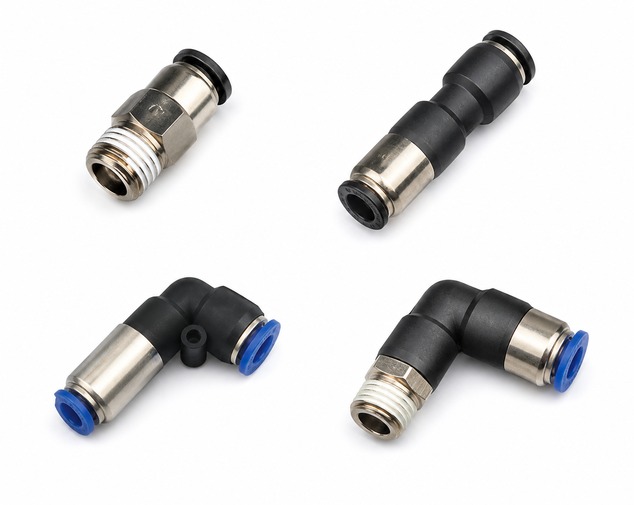
Location is the key factor in defining the requirement. A 316 push-to-connect fitting delivering air to a cylinder on a filling machine has different requirements than one used for product, purified water, or other process fluids. Connections for utility-air are typically evaluated in terms of corrosion resistance; compatibility with the tube; leakage; accessibility for servicing; and effects of cleaning or sterilization agents. For product-contact applications, additional factors may include surface finish; control of crevices; drainage; sealing; inspection access; and cleanability.
3-A Sanitary Standards address equipment materials, fabrication, cleanability, and hygienic design. A 316 body alone does not prove conformance. Buyers should request the exact standard, certificate, or supplier declaration required by the project rather than rely on terms such as “food-grade.” If the circuit is strictly pneumatic, the guide on push-to-connect vs. compression fittings can help determine whether a push-in design fits the maintenance and installation requirements before stainless grade is finalized.
Which Specifications Should Be Checked Before Ordering 316 Stainless Steel Push-To-Connect Fittings?
Material grade is only one line on the purchase specification. Push-to-connect fittings seal around the tube outside diameter, so tube OD and material must match the fitting design. A metric tube should not be substituted with a visually similar inch size. Buyers using ท่อลมโพลียูรีเทน should confirm OD tolerance, hardness, pressure, and temperature; nylon and other ท่อลมหลายวัสดุ can behave differently at the sealing interface.
Thread identification deserves the same care. NPT, R/BSPT, G/BSPP, and metric threads may have similar nominal sizes while using different forms or sealing methods. The fitting shape also affects routing and service access.
| รายการ | What the Buyer Should Define |
|---|---|
| Tube | OD, metric/inch, material, hardness if relevant |
| การเชื่อมต่อ | Straight, elbow, tee, union, reducer, bulkhead |
| Thread | Full standard and size |
| วัสดุ | 316 or specified 316L designation |
| บริการ | Medium, normal/max pressure, temperature |
| Cleaning | Chemical, frequency, temperature |
| Documentation | Material, traceability, inspection or compliance needs |
What Evidence Should Buyers Request for Food or Pharmaceutical Projects?
Start with evidence that applies to the exact part number. Depending on the machine, this may include a material declaration, alloy designation, seal material, dimensional drawing, pressure and temperature limits, tubing compatibility, lot traceability, or a specific compliance document. If a supplier claims a fitting meets a hygienic standard, ask which standard and what document supports the claim.
Cleaning chemistry should be included. “Food-processing environment” is not specific enough for compatibility review. An alkaline wash, acidic cleaner, alcohol-based agent, hot-water rinse, and steam exposure create different demands. The O-ring may become the limiting component even when the stainless body remains unaffected. Hygienic guidance also considers cleanable surfaces, suitable materials, and joint integrity. That is why 304/316 Stainless Steel Push-To-Connect Fittings should be evaluated as part of the intended assembly rather than approved from alloy name alone.
How Should OEMs Qualify the Fitting and Supplier Before a Volume Order?
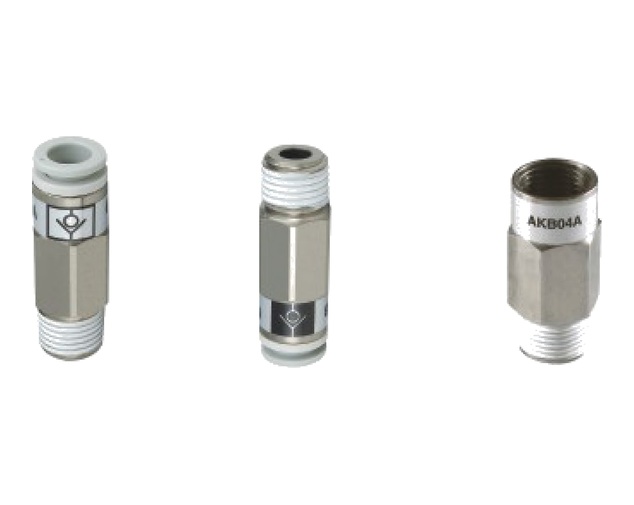
Sample approval should use the actual production tube and machine port. Check tube insertion, retention, release operation, fitting dimensions, thread engagement, installation clearance, and leakage under defined conditions. For washed equipment, representative exposure to the cleaning environment can reveal issues that a short room-temperature test may miss. The leakage method should state pressure, duration, tube specification, sample quantity, and acceptance criterion.
Supplier evaluation should cover repeatability. Ask how stainless grade, seal compound, critical dimensions, threads, and assembly are controlled between batches. If a material or seal changes after approval, determine whether notification is required before shipment. The broader อุปกรณ์และแอมป์ ตัวเชื่อมต่อ range can help compare available configurations, but production approval should be tied to a defined drawing, sample, and test requirement rather than appearance alone.
How Can a Pneumatic Tubing and Fittings Supplier Support These Projects?
Yantai Aisili บริษัท วัสดุใหม่ จำกัด manufactures polyurethane pneumatic tubing and related pneumatic materials and also supplies fittings for industrial applications. Its company information lists two manufacturing plants in Shandong and seven extrusion lines and provides OEM and customization services for the tubing diameter, colors, hardness, and performance. For food-processing or pharmaceutical-equipment applications, the buyer can specify the tube OD, the material, fittings, stainless steel grade, threads, pressure, temperature, cleaning, quantity, and required documentation before sampling to help the engineer and purchaser understand the interface during release for production.
บทสรุป
316 stainless steel push-to-connect fittings may be a good choice for pneumatic equipment subjected to moisture, washdown, cleaning chemicals, or other corrosive forces. However, the material of construction alone does not guarantee hygienic safety. To ensure it, consider separate utility-air connections and product connections, check the compatibility of tubes and seals, specify relevant thread standards and operating conditions, ask for supporting documents, and perform a sample qualification in terms of cleanability and absence of leakage before agreeing to a volume supply from a chosen manufacturer.
คำถามที่พบบ่อย
1. Are 316 stainless steel push-to-connect fittings automatically food-grade?
No. A 316 body improves corrosion resistance, but food-contact suitability can also depend on surface design, seal materials, cleanability, tubing, installation location, and the specific documentation required by the equipment specification.
2. Should buyers specify 316 or 316L for pharmaceutical equipment?
Specify the grade required by the drawing or project standard. If 316L, UNS S31603, EN 1.4404, or another designation is required, include that exact designation in the RFQ and material documentation.
3. Can 316 stainless steel push-to-connect fittings be used with PU tubing?
They can when the fitting is designed for the tube’s outside diameter and material characteristics. The production tube should be checked for OD tolerance, hardness, pressure, temperature, insertion, retention, and leakage.
4. What cleaning information should be sent to the fitting supplier?
Provide the cleaning agent, approximate concentration when available, exposure frequency, cleaning temperature, and whether the fitting is sprayed, rinsed, soaked, or exposed to steam. This helps evaluate metal, seal, and tubing compatibility.
5. What should an OEM test before approving a stainless pneumatic fitting?
Use the actual production tube and port to check dimensions, thread engagement, insertion, retention, release, installation clearance, and leakage. Add cleaning or temperature conditioning when those exposures are relevant to the machine.