What are the best materials for pneumatic tubing and hoses?
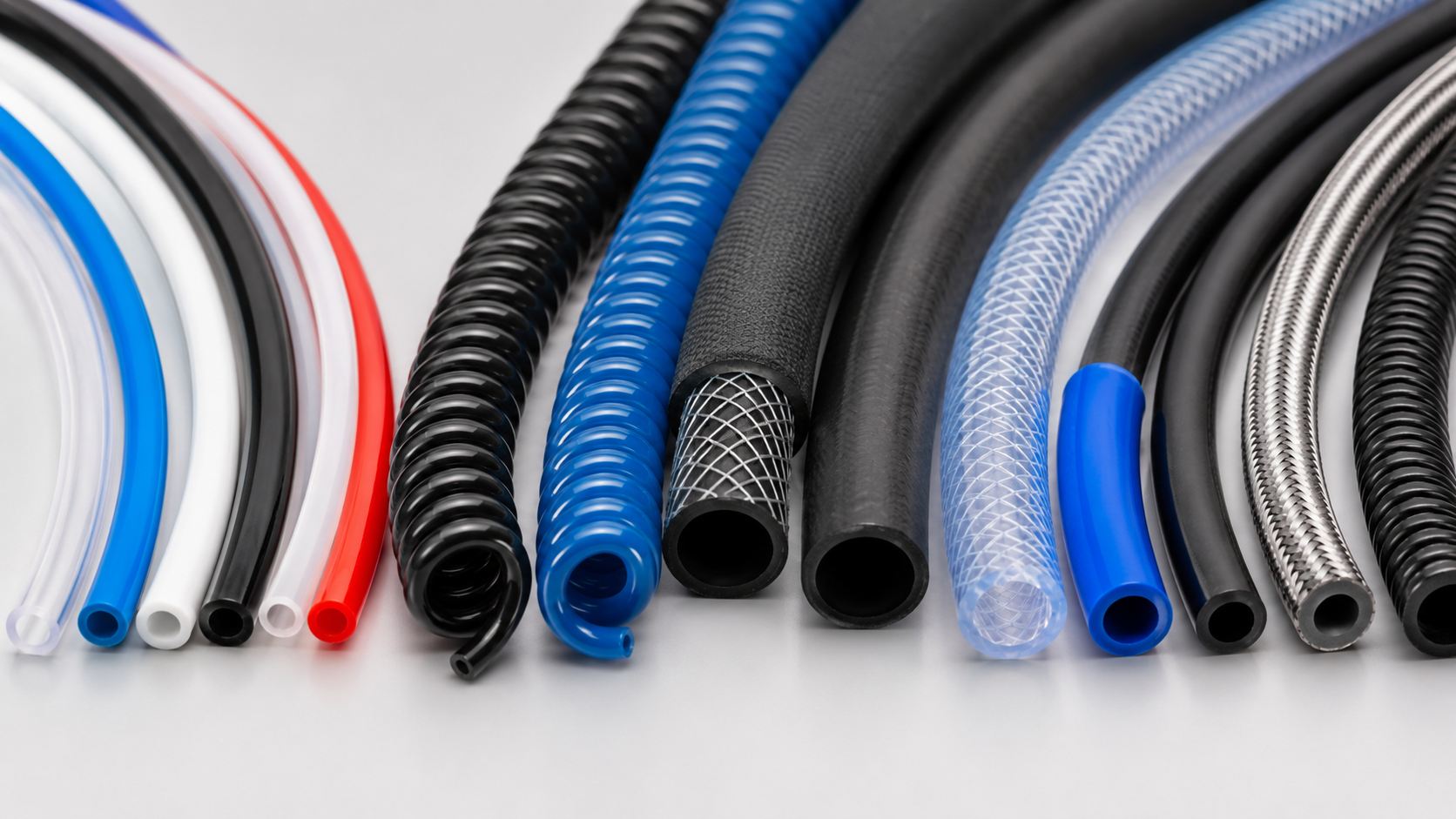
Pneumatic systems rely on compressed air to power tools, automation lines, and industrial machinery. The performance and reliability of these systems depend on the quality and type of tubing or hoses used to transport air. Choosing the right pneumatic tubing material can impact not only system efficiency but also maintenance costs and operational safety. Each material—whether polyurethane, nylon, polyethylene, or PTFE—offers unique benefits suited for specific conditions such as pressure range, flexibility needs, and chemical exposure. This article explores the most common materials used for pneumatic tubing and hoses, how they perform under various conditions, and why multi-material pneumatic tubing is becoming increasingly popular in industrial applications.
What Factors Should Be Considered When Choosing Pneumatic Tubing Materials?
When selecting tubing, a balance of technical and economic factors need to be satisfied in order to optimize performance of a system.
Key Performance Criteria
The pressure rating of any pneumatic hose is of major importance. We supply nylon and polyurethane hoses for use in the mid to high pressure markets. The polyurethane hose has a very soft tube which makes it easy to route around tight machine layouts. The temperature resistance of polymers can vary. The nylon hose has a good heat resistance whilst the polyethylene hose is better at low temperatures. Chemical resistance is also important. There are many oils, solvents and even corrosive gases that can be present in a working environment. If the incorrect hose is selected it could result in early failure of the hose or even a leak.
Cost and Maintenance Considerations
Instead of just looking at the cost of a product at the point of purchase, one should look at the product’s total lifecycle cost. Although the initial cost of Nylon tubing may be greater than say hard rubber or PVC tubing, it has a longer life where there are high mechanical stresses. Additionally tubing that can resist abrasion or kinking reduces the need for maintenance. This in turn reduces the time spent on unscheduled maintenance down time. This results in a lower replacement rate and in the end better ROI. Especially in high volume manufacturing environments where any unscheduled maintenance can pull the production schedule.
How Do Different Materials Perform in Pneumatic Applications?
Different materials have their own specific mechanical and chemical properties and can be used for certain pneumatic applications.
Polyurethane (PU) Tubing
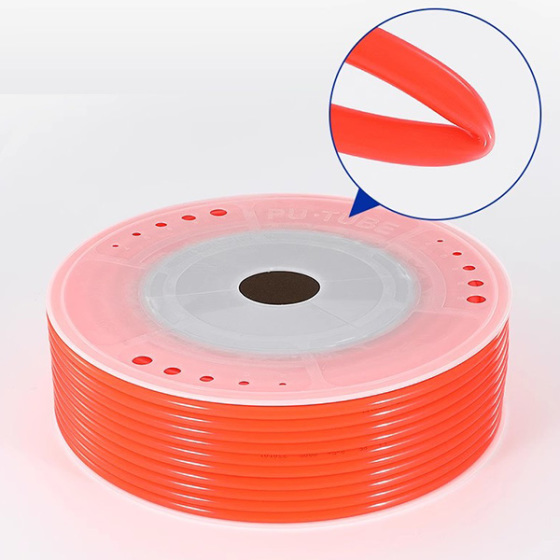
High performance Polyurethane tubing is very flexible and will not kink. It is an ideal tubing for use in dynamic motion systems, for example in robotic arms and automated assembly lines where constant movement is a requirement. Whilst PU tubing is stable in UV light some surface degradation can occur unless additives have been included for stabilization. PU tubing offers moderate chemical resistance and is not recommended for use with hydrocarbons or other aggressive solvents.
Nylon (PA) Tubing
Tubing made from nylon is incredibly strong for its weight making it a great choice for high pressure air applications such as automotive brake control lines or industrial actuators. Nylon resists both abrasion and heat well, allowing it to maintain performance under fluctuating pressure. Stiffer than polyurethane, nylon tubing is very rigid and does not deform under constant pressure.
Polyethylene (PE) Tubing
Polyethylene offers a lightweight and economical solution for low-pressure pneumatic circuits. It has excellent resistance to moisture absorption and many chemicals including acids and bases, which makes it suitable for laboratory setups or food-grade applications where cleanliness is paramount. However, PE can become brittle at very low temperatures if not properly formulated.
PTFE (Teflon) Tubing
PTFE tubing is an extremely chemically resistant tubing material over a wide temperature range, whether in cryogenic applications or high heat industrial applications. PTFE tubing has a smooth inner surface to keep minimal friction for maximum energy efficiency. PTFE tubing is not as flexible as some of the other materials like PU or PE, but PTFE has an extremely long life, which makes it the ideal choice for very aggressive chemical processing plants as well as semiconductor applications.
What Are Multi-Material Pneumatic Tubes and Why Are They Gaining Popularity?
The growing demand for more efficient compact systems is driving the development of a new type of pneumatic tubing: multi-material pneumatic tubing made of multiple layers of different polymers, all combined in one tube.
Structure and Functionality of Multi-Material Tubes
Flexible tubing with an inner polyurethane layer and a strong abrasion resistant outer nylon layer. It offers good flexibility and pressure stability while maintaining excellent chemical resistance. The tubing is particularly suitable for complex automation lines and circuits that require to be very flexible and durable at the same time.
Advantages Over Single-Material Tubes
Multi-material pneumatic tubing is designed to last longer. Inner layers are optimized for air-tight conduction of air while the outer layers are designed to protect against wear and environmental influences. The latest adhesion technologies guarantee optimal bond quality between the individual layers. Leakage is a thing of the past. Practical field tests in industry have shown that hybrid pneumatic tubing systems can extend the change interval of tubes in comparison to single-layer tubing by 20 to 40 percent.
How Do Environmental Conditions Affect Material Selection?
Environmental stressors often determine which best material will last longest.
Temperature Extremes and Outdoor Use
UV exposure can degrade plastics such as polyurethane unless stabilized with UV-resistant additives. In cold weather, polyethylene can become brittle and lose its elasticity. This is not the case with nylon which maintains its toughness even at below freezing temperatures. This makes nylon an ideal material for outdoor use such as on vehicles with pneumatic controls.
Exposure to Chemicals or Oils
In environments where there are lubricants or cleaning agents present, PTFE remains unaffected by almost all solvents, in contrast to PU which can swell when in contact with hydrocarbons. When using facilities that are lubricated and have cleaning agents, such as automotive workshops or metal stamping facilities, it is recommended to select oil resistant tubing to prevent swelling or cracking and subsequent leakage.
How Can Material Choice Influence System Efficiency and Cost?
The choice of materials has a significant effect on energy consumption and operating costs over the life of a system.
Energy Consumption Implications
One benefit of smooth internal surfaces on air flow tubes is that they reduce turbulence and help to keep the pressure inside the air flow network up. The U.S. Department of Energy reports that even small compressed air leaks can waste up to 30% of as installed air system energy in a factory. By selecting the proper tube for your application, you can help to reduce the number of leak points and save energy too by using tougher materials to withstand wear and tear.
Maintenance and Replacement Intervals
High-quality materials are designed with longevity in mind to minimize downtime required for repair and replacement. A multi-material design typically lasts longer than a single material alternative, as it is designed to withstand fatigue from internal pressure as well as abrasion from external forces. It will maintain peak performance for extended periods, without interruptions for repair.
Which Industries Benefit Most from Specific Pneumatic Tubing Materials?
Various industries place different emphasis on performance criteria, depending on their specific applications.
Automotive Manufacturing Applications
On most car assembly lines, nylon tubing is preferred over other materials for its high pressure resistance. It is primarily used in brake control systems as well as for the robot-aided handling of components. Its high level of reliability under stress is essential for these applications.
Food Processing Environments
Food-grade polyethylene or special polyurethane versions fulfill the highest hygiene standards as required by the corresponding food safety legislation. Also cleaning agents for washdowns are no problem at all. Clean air delivery is guaranteed!
Electronics Assembly Lines
Anti-static multi-material tubing does not attract dust for the electronics manufacturing environment where static discharge can damage sensitive components. The tubing is also flexible to accommodate repetitive motion. Applications include production line conveyors.
Who Is Yantai Aisili New Material Co., Ltd., And What Makes Their Multi-Material Pneumatic Tubing Reliable?
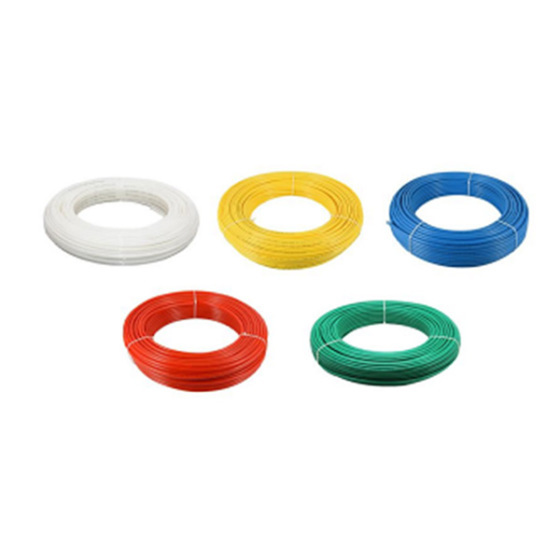
Yantai Aisili 새로운 재료 Co., Ltd. is a polymer engineering company that produces high-performance multi-material pneumatic tubing for a variety of industries. For example, the tubing can be used in automation and robotics, pneumatic air tools, gas cylinders, medical equipment, and other similar applications that require precise air pressure. Yantai Aisili New Material Co., Ltd.’s pneumatic tubing is produced with advanced precision extrusion technology, which allows the company to ensure that the wall thickness of the tubing is consistent and that there is strong bonding between the different layers of the material. This helps to prevent leaks and ensure that the tubing can last for a long time without needing to be replaced. The company also offers a number of different customization options, including the addition of color-coded identification lines on the surface of the tubing to make circuit mapping easier, the use of different levels of hardness on the inner and outer layers of the material to ensure optimal performance at a variety of operating pressures, cut-to-length services to facilitate easy installation, and technical consultation to assist with startup issues. These options are particularly valued in automation-intensive industries around the world.
Conclusion
Selecting the best pneumatic tubing material requires consideration of several key criteria. These include the maximum operating pressure, the potential environmental exposure, required flexibility, compatibility with chemicals, and the long-term cost of ownership. While some materials are better suited to specific applications than others, such as dynamic machinery applications where polyurethane excels, or high pressure applications where nylon is ideal, low pressure, hygienic applications are where polyethylene can be used to best effect. Extremely aggressive chemicals can be tackled using PTFE. However, by using multiple materials within a single pneumatic tubing solution, there are many applications where one solution can be used. Working with experienced pneumatic tubing suppliers who are able to specify materials to individual requirements enables users to create systems that are energy efficient, safe, minimize down time and thus are cost efficient in the long term. Sustainable equipment is also a key benefit.
FAQs
1. What is the difference between pneumatic tubing and pneumatic hoses?
Pneumatic tubing is generally speaking rigid or semi rigid tubing which is used for fixed installations as opposed to hoses. These hoses connect up moving parts within a pneumatic circuit.
2. Can you use water or other fluids in pneumatic tubes?
While materials such as PTFE are suitable for use with liquids due to their inert nature, pneumatic systems are generally designed to operate with compressed air only as liquids can cause damage to valves and actuators.
3. Pneumatic tubes – how often should they be replaced?
Pneumatic tubes are subject to the intensity with which they are used. As a rule, pneumatic tubes are replaced every 2–5 years and can show first signs of wear in the form of cracks or discoloration during regular inspections.
4. Is the use of multi-material tubes worth the investment?
Yes. Multi-material tubes, such as those made from rubber and rigid materials, are suitable for extended periods of operation under mixed service conditions. They offer sufficient flexibility in addition to sufficient structural strength in automated systems and thus save a lot of time that would be otherwise required for frequently changing of tubes in order to resume operation.
5. How to select the correct size of tube?
The size of a tube can be determined by two parameters: the inner diameter of the tube which will indicate the airflow capacity of the tube and the wall thickness of the tube which will indicate the maximum working pressure of the tube. In most cases, the manufacturers of tubes will provide a chart to select the correct size of tube based upon the application for which the tube is required.