Product News
-
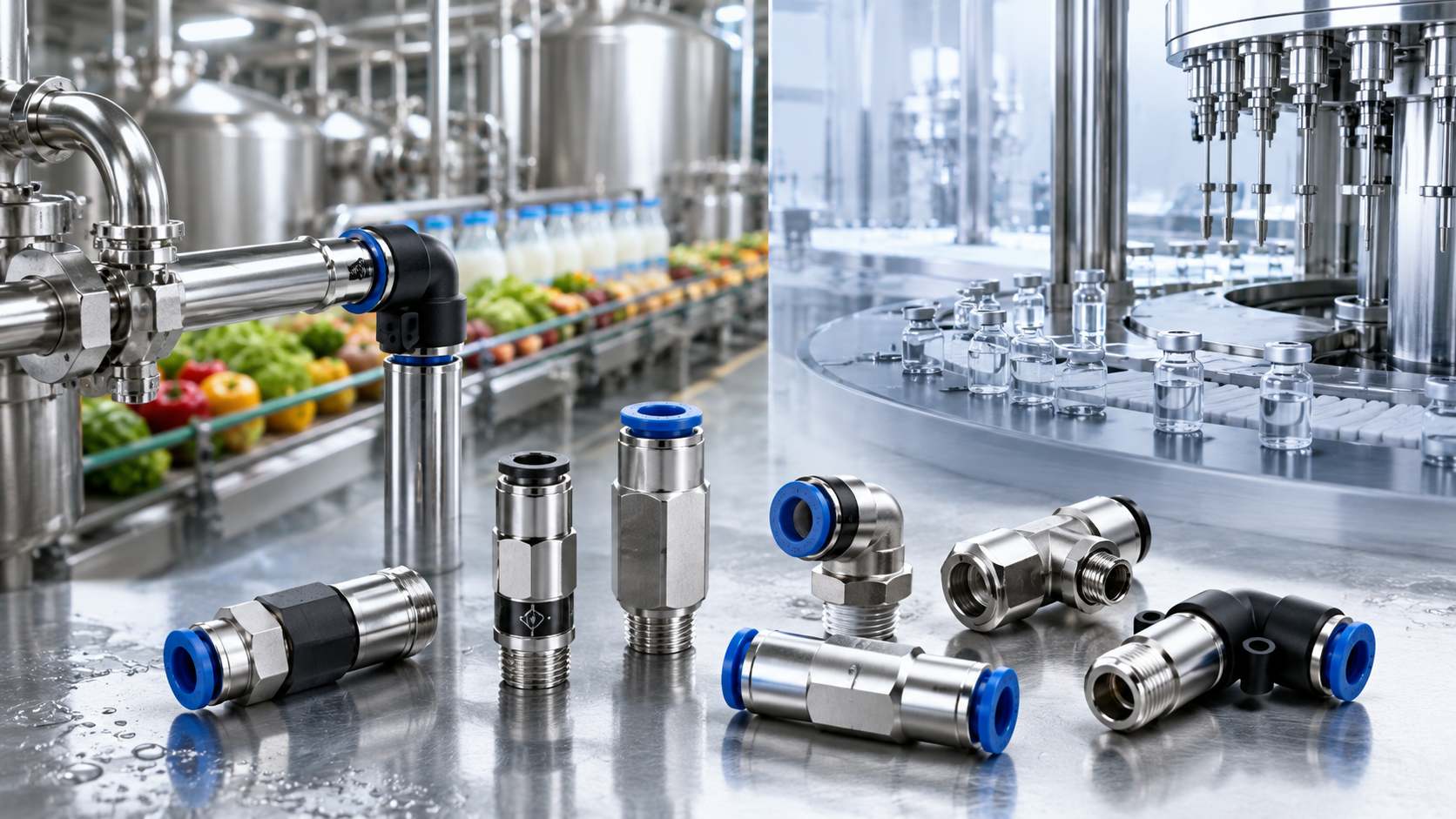
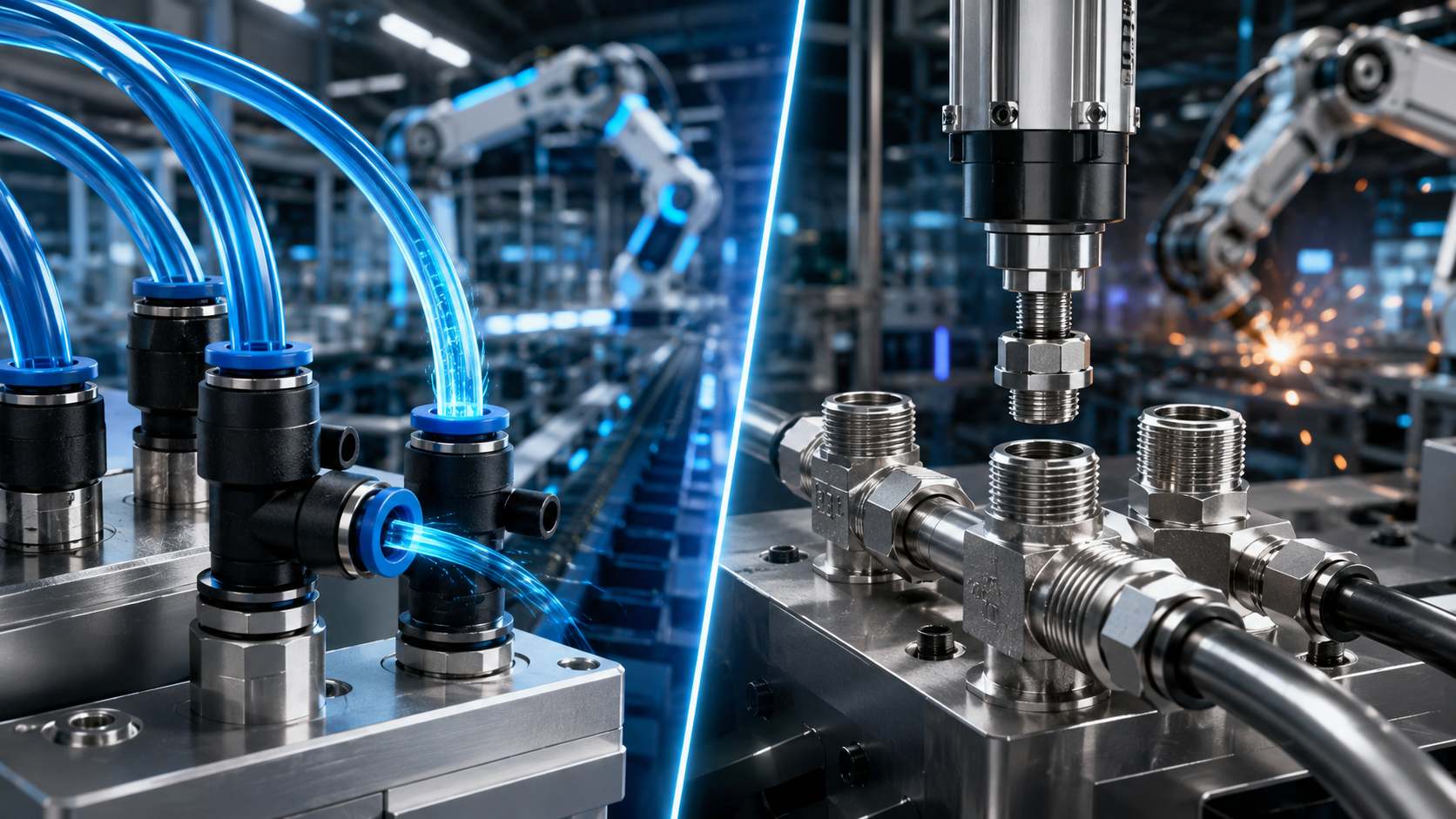
 27 AugBy AdminWhy Are 316 Stainless Steel Push-To-Connect Fittings Preferred in Food Processing and Pharmaceutical Equipment?In the realm of food-processing and pharma machinery, 316 stainless steel push-to-connect fittings are standard solutions for pneumatic system circuits subjected to moisture, washdown, cleaning chemicals, and repeated cleanings. While the utilization of a stainless alloy offers greater protection against corrosion, fittings of this type are nonetheless not inherently sanitary or compatible with product contact. Further qualification is required, including tubing, seals, threads, pressure ratings, temperatures, surfaces, and certifications. For OEM engineers and buyers, the more crucial consideration is the degree to which a fitting can be applied to the hygiene level and exposure risks of their machinery. Why…
 -
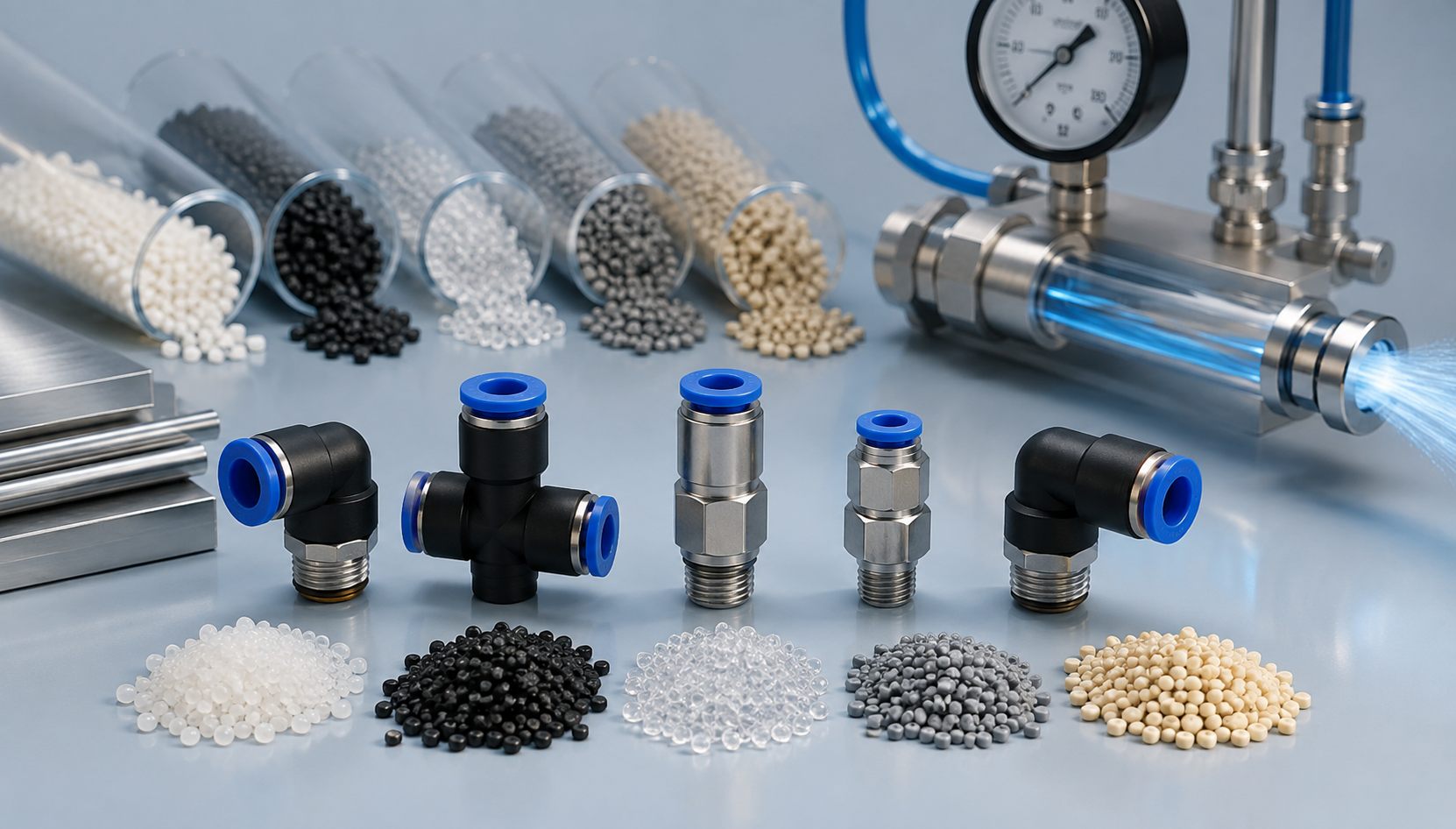
28 AugBy AdminHow Raw Materials Affect the Air Leakage Performance of Push-to-Connect Pneumatic FittingsAir leakage in push-to-connect pneumatic fittings is influenced by numerous factors beyond the action of a single O-ring. Body dimensions, the ability of the gripping element to center the tube, recovery characteristics, and the seating surface are among the key variables. Changes in resin, rubber, and metal composition, tube hardness, or OD tolerances can introduce leakage even in seemingly identical assemblies. This is why raw material control is a critical concern for OEM buyers and quality managers. The interplay between fitting and hose requires closer scrutiny than is typical for threaded connections. Which Raw Materials Have the Greatest Influence…
-
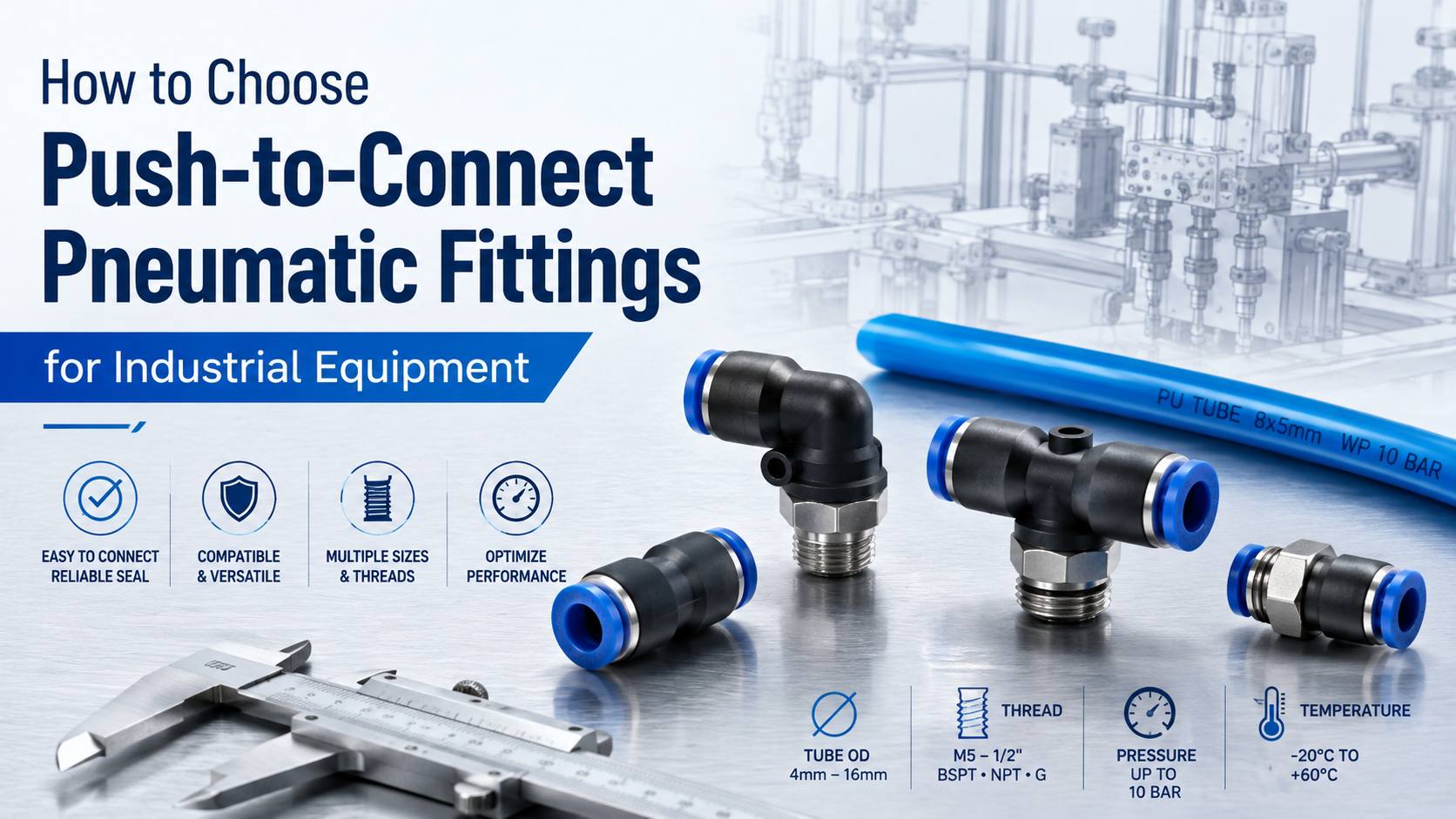
20 AugBy AdminHow to Choose Push-to-Connect Pneumatic Fittings for Industrial EquipmentA push-to-connect pneumatic fitting often costs very little. This is true when you compare it to the expensive machine around it. However, just one wrong fitting can halt an assembly job right away. The usual mistakes are not very complicated. People might pick the wrong tube OD or an almost-matching thread. They might leave insufficient installation clearance. Sometimes, they select a fitting from a familiar KJ/KQ2-style name without checking the actual dimensions. Production volumes eventually rise. When this happens, those small errors turn into costly rework. You face extra leakage checks, replacement orders, and bad downtime. Selecting push-to-connect pneumatic…
-
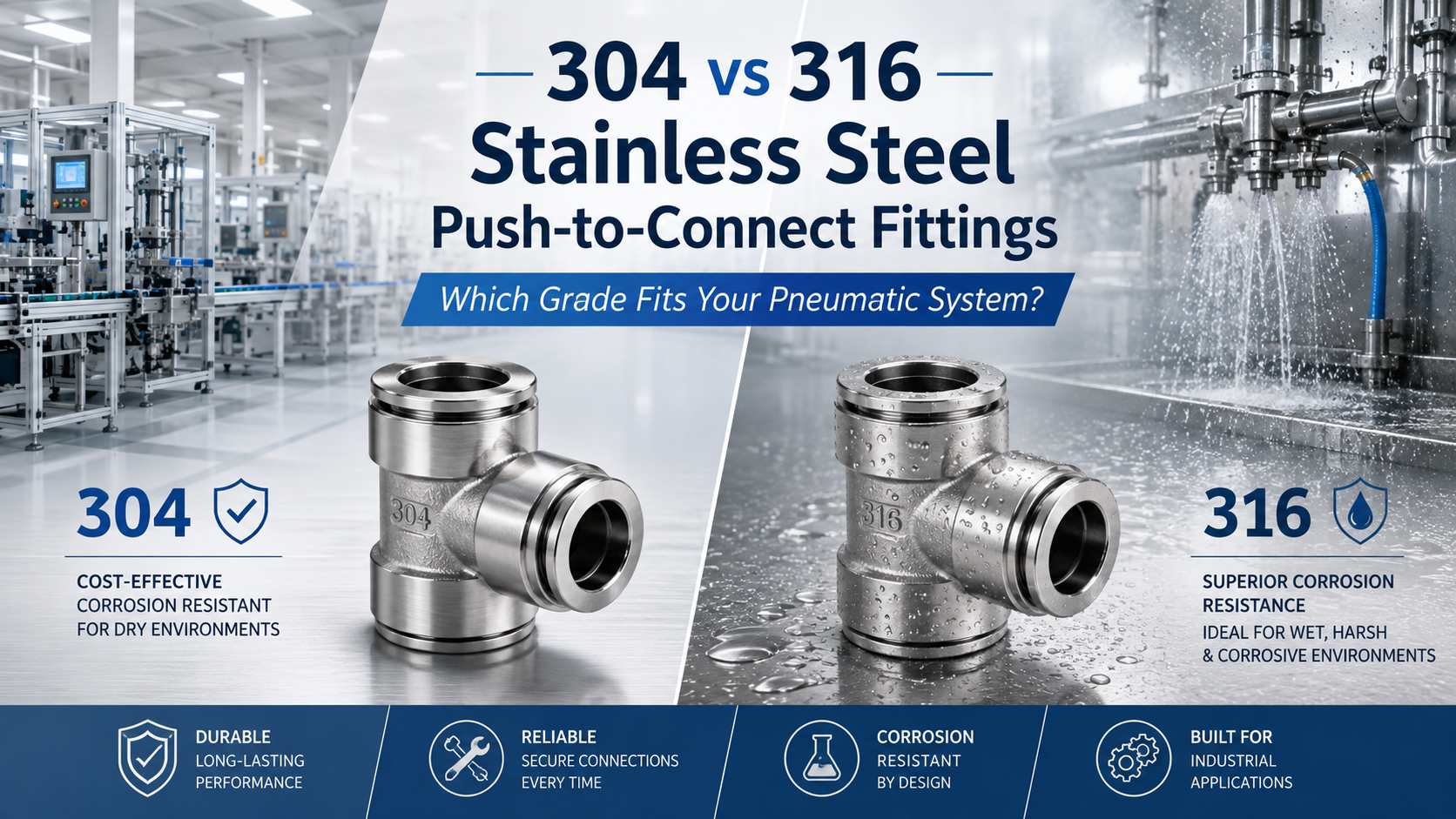
20 AugBy Admin304 vs 316 Stainless Steel Push-to-Connect Fittings: Which Grade Fits Your Pneumatic System?Picking stainless steel push-to-connect fittings often begins with a basic question. Will you use 304 or 316? This choice gets complicated after you install the part on actual machinery. Dampness, strong cleaners, and tube stiffness affect how long the part lasts. Thread styles, pressure shifts, and upkeep schedules also play a huge role. The metal body might fight off rust perfectly. Meanwhile, the inner seal or the tube itself might fail first. OEM engineers and factory buyers must view the metal type as just one detail of the whole joint. It is not the only rule to follow. The…
-
14 AugBy AdminPush-to-Connect Fittings vs Threaded Fittings: Which Pneumatic Connection Is Better for Industrial Automation?A pneumatic connection that leaks little can lead to slow cylinders, poor grips, frequent run time of the compressor, and challenging diagnostics. Push-to-connect fittings and threaded fittings each address some of these problems. The push-in design expedites the installation of tubes and their removal and replacement. Meanwhile, the threaded connection ensures a mechanical link at the valves, manifolds, cylinders, and other fittings. The choice between these solutions depends on pressure, vibrations, tubing material, temperature conditions, maintenance needs, exposure to chemicals, and the frequency of disconnecting. It is vital to consider the entire connection when choosing between push-in and threaded fittings…
-
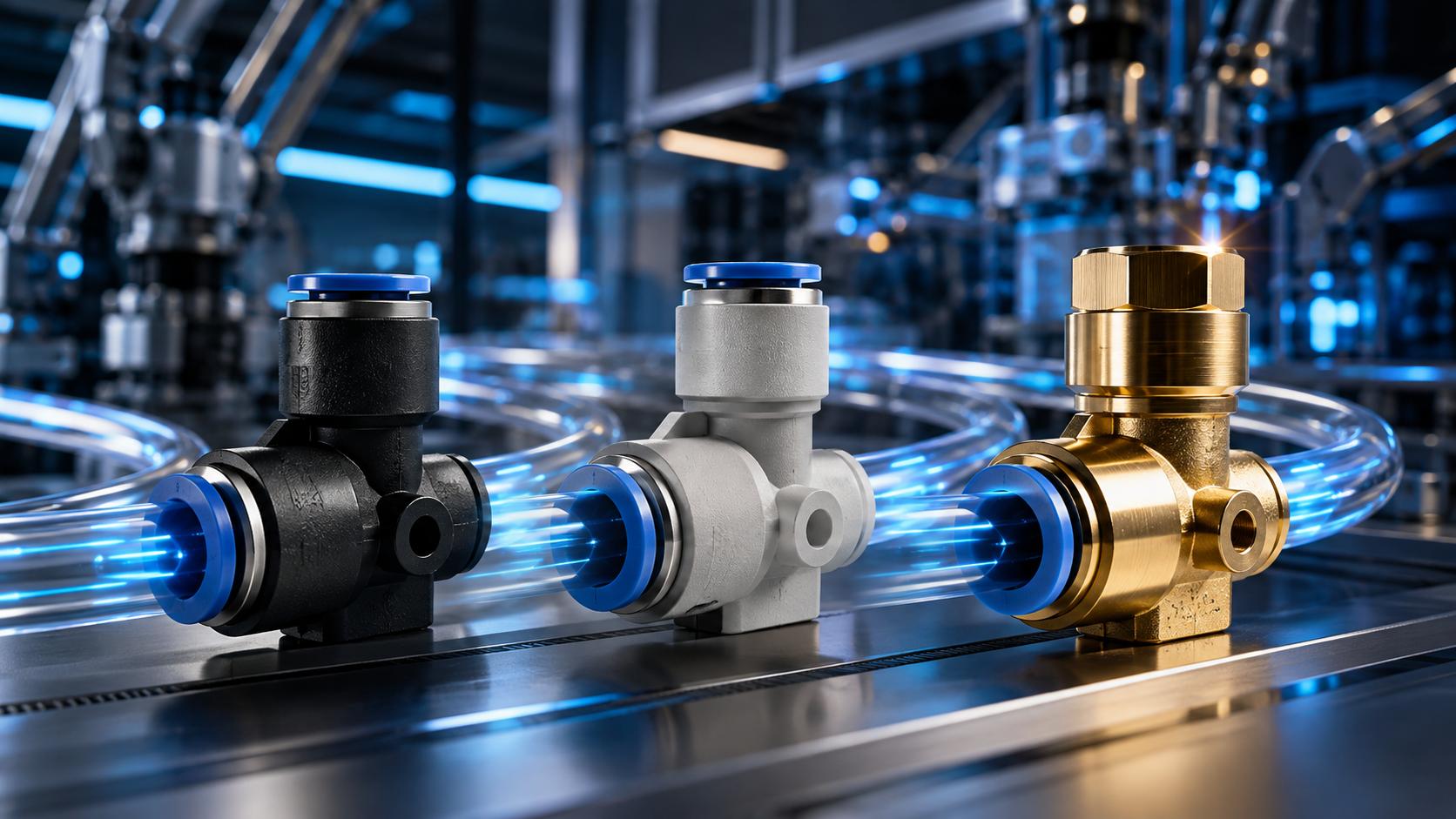
13 AugBy AdminPBT vs PA vs Brass: How Material Selection Shapes Push-to-Connect Pneumatic Fitting PerformanceA push-to-connect fitting can pass a bench leak test and still be wrong for the machine. Body material changes how the fitting responds to heat, impact, chemicals, thread load, vibration, and repeated tube removal. PBT, PA, and brass all solve different problems. The useful comparison is not “plastic versus metal,” but how each material behaves in the actual port, pressure, temperature, and maintenance environment. For KJ and KQ2 type fittings, material selection belongs in the connection design rather than the appearance specification. How Do PBT, PA, and Brass Behave Differently Under Mechanical Load? The fitting body carries thread stress,…