Product News
-
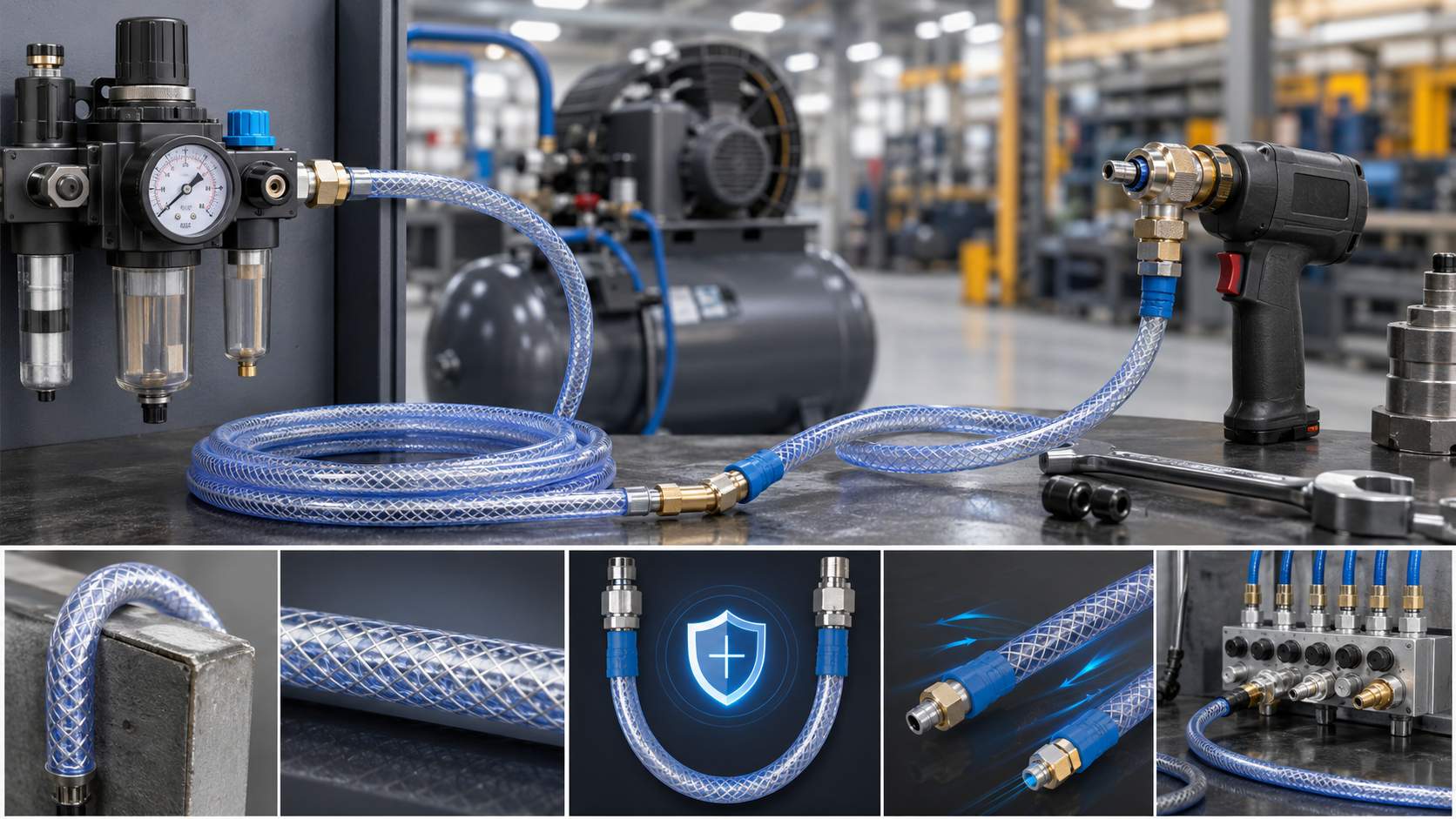
 05 JunBy AdminHow Reinforced PVC Tubing Helps Reduce Air Line Failure in Workshop and Factory UseMany workshop and factory compressed air systems rely on the supply air lines to power pneumatic tools, automation and factory production lines. If an air line fails, the consequences can be costly, lead to accidents and serious downtime. Air hose failures can be caused by the hose suffering mechanical failure, degradation by chemicals or from poor selection and inadequate maintenance. In many industrial environments, reinforced PVC tubing is widely used as it forms a robust and flexible solution superior to other hoses on the market. The reinforced composite structure of PVC hose is typically made of polyester or nylon…
 -
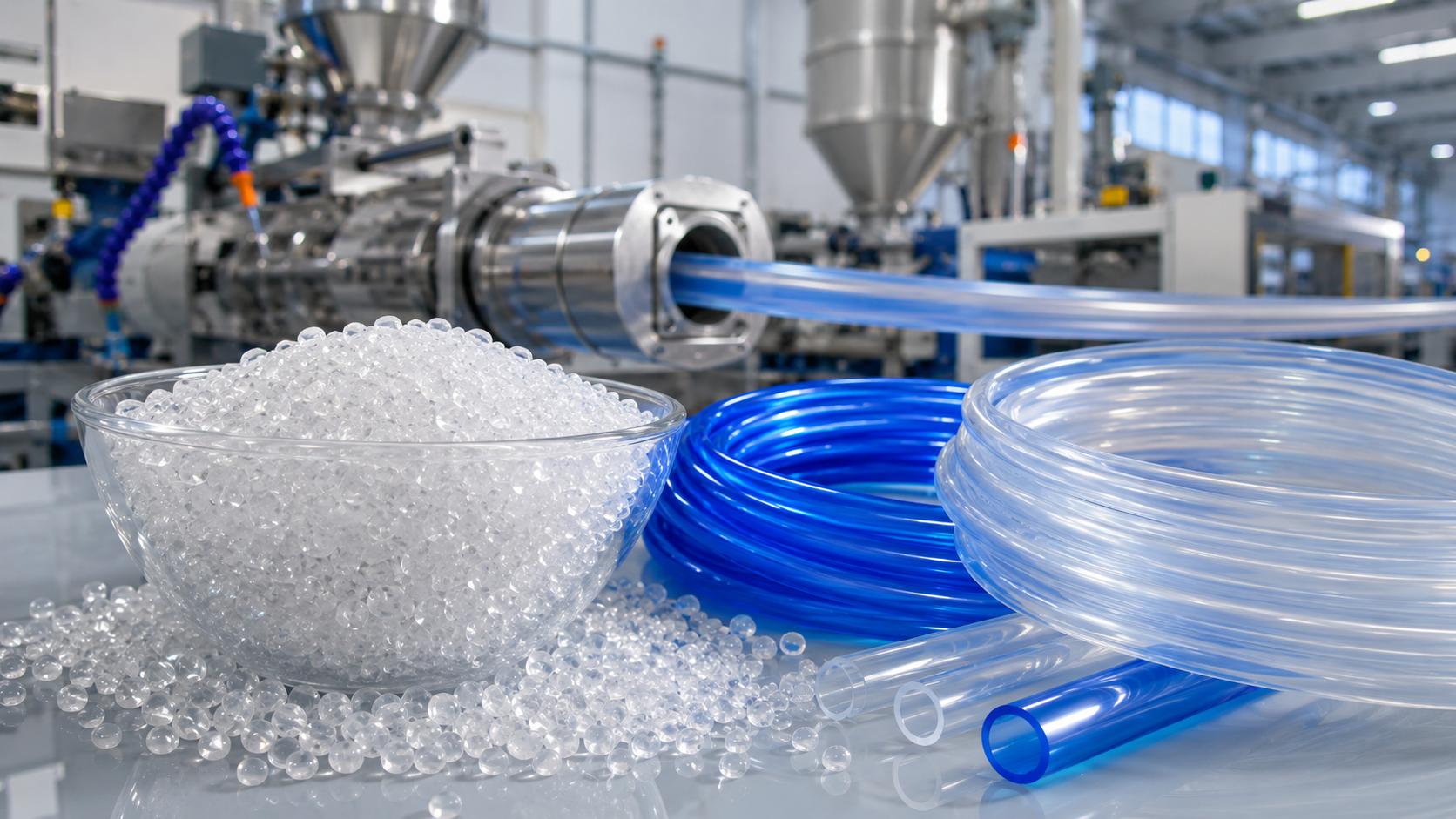
04 JunBy AdminWhat Raw Materials Are Used to Make Polyurethane Pneumatic Tubing?Polyurethane pneumatic tubing commonly referred to as PU tubing, is an critical component in many automated systems, industrial robots and also used in a wide variety of other fluid transfer systems throughout industry. Its flexibility, superior abrasion resistance, and also a large number of chemical resistances allow PU tubing to be used in virtually any kind of industrial environment. When looking at the quality and useful service life of pneumatic PU tubing, attention must be given to the formula of the materials which are used for its production. Every single raw material is used for realizing special mechanical features…
-
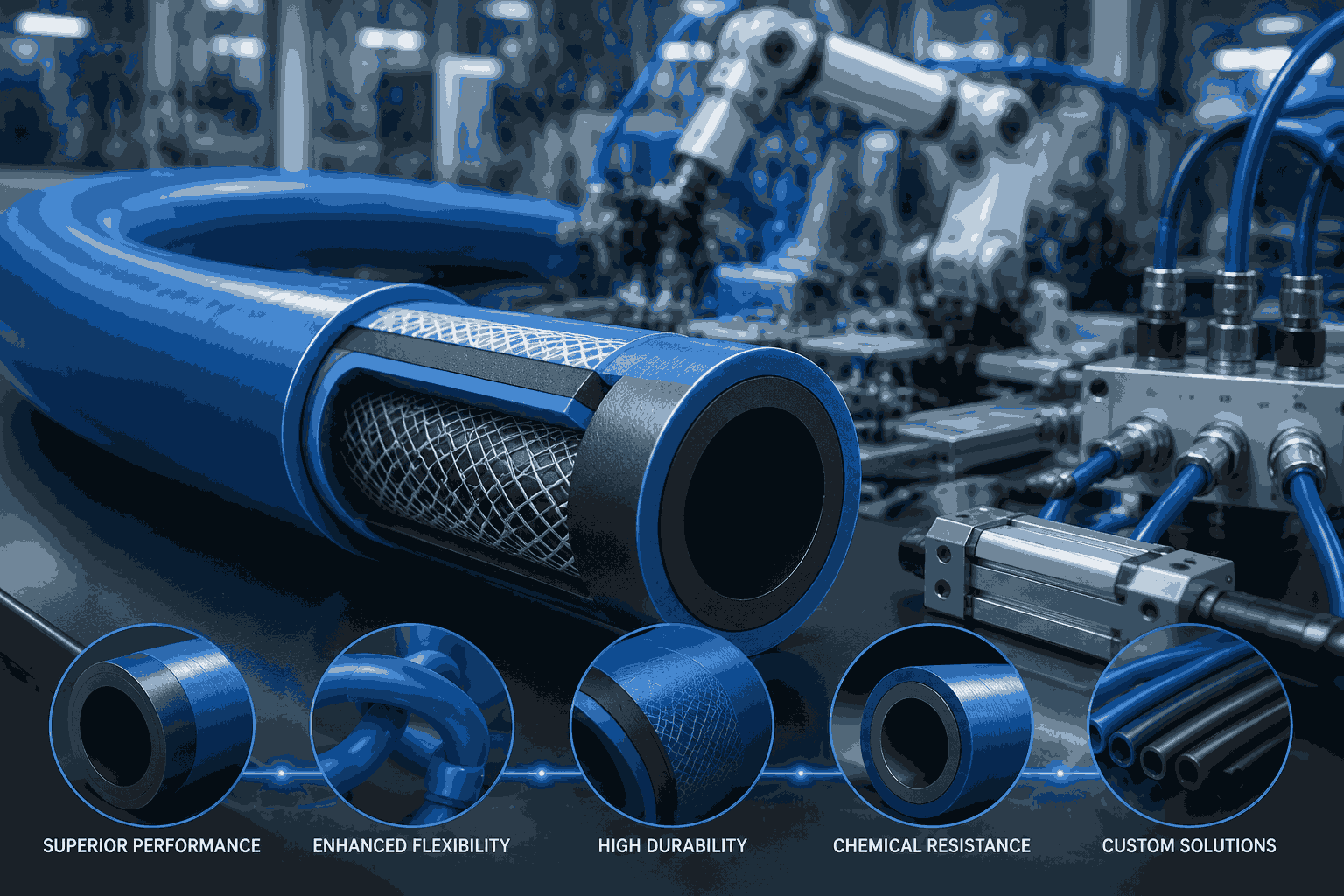
29 MayBy AdminWhy Multi-Material Pneumatic Tubing Is the Future of Industrial AutomationPneumatic systems are nowadays an essential component in industrial automation. With the trend towards more intelligent, flexible and interconnected production facilities a sophisticated pneumatic tubing is required which is able to face different conditions. While simple pneumatic tubing made of one material is sufficient for most applications, there are areas where high pressure, chemical exposure or special mechanical stress are prevalent. In these fields a pneumatic tubing made of multiple materials is the ideal, as it is made of different types of polymers which together form a composite material. By combining e.g. polyurethane, nylon and PTFE optimal properties for…
-
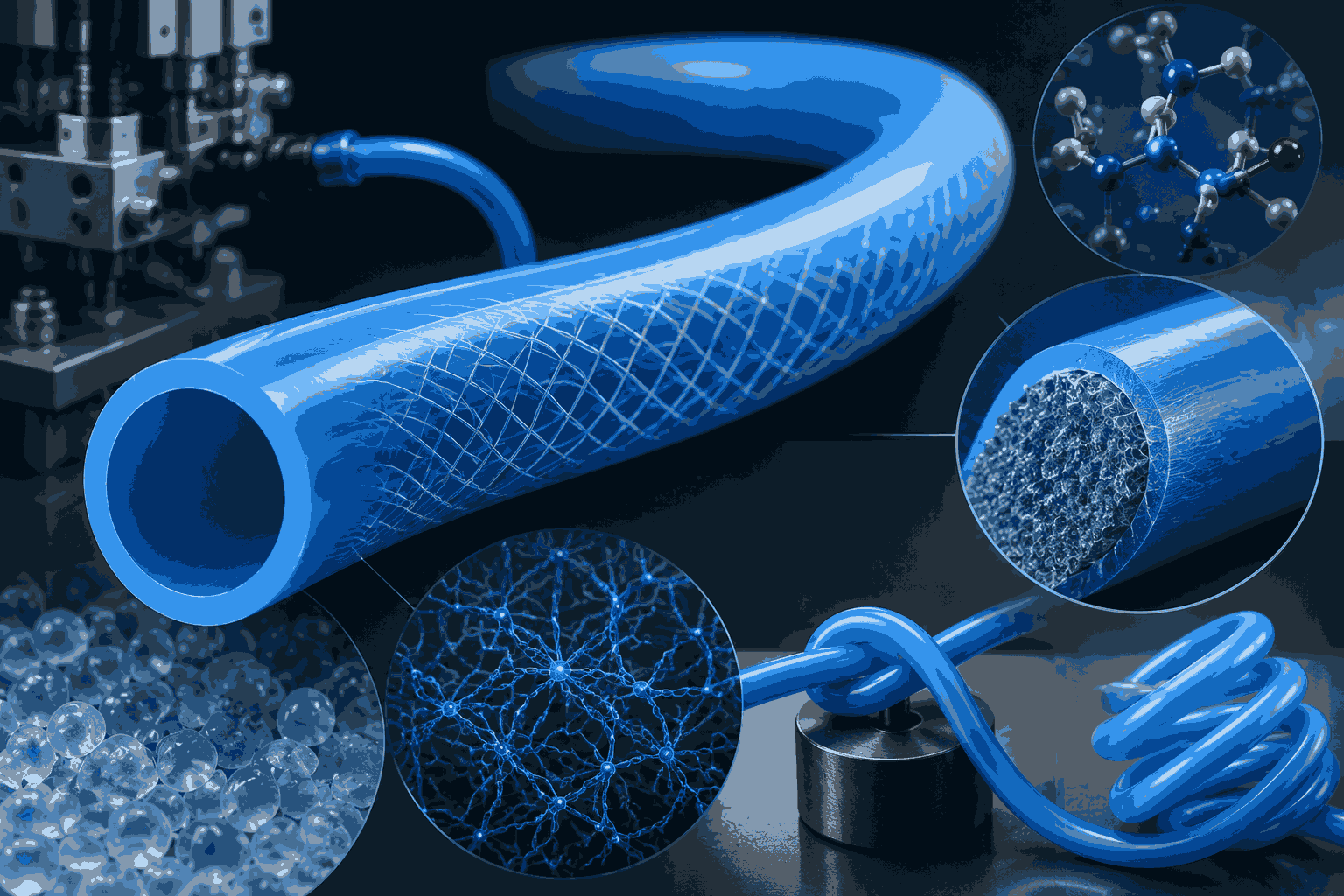
28 MayBy AdminThe Science Behind Polyurethane Pneumatic Tubing’s Flexibility and DurabilityPneumatic tubing made from polyurethane is a very flexible and durable material and for this reason is used in industrial automation, in robotics and in pneumatic systems in general. This special tubing has excellent characteristics thanks to its chemical composition that combines the elasticity of the tubing with the great mechanical resistance it has. Chemical Structure and Molecular Arrangement The molecular chain are flexible, elastic, and are responsible for the tube’s properties regarding tensile- and polyurethane tube has a molecular structure with alternating soft and hard segments. The soft segments of the compression- resistance, whilst the hard segments are…
-
22 MayBy AdminMulti-Material Pneumatic Tubing vs Rubber Hose: Which Lasts Longer?Pneumatic tubing acts as the vital network in industrial automation. It carries compressed air to actuators, valves, and control devices with accuracy. Choosing the right tubing material affects work efficiency, energy use, and system dependability. Lately, multi-material pneumatic tubing has become a better choice than old rubber hoses. This change comes from its strong resistance to weather and physical wear. This piece looks at how these two options stack up in terms of toughness, operation, and value for money. Key Factors Affecting Tubing Longevity The life of pneumatic tubing depends on outside and inside elements. On the outside, shifts in…
-
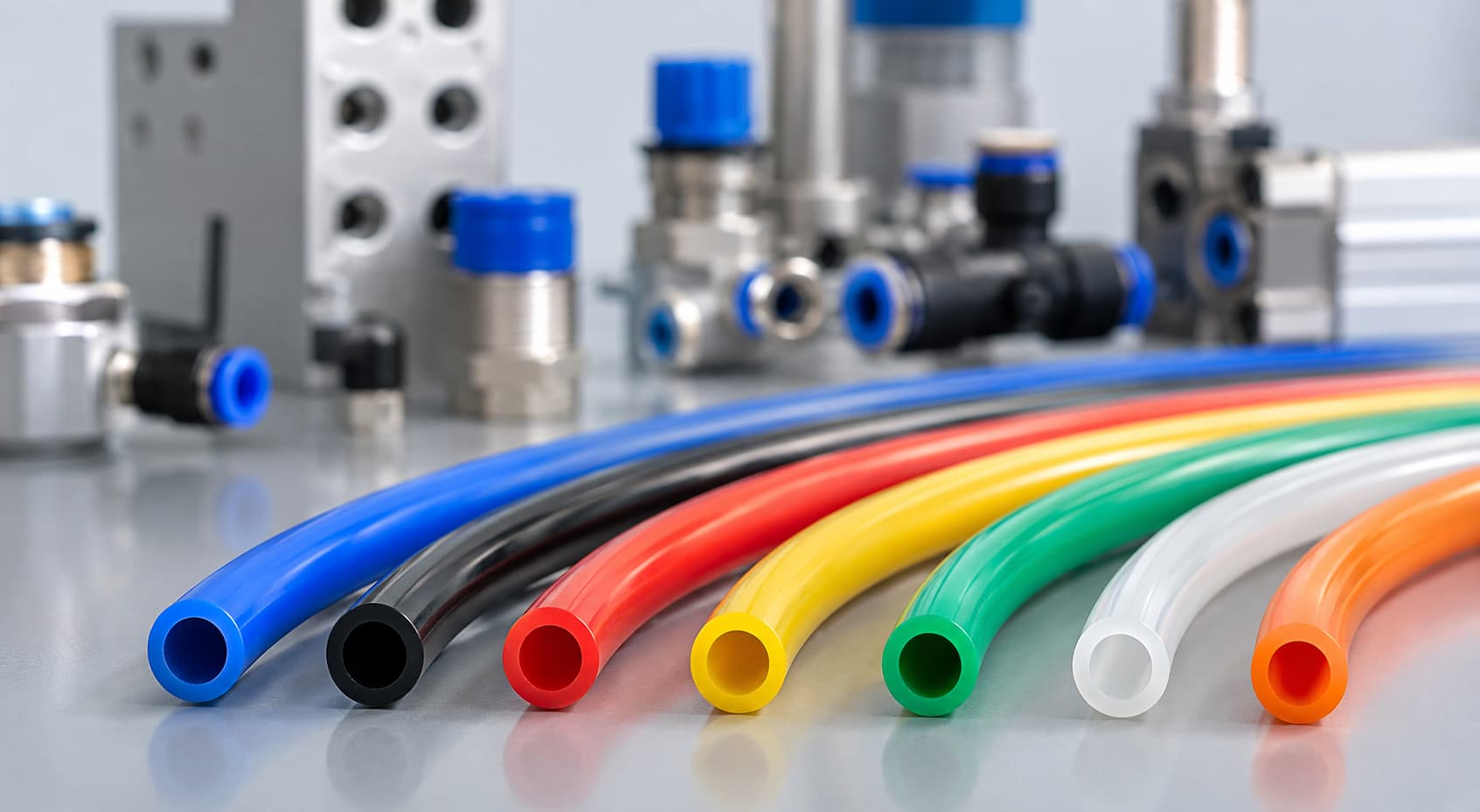
21 MayBy AdminPneumatic Tubing Color Codes: Do Different Colors Actually Matter?Pneumatic tubing serves as a key part in compressed air setups. It carries air or gases to tools, actuators, and other equipment. In factories, where many pneumatic lines run at the same time, color coding helps keep things clear and orderly. Distinct colors let workers and repair staff spot different air paths fast. This cuts down mix-ups during setup or fixes. Some experts say tube color might change how well it works because of added dyes. But most think color mainly aids in spotting lines. It does not really affect how strong or flexible the material is. What Is the Purpose…