


How to Build a Pneumatic Tubing and Fitting Spare Kit for Packaging Machines
The bin is marked “8 mm fittings.” A technician opens it during a stop and finds three elbows, a tee and a reducer. The tube is 8 mm OD, all right, but the port on the machine has a thread. Nothing in the bin will replace the failed joint. That is the trouble with stocking by diameter alone.
I would build the kit around installed circuits, one machine position at a time. On the card, the position comes first. After that: tube, connector and port. Aisili makes PU tube and push-in connectors used around packaging and automation lines. Its range covers custom dimensions and colors. Neither helps much if the old connection goes onto the order sheet as merely “8 mm fitting.”
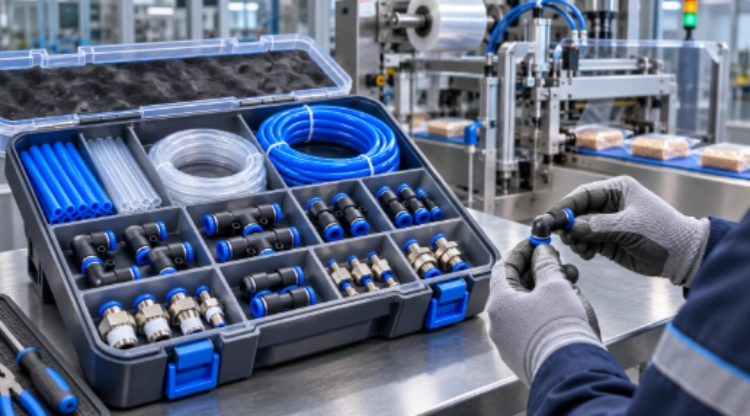
Walk the line before filling a bin
Take the drawing to the machine. A carton erector drawing may show a straight run from the valve bank to a stop cylinder. The real tube goes around a newer guard, then past its hinge. Suddenly the neat line on paper is too short as a replacement length. The drawing still tells you which circuit it is. For the cut length, follow the tube with your eyes. A few labeled photos of the valve bank, bend and panel entry will get the next shift to the same place.
Record the parts a repairer can actually see
A readable tube marking saves time. I would copy it while the run is still in place: material, outside diameter (OD), inside diameter (ID), color, grade code. The fitting needs its own little sketch beside those numbers. A union and an elbow may both grip the same tube, but one of them will not fit the space at this valve. A thread on the port side changes the order again.
Aisili’s 5 × 8 mm PU tube is a useful example: 5 mm bore, 8 mm OD, nominal 1.5 mm wall. At the push-in connector, the 8 mm outside number is the one used to choose the tube side. A label reading only “5 mm air hose” leaves too much open. Add the thread form and size where the fitting enters a valve port. An almost-right thread is easy to spot when it refuses to start by hand; leave it out of the kit.
An unmarked piece needs a physical reference. Keep a known-good sample with the position card until the drawing is checked. A photo of the elbow gets you to the right cabinet; it cannot show the thread accurately or settle the tube wall. A fitting removed because it leaked is a doubtful master sample, so check that one against the verified port before copying it.
Separate stoppage parts from project parts
The short run beside a moving guard may be worth keeping in the emergency kit, especially if it is disturbed at changeover. A special connector for next month’s modification belongs with that project. Once it lands in the repair drawer, it looks approved to anyone who was not there for the trial.
Counting the installed pieces is only the start. That protected elbow deep inside a cabinet may need one spare, while an exposed tube removed with a guard may need several lengths. Look at past repairs and the replenishment time before setting the bin quantity. Two machines can share a bin only when their approved part codes match. Put the machine revision on the label, too. A revised valve block can make a full box of old connectors useless.
Put the right tubing in the kit
A reel of “general PU” is easy to buy and hard to defend when the line stops again. Aisili offers straight, coiled and spiral PU tubes, as well as ester-based PU tubing and ether-based PU tubing. Its PU air tube is light, flexible and abrasion resistant, with oil resistance and a small bend radius. The wider extrusion range includes antistatic and flame-retardant TPU tube, TPEE tube and double-row spring air hose. Keep the material used in the approved build on the kit card. Similar color and bend feel are poor ways to decide that another formulation will do.
What goes on the reel tag
The reel tag needs more than a color. OD, ID, grade, hardness, supplier code and cut length all belong there. Aisili can alter size, hardness, color and performance on an OEM tube order. That makes “blue PU” a poor buying description. Blue may help a mechanic trace one line through a crowded machine. It says nothing about its pressure rating. A tube near cleaning chemicals, cold storage or oil mist needs that exposure written into the order, where the grade can be checked against it.
Follow the installed route when setting a spare length. The shortest line on the drawing can drag across a hinge or pull at the push-in port. Leave enough for a square recut if the end is marked. During a stop, a short replacement may seem enough for the rubbed section. The bracket that cut the old tube is still waiting for the new one. Move or protect that contact point, then measure the corrected route for the kit card.
Storage is part of the replacement quality
An opened reel easily loses its tag among other blue coils. Its tag can be tied to the core, with the free end capped. I would rather give that reel a clear shelf space than find it flattened under a box of fittings. Damp storage and time on the shelf can age or hydrolyze PU hose. You may first see a crack when bending a length to install it. The approved record needs the pressure and temperature limits as well. Heat can lower the allowed working pressure. Aisili PU tube is used with compressed air, ordinary industrial water and noncorrosive oil. Hot or corrosive fluids can damage the hose.
Before extrusion, Aisili screens raw and auxiliary materials against sixteen internal physical and chemical indicators. Online diameter control targets ±0.12 mm. None of that tells you what happened to a reel in transit or on a shelf. Receiving has to look at the coil in front of it; a crushed, cut or dirty length should not reach the machine.
Stock fitting functions, not a random assortment
The first question at a failed joint is what it connects. Tube to tube? Tube to a threaded valve? One supply line to two outlets? Ask it while the old fitting and port are in view. Look at the space around the release collar as well. A nominally correct connector may fit in, yet leave no room for fingers to release it at the next repair.
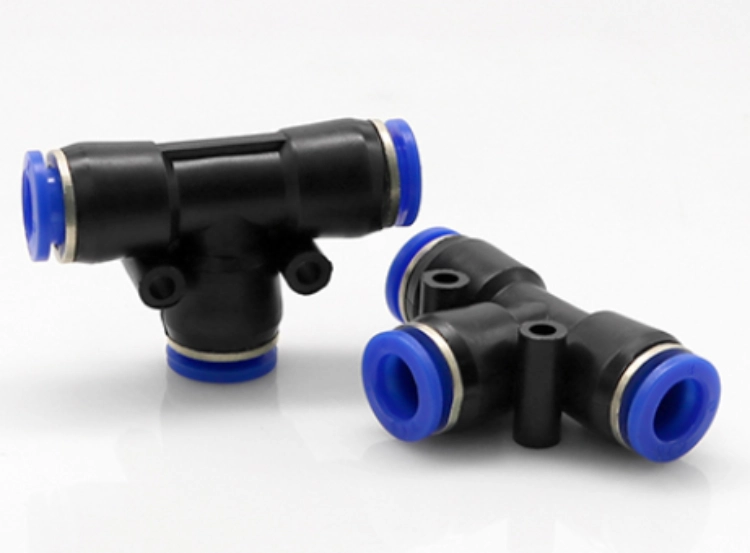
The PE Series union tee belongs only where the approved circuit has a branch. Do not use a tee to create a new outlet just because it is the part on the shelf. The PG Series reducing union joins two tube outside diameters in a straight run. Put the size of each side on the kit card. It cannot replace a threaded adapter at a valve port.
The tube and a quick push-in connector can come from Aisili together. For an OEM kit, I would ask for a matched sample and mark it with the machine revision. OD and ID alone are not enough: the fitting series, port style and body have to go on the request. “Suitable for 8 mm tube” still leaves the branch and thread unanswered.
Before a new batch reaches the shelf
Check the new stock on a receiving bench, away from the live machine. Lay the label beside an approved spare sample; a wrong grade or size is easy to set aside here. Check OD and look closely at the surface the connector will grip. One square-cut sample in the actual fitting series is more useful than a whole reel admired from its wrapper. It should seat fully; a gentle pull can expose an obvious mismatch. Use a verified gauge or an approved spare mating port for threaded parts. The installed circuit stays untouched until the planned repair.
The assembled connection still needs the plant’s pressure and leak check. A burst figure from a material test does not set the machine air pressure. For Aisili PU tubing, the burst-to-sustained-working-pressure safety ratio is 3:1; the selected grade still needs its own working rating on the stock card. Its tubing checks cover burst behavior, hydrolysis resistance, flexibility, bend radius and insertion force. For a custom grade, find out which results belong to that order. The tube and connector then have to pass the maintenance check used on their circuit.
By the time loose fittings have rolled around in a drawer, some have dirt in the bore and nobody can read the code. Bag them by approved part. Put a sharp tube cutter in the same kit; a crushed or angled end may leak even when the push-in connector itself is sound.
Refill it from repair records
The used bag tells you what left the shelf, not why the machine needed it. Put a short note against the position after the repair: rubbed through at guard, pulled from port, damaged during changeover. When the same guard keeps eating tube, look at the route before raising the stock level. A bent fitting points toward hose reach or a loose bracket. Next month’s reorder will make more sense with those notes beside it.
Aisili has bases in Yantai and Linyi and seven extrusion lines. Standard tube sizes are normally stocked; a custom grade takes a separate production slot. Ask for the current schedule before setting a reorder point on that grade. Keep the sample, dimensions and mating fitting code with the purchase record. A future reel should reproduce the installed connection, not just arrive in the same color.
For a quote, send Aisili the machine-location list: tube material, OD and ID, hardness and color, the route length, fitting shape, thread details, approved sample and expected use. Send the list to Aisili with the machine revision in the subject. Ask for the tube and mating fitting to be identified together, then put those codes on the bin before the line needs them.