


What Drives the Total Landed Cost of Pneumatic Fittings for B2B Buyers?
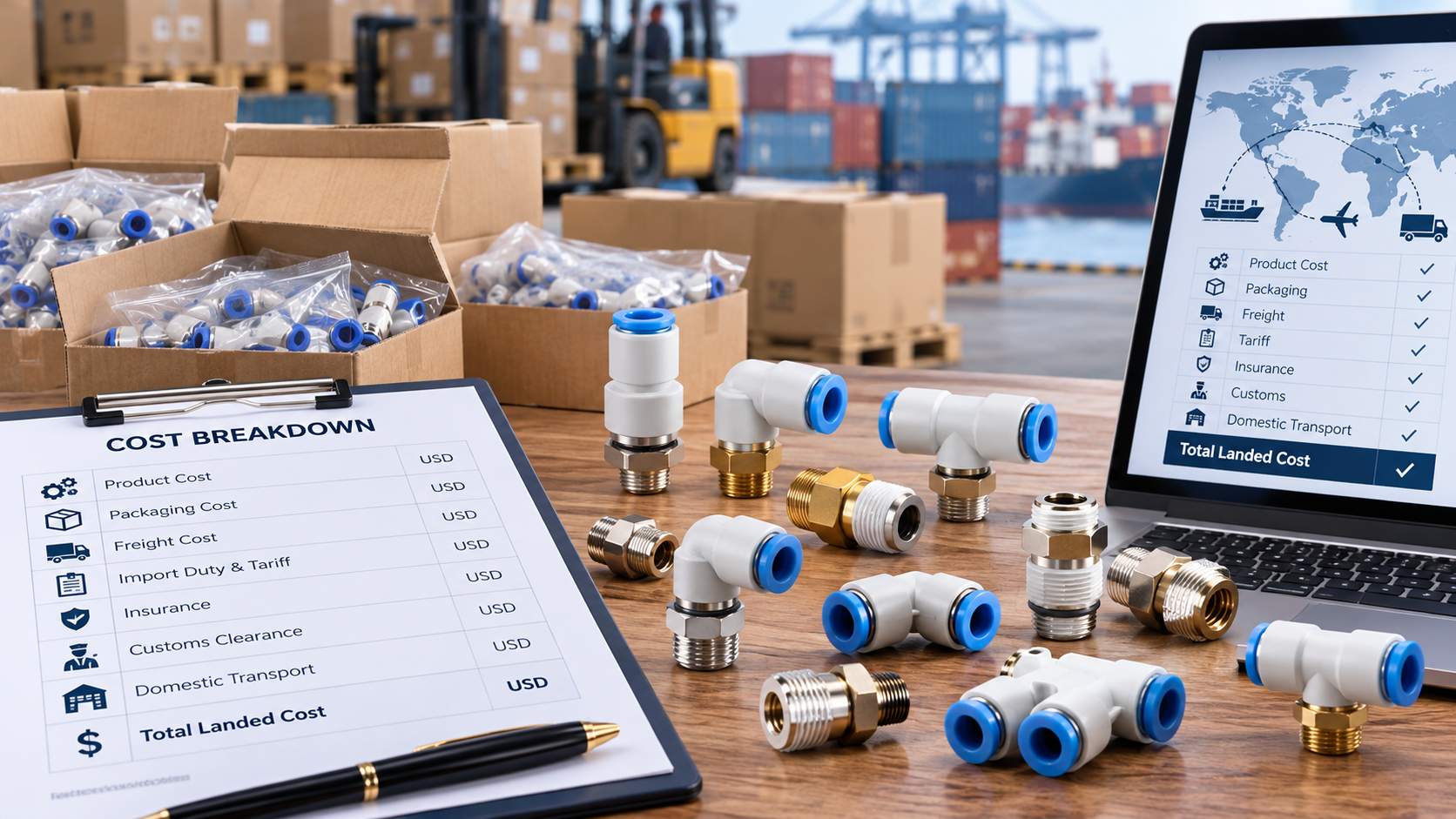
A fitting that costs less on the quotation may cost more by the time it reaches the assembly line. International freight, customs charges, unsuitable packaging, and rejected components can all affect the final purchasing cost. For buyers handling several fitting sizes or arranging regular overseas shipments, these expenses are not always visible when comparing supplier prices. The first step is to establish exactly what each quotation covers. Only then can purchasing teams decide whether the apparent saving is genuine or simply the result of different product specifications and delivery arrangements.
Why Can a Cheaper Pneumatic Fitting Become More Expensive?
Consider a manufacturer ordering straight connectors for an assembly line. One supplier offers a lower unit price, but the quotation does not clearly identify the thread standard. The shipment arrives with fittings that cannot be installed directly into the machine ports.
The buyer now has to arrange replacements, inspect the remaining stock, and determine whether the assembly schedule needs to change. The original price advantage has little value when the components cannot be used.
This is why competing offers should be based on the same product specification. Tube OD, thread standard, body material, fitting configuration, and approved dimensions need to be settled before purchasing begins.
Are Both Suppliers Quoting the Same Product?
A polymer-and-brass connector and a stainless steel connector may serve similar purposes, but they do not necessarily meet the same equipment requirements. Even within one material group, different thread forms or body configurations can prevent substitution.
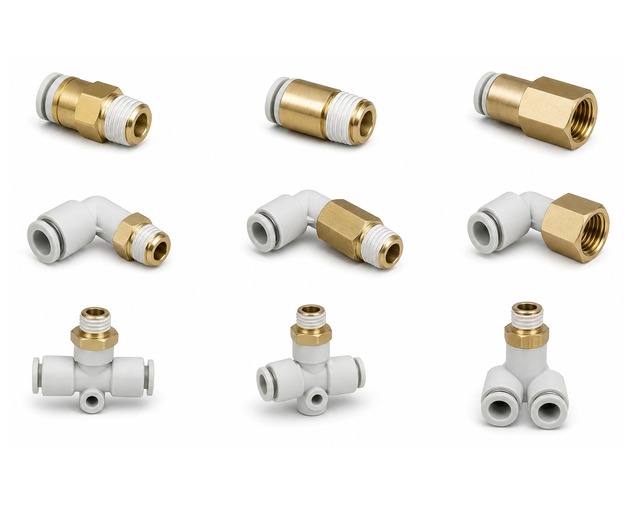
When preparing a mixed order, buyers can use the pneumatic fittings and connectors category to identify the configurations needed for each machine.
The RFQ should list these components separately instead of requesting one general price for pneumatic fittings.
Which Shipping Costs Should Be Included in the Comparison?
An EXW quotation and a DAP quotation describe different delivery arrangements. The first generally leaves the buyer responsible for arranging transportation from the named location, while the second includes delivery to an agreed destination, with import clearance and applicable duties generally remaining the buyer’s responsibility.
Comparing those prices without adjusting for freight and import expenses can give purchasing managers the wrong impression of the actual cost.
Before approving a quotation, confirm the named delivery location, transport mode, insurance arrangements, customs responsibilities, and any local delivery charges.
A quotation covering transport to the destination port is not equivalent to one that includes delivery to the buyer’s warehouse.
How Should the Final Cost Be Calculated?
The practical calculation is:
Landed Cost per Accepted Fitting = Total Applicable Purchasing and Delivery Costs ÷ Accepted Quantity
Depending on the commercial agreement, the total may include the product invoice, freight, insurance, import duties, customs brokerage, and separately charged inspection or packaging.
Charges already included in the supplier’s quotation should not be counted again.
When Do Packaging and Inspection Become Purchasing Problems?
Mixed fitting orders can contain dozens of components that look almost identical. A distributor receiving straight connectors, elbows, and reducers in different sizes needs to identify each item quickly before allocating stock to customer orders.
Poor labeling can turn a routine warehouse task into hours of sorting. For OEM manufacturers, the same problem may affect assembly when workers receive parts with unclear model identification.
Packaging requirements should therefore be discussed before shipment, particularly when individual SKUs require separate bags, labels, or cartons.
Inspection costs can also arise after delivery. If a batch contains damaged threads or incorrect dimensions, the buyer may need to quarantine the goods and arrange replacement components.
The purchasing agreement should establish how rejected products are handled and who is responsible for replacement transportation or other agreed expenses.
How Can Mixed Orders Be Managed Without Creating Excess Inventory?
Combining several fitting models into one shipment may simplify freight and receiving arrangements. However, purchasing more components than the production schedule requires can offset those savings.
A manufacturer may use the same straight connector across several machines while ordering a particular elbow only for one equipment configuration. The straight connector may justify regular stock, but the project-specific fitting needs a different purchasing approach.
The KJ/KQ2-type pneumatic fitting range includes different connection configurations that should remain separately identified within a consolidated order.
Should Buyers Accept a Higher Minimum Order Quantity for a Discount?
That depends on expected consumption.
If the additional quantity will be used in upcoming production, a larger order may be reasonable. If the fitting is unlikely to be used again, the discount may leave the buyer holding unnecessary inventory.
Before accepting a volume-price offer, compare the proposed quantity with actual demand and the possibility of future machine design changes.
What Should Be Confirmed Before a Supplier Is Approved?
A useful purchasing comparison brings the technical and commercial details together. Each supplier should be quoting the same fitting specification, quantity, packaging requirements, and delivery destination.
The final review should also establish whether the supplier can provide an approved sample, maintain consistent specifications for repeat orders, and handle nonconforming shipments under agreed conditions.
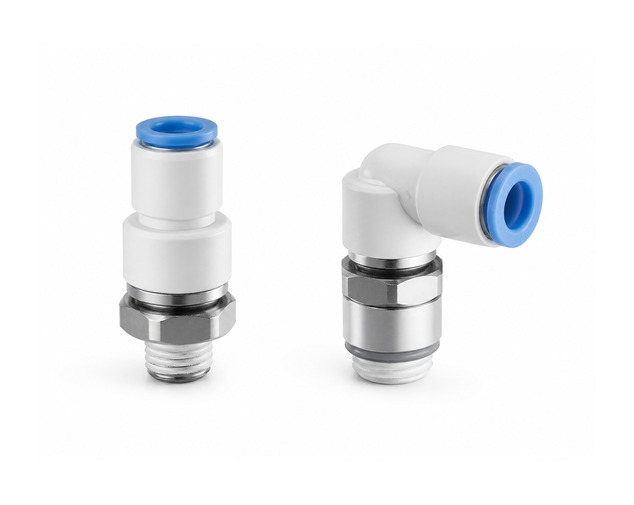
For a mixed order, the purchasing document should identify each model separately, including tube OD, thread, body material, quantity, and drawing reference where available.
Price validity, payment terms, delivery schedule, and inspection requirements should be confirmed before the purchase order is issued.
A clear record makes later quotations easier to compare without requiring the purchasing team to reconstruct the original agreement.
Need Help Matching Pneumatic Fitting Specifications to Your Purchasing Requirements?
Yantai Aisili New Material Co., Ltd. supplies pneumatic tubing and related connection components for industrial automation. The company operates manufacturing facilities in Yantai and Linyi, Shandong, with seven extrusion production lines supporting its tubing operations. Its product portfolio includes polyurethane tubing, multi-material tubing, and pneumatic fittings for different connection requirements. Buyers preparing mixed orders can review the KQ2 Type Threaded Push-to-Connect Fittings range when identifying straight, elbow, and branch configurations. Providing approved drawings, tube and thread specifications, quantities, packaging requirements, and delivery details through the company’s contact page establishes a clearer basis for quotation and sample evaluation.
Conclusion
Pneumatic fitting costs should be compared only after suppliers have confirmed the same technical requirements and delivery conditions. Freight, import charges, packaging, rejected parts, and unnecessary inventory can change the value of an apparently inexpensive quotation. Purchasing managers should calculate landed cost against accepted quantities, confirm responsibility for additional charges, and retain the approved fitting specification for future orders. These records provide a practical basis for comparing suppliers without introducing avoidable purchasing risks.
FAQs
1. What is included in the landed cost of pneumatic fittings?
Landed cost may include the product invoice, freight, insurance, import duties, customs brokerage, and separately charged packaging or inspection expenses. The exact calculation depends on the agreed delivery terms and should not count expenses already included in the supplier’s price.
2. Why do similar pneumatic fittings have different prices?
Differences may result from body materials, connection dimensions, internal components, order quantities, inspection requirements, and packaging. Buyers should confirm that competing quotations meet the same approved specification before treating a price difference as a genuine purchasing advantage.
3. Is buying pneumatic fittings in bulk always cheaper?
Not necessarily. Larger orders may reduce unit prices or consolidate freight, but excessive stock can tie up working capital. The purchasing quantity should reflect expected consumption, repeat-order frequency, and the possibility of future equipment design changes.
4. How should rejected fittings affect a supplier cost comparison?
Rejected components may create additional inspection, replacement, transportation, and production-planning expenses. Buyers should use actual inspection results and confirm the supplier’s responsibilities for nonconforming goods before calculating the final purchasing cost.
5. What information should a pneumatic fitting RFQ include?
Provide the fitting configuration, tube OD, thread specification, body material, approved drawing or sample, quantity by SKU, delivery destination, packaging requirements, and inspection expectations. These details help suppliers prepare quotations based on the same purchasing requirements.