


How Should OEM Buyers Specify C-Type Quick Coupling Sealing and Safety Requirements
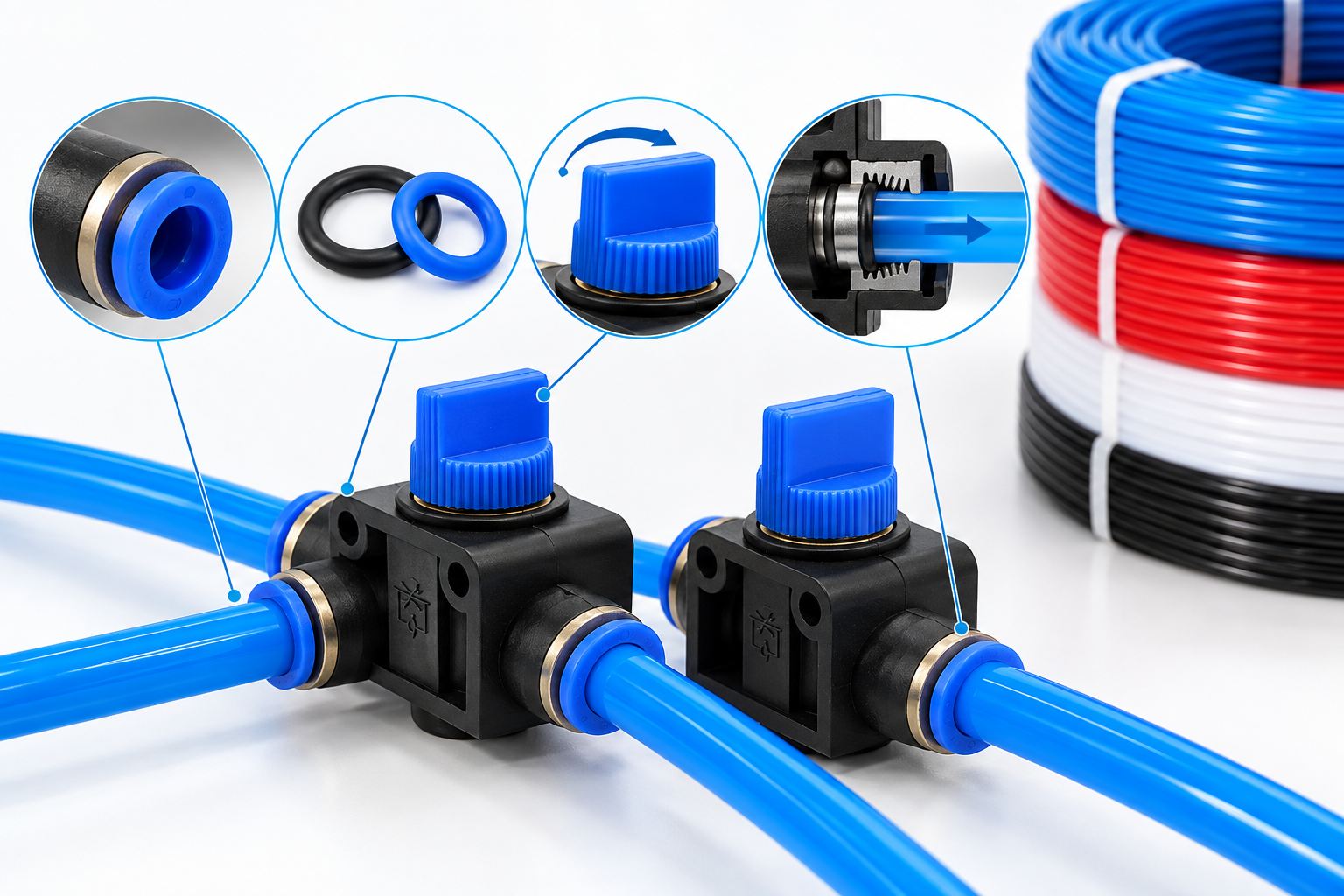
OEM buyers should specify a C-Type quick coupling as a complete safety and sealing assembly, not as a catalogue shape alone. The purchase specification should connect seal material, pressure, media, connection method, release behavior, and production validation to the equipment’s actual service conditions.
Which service conditions must be fixed first?
Before selecting a seal or coupling configuration, buyers should describe the operating envelope that the assembly must withstand.
Define the operating envelope
Start with the working medium, pressure range, temperature range, connection frequency, and installation environment. Dry indoor air, coolant mist, cleaning chemicals, outdoor moisture, and dusty service can place different demands on seals and coupling bodies. The RFQ should also state whether the coupling is a permanent connection, a maintenance port, or a frequently exchanged tool connection.
How should sealing performance be specified?
With the service conditions defined, the next step is to turn sealing expectations into a repeatable specification and test.
Turn “leak-free” into a testable requirement
Define the seal material, contact geometry, insertion depth, and acceptable leakage method. The plug must reach its designed position before the seal is compressed. Ask the supplier to identify the dimensions that control sealing and to provide a repeatable pressure-decay, bubble, or flow test method. “Leak-free” is not a measurable acceptance criterion until the test pressure, duration, medium, and limit are written down.
Separate leakage paths before comparing samples
An assembled connection can lose air at the mating seal, the threaded port, or the hose termination. Record where leakage occurs before rejecting the coupling design. Otherwise, a port-sealing problem may be mistaken for a defective internal seal, and changing the coupling will not resolve the installation fault. Use the approved mating half and installation method for each comparison. Any change to thread sealant or tightening procedure should be documented separately from a change to the coupling itself.
For pressure-decay testing, agree the enclosed volume, stabilization period, measurement interval, and instrument resolution. Temperature changes can affect the reading, so samples need comparable conditions. A bubble test may help locate a leak, while a quantified flow measurement may suit an agreed leakage limit. The buyer and supplier should select a method appropriate to the acceptance decision; results from different methods should not be treated as interchangeable without an agreed correlation.
What safety functions should be verified?
A sealing specification must also address how the operator connects, isolates, and releases the coupling during service.
Connect locking to pressure release
Check that the coupling gives positive connection confirmation, prevents partial engagement from appearing secure, and resists accidental sleeve movement. If disconnection can occur under residual pressure, specify the required isolation and venting sequence. Verify hose movement, operator force, and any discharge during a controlled disconnect test.
Confirm the permitted connection state
Self-locking does not by itself establish that a coupling supports connection or disconnection under pressure. Ask for the operating restrictions for the exact plug-and-socket combination. If no such capability is documented, define isolation and depressurization as prerequisites for service. Any pressurized release evaluation should be planned by qualified personnel using suitable restraints and guarding, rather than attempted by an operator at an exposed machine connection.
How should samples be validated before production?
The specification should then be verified on a sample assembly that matches the final hose, port, routing, and access conditions.
Test the complete hose-and-port assembly
Test the coupling with the approved hose, thread or barb end, adjacent brackets, and actual routing. Record connection force, retention, leakage, sleeve travel, and pressure-release behavior. Repeat the test after the planned connection cycles and inspect the seal, plug nose, retaining parts, and sleeve for wear or deformation.
Compare results before and after exposure
Record baseline leakage before cycling or environmental exposure, then repeat the same measurement afterward. This makes deterioration visible even when the sample still connects normally. Where the equipment encounters cleaning fluids or temperature changes, agree an exposure procedure that reflects those conditions and stays within documented component limits. Do not substitute a generic accelerated test for the application’s actual service conditions without explaining what the test demonstrates.
A useful report identifies each sample, its configuration, the procedure, the result, and any deviation. Separate failures caused by the coupling from failures caused by fixture leakage or incorrect assembly. When a sample fails, record the corrective action and repeat the affected checks before approval; a replacement sample alone does not explain whether production has addressed the cause.
What belongs in the purchase record?
Finally, the approved requirements need to be preserved so production, inspection, and replacement decisions remain aligned.
Preserve the approved revision
| Requirement | Record in the RFQ or drawing | Acceptance evidence |
| Interface | C-Type profile, size, thread or hose barb, hose OD | Dimension and fit check |
| Sealing | Seal material, medium, pressure, temperature, leakage limit | Defined leakage test |
| Safety | Lock confirmation, release sequence, residual pressure rule | Functional disconnect test |
| Durability | Cycle count, side load, service frequency | Post-cycle retention and seal inspection |
How should the incoming inspection be documented?
The first production lot should be checked against the approved drawing and sample. Record the part number, drawing revision, lot number, interface dimensions, seal identification, and test equipment used. A practical inspection plan can combine a visual check, a fit check with the approved hose and port, a pressure or leakage test, and a functional locking check. The exact sampling level depends on the equipment risk and order volume, but the acceptance method should be agreed before shipment rather than invented after a problem appears.
What changes require requalification?
Requalification is appropriate when the hose OD, hose material, port thread, seal compound, pressure range, temperature range, sleeve design, or routing changes. These changes can alter insertion depth, friction, retention, and leakage even when the product name remains the same. Buyers should also review a change when the coupling moves from a protected indoor panel to an exposed service point, because contamination and operator access can change the real risk.
How should substitution be controlled?
The purchase record should identify the approved coupling family, plug and socket relationship, seal option, and any permitted alternatives. A similar-looking component should not be accepted only because it fits the hose. Require the supplier to identify material or tooling changes, and require engineering review when a substitution changes the locking force, release sequence, sealing surface, or pressure rating. This keeps repeat orders aligned with the sample that passed the original validation.
Need Help Defining Sealing Requirements for Your Equipment?
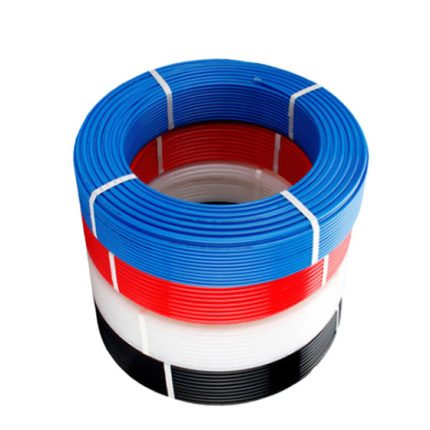
A sealing decision is easier to control when the coupling, hose, port interface, and service conditions are reviewed as one assembly. Yantai Aisili New Material Co., Ltd. supports OEM sourcing as a pneumatic fittings and tubing supplier and sourcing partner. Buyers can review Yantai Aisili New Material Co., Ltd. for supplier context, check the C-Type quick coupling product reference, compare related fittings and connectors, and review pneumatic tubing before submitting the required medium, pressure, temperature, interface, quantity, and validation method for a quotation.
Conclusion
The safest C-Type coupling specification links sealing, interface, locking, pressure release, and cycle validation. When each requirement has a measurable test or document, engineering and purchasing teams can compare quotations fairly and prevent unapproved substitutions during production.
FAQs
These questions clarify how the specification should be used during sample approval and subsequent replacement decisions.
1. Is seal material enough to define sealing performance?
No. Seal material must be combined with pressure, temperature, medium, insertion depth, and a defined leakage test.
2. Should the hose be included in sample testing?
Yes. Hose OD, bend, side load, and end preparation can affect both sealing and retention.
3. What should be recorded after cycle testing?
Record leakage, connection force, sleeve travel, plug retention, and seal or retaining-part wear.
4. Can a similar-looking coupling be used as a replacement?
Only after engineering approval. Similar profiles may use different seals, dimensions, pressure limits, or locking geometry.