


How to Choose Multi-Port Push-to-Connect Fittings for Compact Pneumatic Air Distribution
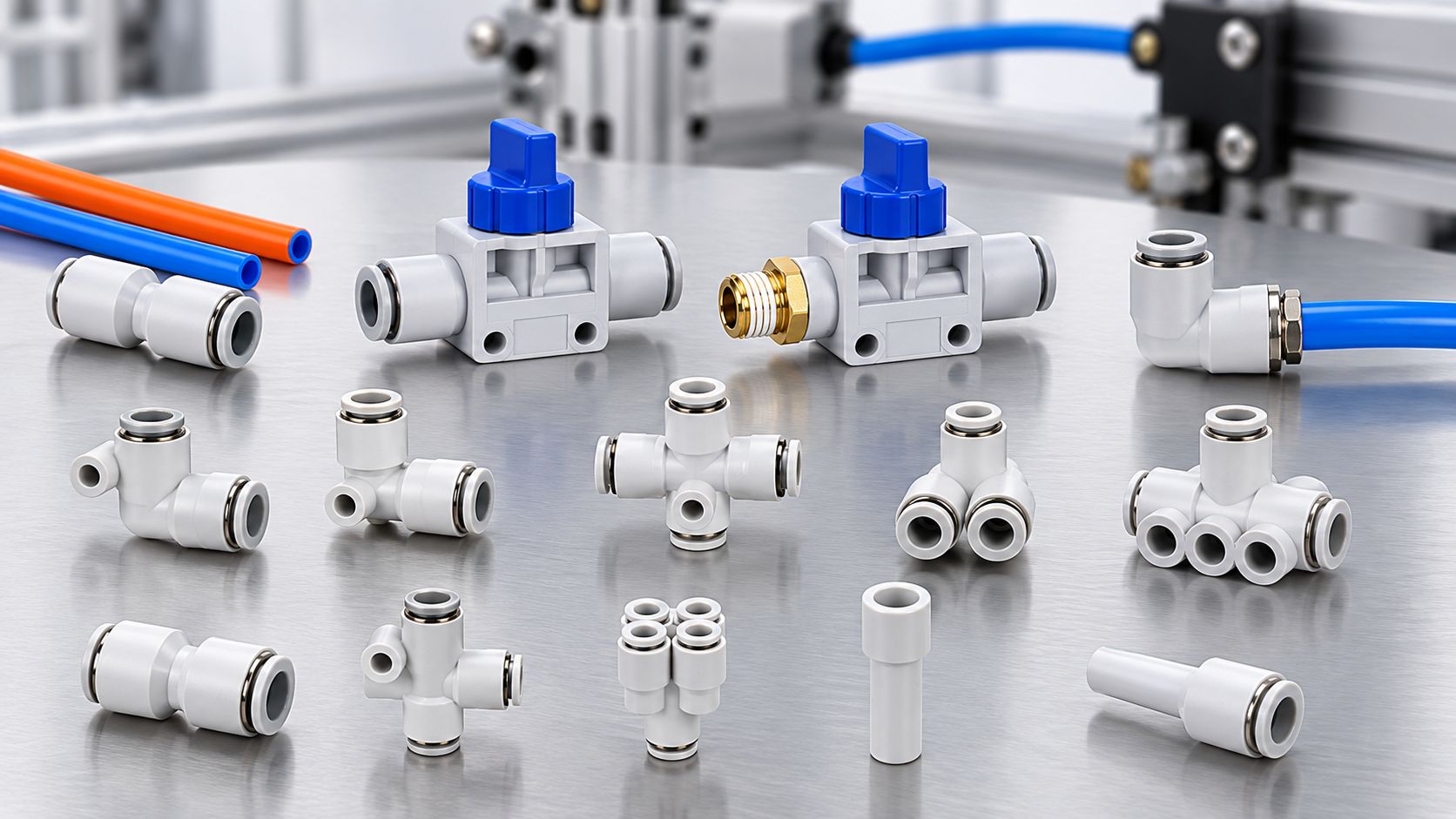
Multi-port push-to-connect fittings are useful when several pneumatic branches must fit into a limited machine area, but the right choice depends on more than outlet count. Port direction, tube OD, branch demand, maintenance access, and tube routing all affect whether the layout stays clean and serviceable. For OEM engineers and purchasing teams, a compact fitting should simplify distribution rather than create hidden restrictions or awkward crossings. Selection therefore starts with the branch layout, then moves to fitting geometry, tube compatibility, testing, and purchasing control.
Why Does Multi-Port Geometry Matter in a Compact Pneumatic Layout?
A multi-port fitting determines both how air is divided and how tubing leaves the connection point. In a crowded cabinet, a pneumatically correct fitting can still create a poor layout if its branches interfere with nearby hardware.
What should the drawing show before a fitting is selected?
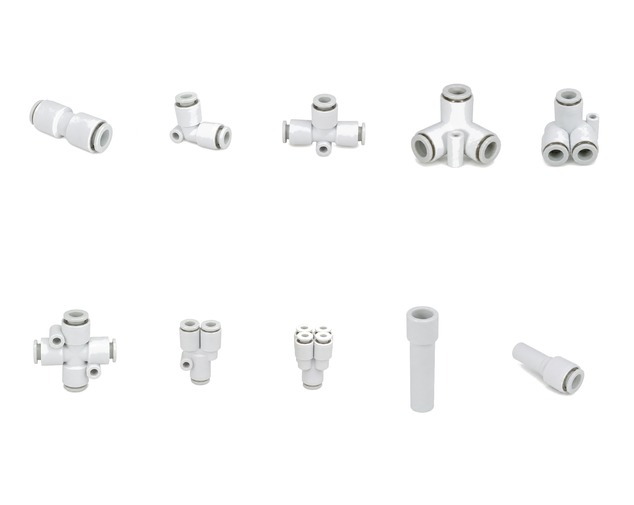
Mark the source line, downstream branches, tube OD, and required tube directions before choosing the fitting. This shows whether a tee, Y-style branch, cross, union, or another arrangement fits the circuit. The KJ / KQ2 type pneumatic fittings category includes tube-to-tube, plug, and multi-port styles, so geometry should be matched to the circuit rather than a family name. Leave enough space around release collars for future service.
How Should Branch Demand Influence Tube Size and Port Selection?
The smallest branch does not automatically determine fitting size. Air demand varies by actuator, valve, cycle frequency, and line length, so the connection should be considered as part of the complete flow path. If one branch serves a low-demand function while another supplies a cycling cylinder, equal-looking ports do not necessarily justify equal tubing.
When can downsizing create a problem?
Reducing tube size too early can add resistance before the branch reaches the lower-demand device. Tube material should also be confirmed. Polyurethane pneumatic tubing is flexible for dense routing, while stiffer materials may need more clearance. Correct OD alone does not replace qualification with the production tube.
Which Port Arrangement Makes Maintenance Easier Later?
Machine builders often optimize initial assembly and underestimate service work. A multi-port fitting may connect several circuits that technicians later need to identify or remove separately.
Keep branches readable
A well-organized layout makes each branch easy to identify. Avoid crossing tubing over release collars or packing branches so tightly that one tube must be removed to reach another. Labels can help, but the physical routing should still make sense without them.
Allow the tube to leave naturally
Each tube needs enough straight length before it bends; an immediate tight turn can add side load and hinder removal. Projects that mix PU with PA, PE, or other materials should account for their different handling behavior; the multi-material pneumatic tubing range provides a useful reference. Review access with guards, ducts, and covers in their final positions.
What Should Engineers Test Before Approving a Multi-Port Fitting?
Approval should cover the complete branch connection, not just tube insertion. Use production-intent tubing on every port, install the fitting in its intended orientation, and test the circuit under approved machine conditions. If one branch changes the response of another, review line sizing and circuit layout before blaming the connector.
| Approval Item | What to Verify |
|---|---|
| Port layout | Correct number and direction of branches |
| Tube interface | Correct OD and approved material at each port |
| Routing | No forced bends or blocked release collars |
| Retention | Tubes remain secure after assembly and cycling |
| Leakage | Every connection point passes the agreed test |
| Branch behavior | Downstream functions operate as intended |
| Serviceability | Individual tubes can be identified and removed |
Repeat the test when tube material, branch size, support location, or machine packaging changes. It is also worth checking the fitting after several assembly and removal cycles if technicians are expected to service the branch regularly. A connector that seals on the first installation but becomes difficult to release or encourages operators to pull tubing sideways can create a maintenance problem even when its initial pressure test looks acceptable.
What Should Purchasing Teams Require for Repeat Orders?
Once engineering approves the circuit, procurement needs a specification that prevents a visually similar but different fitting from entering production. Branch geometry, tube size, plug arrangement, and dimensions can vary within the same general style.
The purchase description should include fitting configuration, tube OD at each connection, approved tube material, model or drawing reference, relevant dimensions, quantity, labeling, and inspection requirements. Keep BOM descriptions specific rather than using informal terms such as “three-way fitting.”
The Fittings & Connectors category can help purchasing teams separate multi-port parts from reducers, quick couplers, hand valves, and flow-control components. Incoming inspection should compare identification, port arrangement, tube interfaces, and visible condition with the approved sample. If the fitting controls several machine functions from one compact location, keep a retained sample or clear drawing with the inspection standard; this gives quality teams a practical reference when a future batch looks similar but the branch geometry has changed.
Need Help Matching Multi-Port Fittings to Compact Pneumatic Layouts?
Yantai Aisili New Material Co., Ltd. produces polyurethane pneumatic tubing and related connection components for industrial automation, with manufacturing facilities in Yantai and Linyi, Shandong, and seven extrusion production lines. OEM/ODM support includes tubing dimensions, hardness, colors, and performance requirements, helping buyers coordinate tube and fitting specifications within one machine layout. The KQ2 Type Tube-to-Tube and Multi-Port Push-to-Connect Fittings family includes KQ2H, KQ2L, KQ2T, KQ2T-W/X/Y/Z, KQ2U, KQ2UD, KQ2D, KQ2LU, KQ2P, and KQ2R models for tube-to-tube, plug, and multi-port connection styles. Final approval should still use the actual branch geometry, tube interfaces, routing, service access, incoming inspection criteria, and machine test conditions.
Conclusion
A multi-port push-to-connect fitting is useful when it simplifies distribution without making routing, airflow, or maintenance harder. Start with the branch map, then confirm tube sizing, port direction, service clearance, and production-intent testing. Purchasing should lock the approved geometry and interfaces into the BOM, while quality teams retain a reference sample or drawing. That makes future substitutions easier to detect and prevents a space-saving design from becoming a maintenance problem later.
FAQs
1. Is a multi-port fitting the same as a pneumatic manifold?
Not necessarily. A multi-port fitting is a compact connector that joins or branches tubing, while a manifold may provide a larger distribution structure with multiple controlled or threaded ports. The correct choice depends on circuit complexity, flow demand, space, and service requirements.
2. Can every branch on a multi-port fitting use the same tube size?
Only when the circuit requires it and the fitting supports that arrangement. Branches may serve components with different airflow needs, so tube size should follow the approved pneumatic design rather than be standardized simply for visual consistency.
3. What causes one branch to affect another in a compact air circuit?
Possible causes include undersized supply tubing, excessive simultaneous demand, restrictive valves or fittings, long tube runs, or an unsuitable branch layout. The complete upstream and downstream path should be checked before attributing the behavior to one connector.
4. What should buyers inspect on incoming multi-port fittings?
Check model identification, port geometry, tube sizes, major dimensions, visible molding or machining condition, and consistency with the approved sample. If the fitting is critical to a compact assembly, verify that release collars and branch directions also match the drawing.
5. When should a multi-port fitting layout be requalified?
Requalification is appropriate when branch count, tube OD, tube material, machine packaging, support points, downstream demand, or fitting geometry changes. Even a small routing change can alter access, side load, or circuit behavior in a tightly packaged pneumatic system.