


What Is Melt Flow Index (MFI) and Why Does It Affect Pneumatic Tubing Quality?
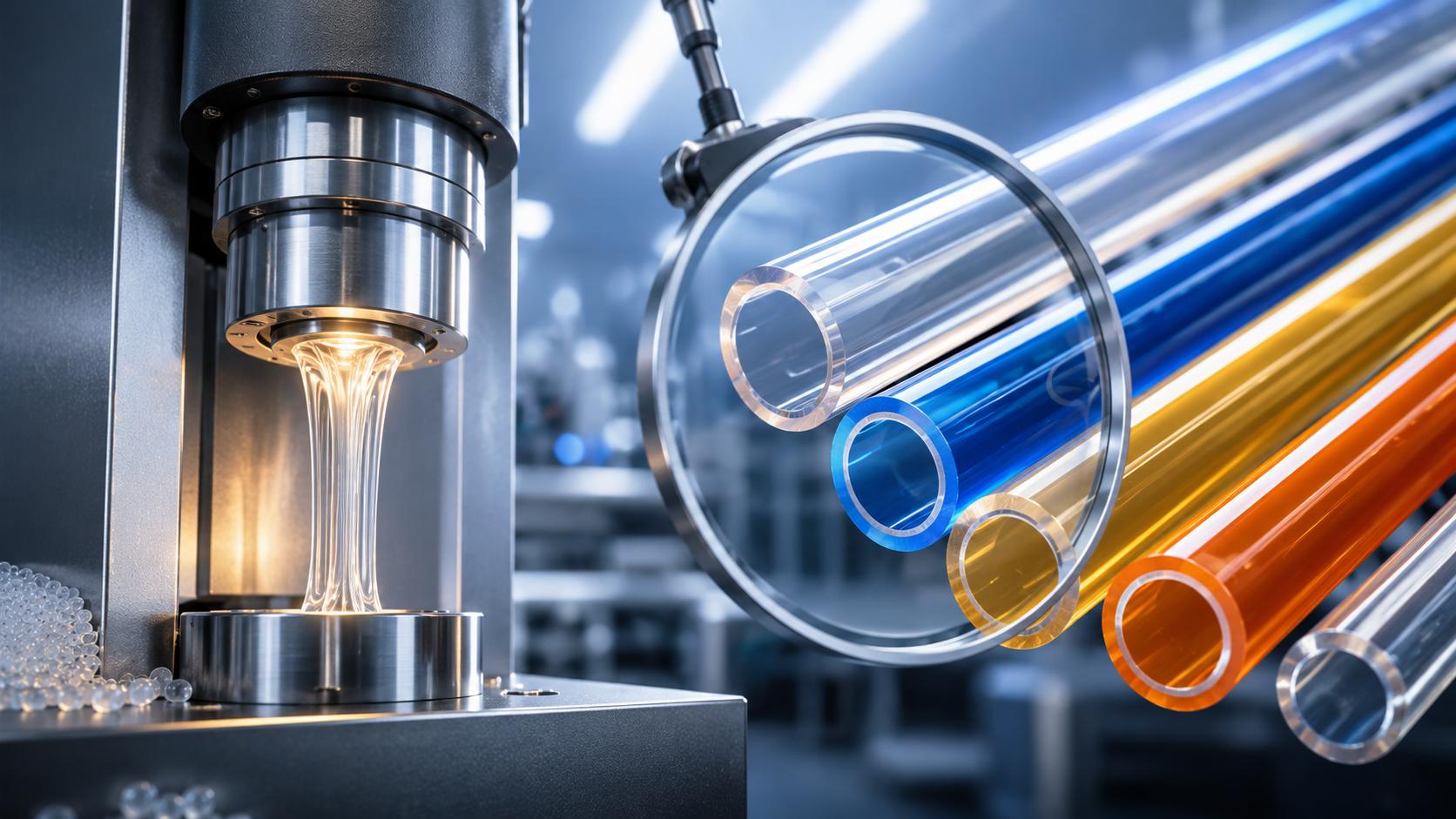
When purchasing pneumatic tubing, a number of factors are typically considered. The tubing’s dimensions, the maximum working pressure, flexibility and the price are all important considerations for potential buyers. However, there are other factors related to the production of pneumatic tubing that can have significant effects on the consistency of a supplier’s products and on the buyer’s service experience. For polyurethane tubing, one of the most important indicators of the materials from which they are made is the melt flow index, or MFI of the TPU resin used in the tubing’s production. The MFI of a TPU resin determines how the material will behave during the extrusion process. Because the quality of the extrusion has a direct bearing on the finished product’s strength, its surface quality and its dimensional accuracy, the MFI of the TPU used in a tube production is a key indicator that can help buyers make more informed purchasing decisions and choose the suppliers best able to meet their needs.
How does melt flow index affect TPU pneumatic tubing production?
Melt flow index is a measurement used to describe how easily a melted polymer flows under specific test conditions. In TPU processing, it provides information about material behavior during extrusion.
Why is melt flow index important during TPU extrusion?
During the TPU extrusion process the molten material is guided through the extrusion equipment. If the material does not have the right characteristics, it can cause instabilities in the process.
The melt flow index of TPU is an important parameter to ensure that the material can flow through the extrusion system at controlled rates. This enables the manufacturer to produce consistent dimensions and surface quality on the tubing.
Note that other properties of the TPU resin also play a part in the performance of the tubing, including the hardness, the chemical structure and the degree of elasticity. As a rule, experienced manufacturers evaluate the MFI in conjunction with other characteristics of the material and are not limited to this single parameter when measuring quality.
How does MFI influence extrusion stability?
Changers in the material flow during the production of polyurethane tubing can have an influence on the evenness of the tubing. If the material does not flow properly, there can be an impact on the thickness of the wall, the surface of the tubing and the production efficiency.
Stable extrusion requires cooperation between material properties, machine settings, temperature control, and die design. A consistent MFI value helps create more predictable processing conditions, but production experience remains important because different TPU materials may require different extrusion parameters.
What TPU resin properties affect pneumatic tubing quality?
MFI is just one of the many characteristics of TPU resins and overall tubing performance is influenced by a balance of several key physical and mechanical properties.
How do TPU characteristics influence tubing performance?
TPU is one of the most commonly used materials for pneumatic tubing due to TPU’s flexibility, its abrasion resistance, and its mechanical properties. There are various TPUs or TPU formulations that are used for different applications, and some of these materials can be more suitable for manufacturing and for use than others.
The important physical properties of TPU resins are Shore D hardness, elasticity, abrasion resistance, temperature resistance and chemical resistance.
Some examples of tube requirements are: On move equipment – Greater flexibility. Industrial – Greater abrasion resistance / greater resistance to external influences.
Why should buyers consider material consistency?
For industrial users consistency in production is more important than any single test value. Consistency of tubing used in automated production lines in particular is key: installation and subsequent maintenance of such lines must not be made more difficult by differences in performance between different batches of tubing.
A supplier with good material control procedures can manage variation during production better than another supplier. So the buyers should not only look at the tubing specifications but also at the material control procedures of the manufacturer and how he controls the raw materials and the production conditions.
How does the extrusion process determine polyurethane tubing quality?
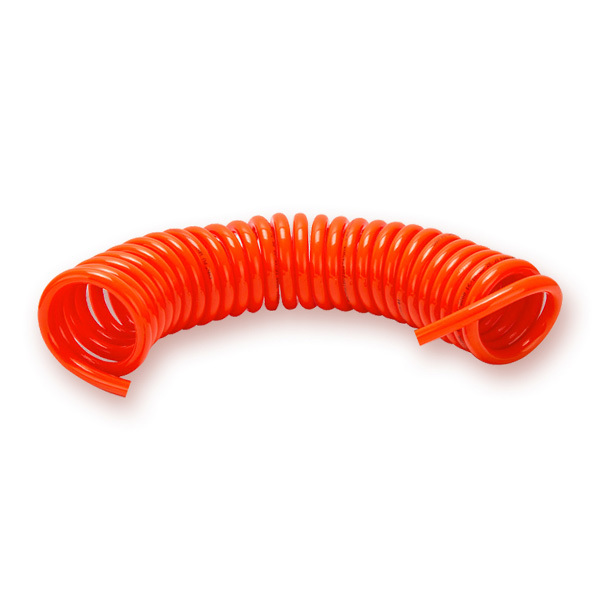
Tube extrusion is a process that is made up of a number of stages and often it is a process that can be affected by a number of factors at each stage and ultimately the entire process can be affected by each stage to produce the finished product.
What happens during polyurethane tubing extrusion?
During the extrusion process, TPU resins are first heated until a suitable processing state is reached. Once melted, the resins are then extruded through a die which is shaped like a tube.
After the die is released from the tube it is cooled and set before it is inspected and packaged. The accuracy of each of these processes will determine the final dimensions of the tube i.e. inner diameter, outer diameter and wall thickness.
Even minor variations in production could potentially result in variation in fitting connection or installation performance. Therefore close control of the extrusion process is critical for suitable pneumatic application.
What production issues can occur during extrusion?
Common extrusion defects which occur due to the wrong processing conditions for polyurethane tubing, are uneven surface finish, dimensional variations and variations in mechanical properties.
The causes are wrong temperature settings, material preparation problems, equipment adjustment issues, or unstable cooling conditions.
In order to solve these problems one has to take a closer look at the entire production process.
What should buyers check when selecting TPU pneumatic tubing suppliers?
Selecting the right supplier to purchase from is more than just finding the cheapest item. The supplier’s ability to manufacture the item as well as their technical expertise play a significant role in ensuring long term reliability of the part.
Which product details should be reviewed before purchase?
Before placing an order, buyers usually confirm:
|
Item |
Reason for Checking |
|
Tube size |
Ensures compatibility with fittings and equipment |
|
Working pressure |
Matches system operating conditions |
|
Temperature range |
Confirms suitable application environment |
|
Material type |
Affects flexibility and durability |
|
Production capability |
Indicates manufacturing consistency |
When purchasing tubing the buyer will need to know certain details to make sure the item purchased will fit their specific piece of equipment.
Why do production control and testing matter?
Testing and inspection enable us to determine whether or not our tubing meets some of the key criteria that we have set for it. The key elements that are evaluated in a consistent and reliable manufacturing process are dimensions, visual appearance, and performance of the material from which the tubing is made.
When making large volume purchases the ability to maintain production consistency is critical as the replacement tubing must be able to interface with the existing plant systems.
How can manufacturers improve extrusion quality through process control?
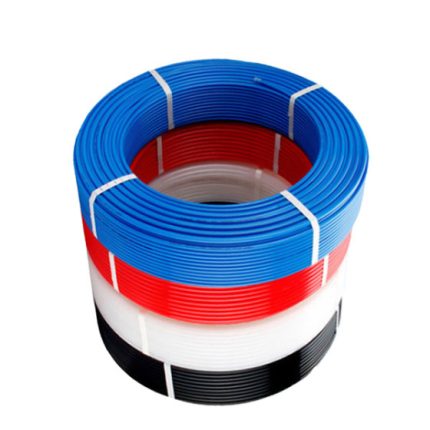
Good extrusion results are obtained by controlling the material and machine parameters.
How does machine adjustment affect TPU processing?
The settings of the extrusion equipment affect the way TPU is flowing and is shaping the tube. By changing temperature, pressure and cooling one has to adapt to the properties of the material.
Unintended settings may cause production to deviate from normal production results. Experienced manufacturers monitor settings throughout the production process to obtain consistent results.
What role does supplier experience play in tubing quality?
A supplier’s ability to solve production issues is influenced by their knowledge of relevant materials and their prior experience with extrusion. Different TPU materials have different processing requirements.
A supplier with knowledge of TPU processing can better assist the customer in selecting the correct tubing for specific applications, as opposed to providing a ‘standard’ product that has not been considered for the various operational parameters that may be required.
How can Yantai Aisili New Material Co., Ltd. support customers looking for multi-material pneumatic tubing?
Yantai Aisili New Material Co., Ltd. offers Multi-Material Pneumatic Tubing solutions for industries which require tubing for industrial applications. Yantai Aisili New Material Co., Ltd. provides product information, assists customers to select appropriate tubing materials and manufactures products according to customers’ applications. When companies compare suppliers, they should pay attention to suppliers’ technical specifications, production capability, quality documents, prices, delivery terms and after sales services etc. and make comparison carefully before making decision.
Conclusion
Melt flow index is an important factor in TPU processing because it affects how material behaves during extrusion. However, tubing quality depends on a combination of MFI TPU, resin properties, equipment control, and manufacturing experience. A stable tube extrusion process can help maintain consistent dimensions and reliable performance. Buyers should evaluate both product specifications and supplier production capability when selecting pneumatic tubing. The right choice depends on matching material characteristics with the actual application requirements.
FAQs
1. What is melt flow index in TPU materials?
Melt flow index – TPU. The melt flow index is a measure of how easily a molten material can flow when subjected to specific test conditions. It gives an indication of the processing characteristics of a material.
2. Why does MFI TPU affect extrusion quality?
MFI TPU affects processability through extrusion tools and equipment and affects production stability, tube dimensions and surface quality.
3. What are important TPU resin properties for pneumatic tubing?
Flexibility, Hardness, Abrasion, Temperature and Chemical compatibility are some of the key characteristics of coatings.
4. What causes extrusion defects in polyurethane tubing?
Extrusion defects can be caused by faulty material preparation, incorrect processing parameters, faulty equipment and cooling instabilities.
5. How is pneumatic tubing manufactured?
Pneumatic tubing is made by extrusion of TPU material. This process starts by processing the TPU material, then forming it through a die, after that it is cooled, then inspected for any defects and finally sent off for delivery.