


When Should OEMs Use Rotary Push-to-Connect Fittings on Moving Pneumatic Equipment?
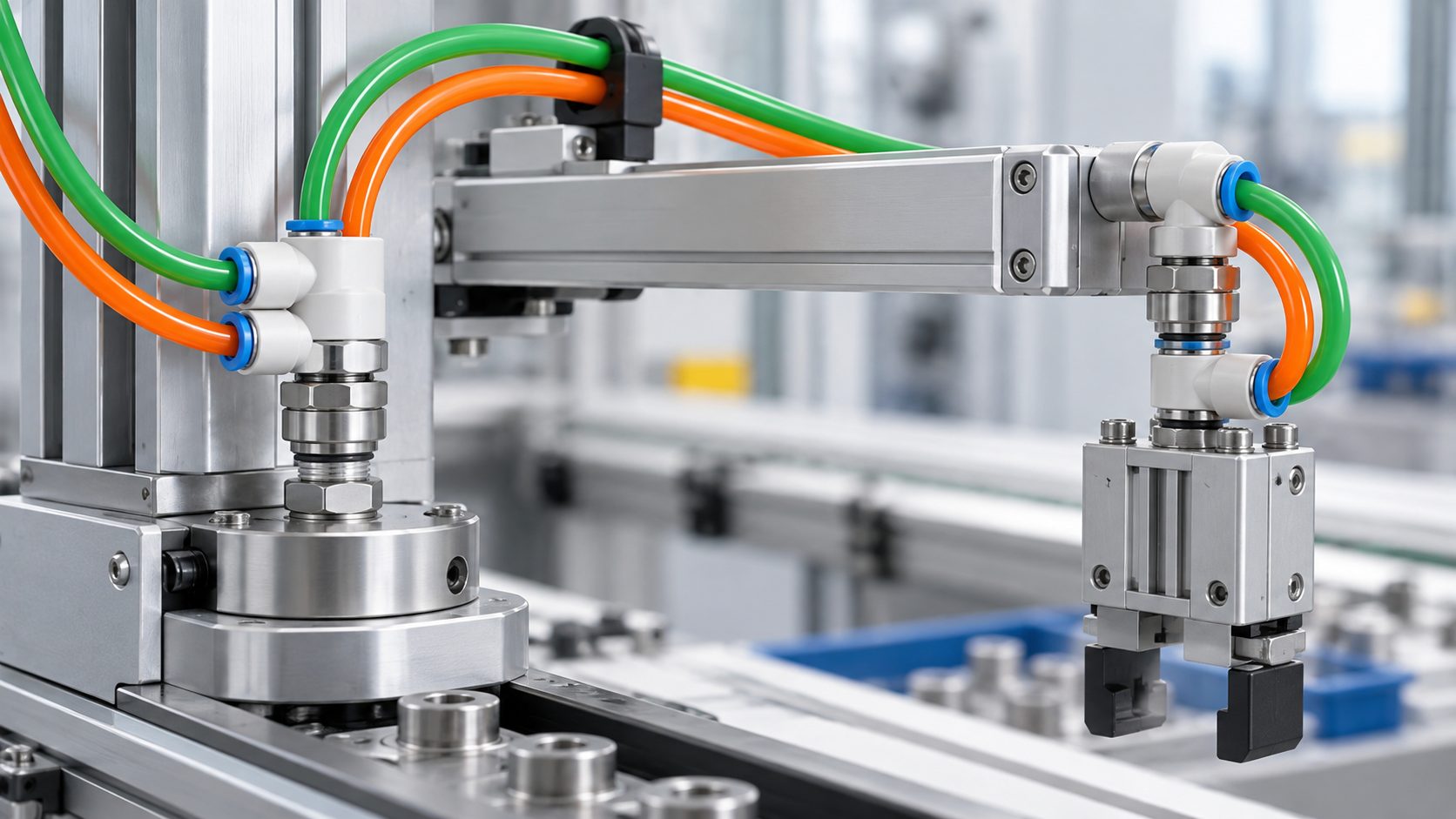
Rotary push-to-connect fittings are useful when machine movement repeatedly twists or side-loads a pneumatic tube near its connection. A fixed elbow may work perfectly on a stationary port yet force the tube to wind, rub, or pull sideways once an indexing table, sliding fixture, or adjustable assembly begins cycling. For production engineers and technical buyers, the decision should therefore start with tube behavior, not fitting shape. The aim is to determine whether controlled rotation at the connection genuinely reduces mechanical strain, while still meeting tube, thread, clearance, service, and repeat-order requirements. This guide focuses on those checks before OEM approval.
How Does Machine Movement Create Stress at a Pneumatic Connection?
Moving equipment can make one short tube section absorb bending, torsion, and side load at the same time. If that stress always concentrates beside the connector, the routing deserves attention before the machine design is released.
Why is twisting different from ordinary bending?
A bend changes tube direction along a radius; torsion rotates the tube around its own axis. When a fitting is fixed and the mechanism changes angle repeatedly, the tube can wind up and then try to spring back. That reaction may pull against the collet, shift the tube path, or create a repeatable wear point.
Flexible polyurethane pneumatic tubing helps with moving routes, but flexibility does not make continuous torsion harmless. A longer service loop, a different support point, or a rotary connection may be the better correction.
Where Does a Rotary Push-to-Connect Fitting Add Real Design Value?
Rotation is most useful where tube orientation changes during normal machine operation or maintenance. It is less useful on a stationary port where the line can already be routed without stress.
Which layouts are worth reviewing?
Indexing tables, pivoting fixtures, adjustable tooling, and small moving stations are common candidates. Even limited angular movement can matter when the tube is short and tightly routed. In compact machinery, pneumatic lines also compete for space with cables, sensors, brackets, and guards, so the connection needs enough freedom to follow motion without becoming a mechanical stop.
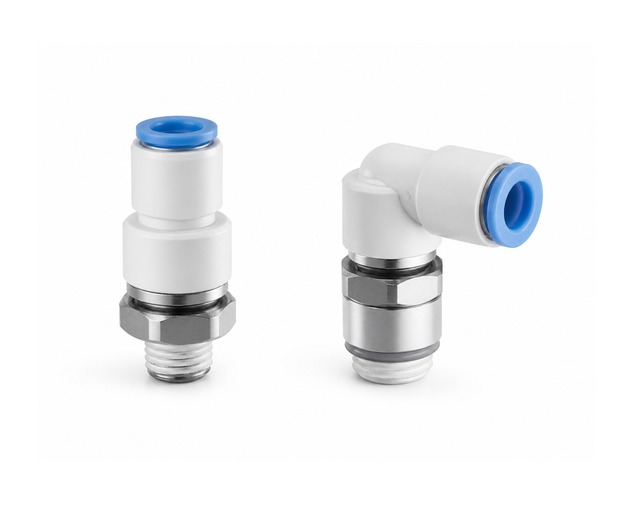
Before specifying a rotary style, compare it with other KJ / KQ2 type pneumatic fittings. Sometimes a fixed elbow plus better routing solves the problem with fewer moving interfaces. The rotary fitting should address a defined movement issue rather than compensate for poor layout.
Which Interface Details Must Be Verified Before Approval?
Once rotation is justified, the fitting still has two basic interfaces to qualify: the pneumatic tube and the threaded machine port. Both belong in the same purchase specification.
What should engineering confirm?
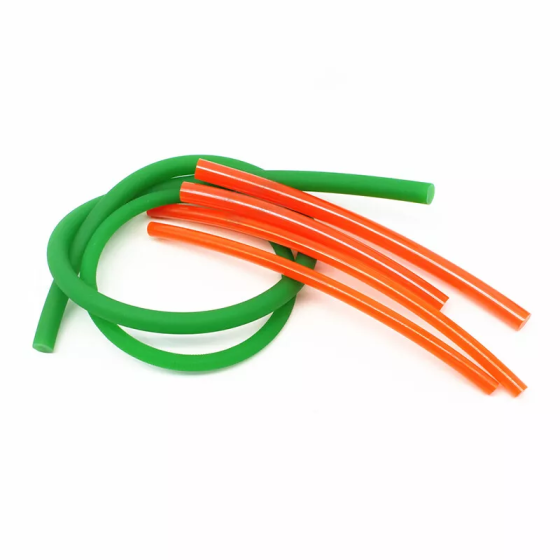
Tube OD must match the push-in connection, while tube material should be compatible with the fitting design. Projects using several tube families should not assume identical behavior; multi-material pneumatic tubing can differ in stiffness and handling even at the same nominal OD.
The threaded side requires the exact standard and size shown on the machine drawing. Installation clearance also matters. The fitting body and connected tube need enough room to move through the intended range without striking nearby hardware. A physical sample on production-intent equipment is usually more revealing than a drawing alone because it shows the natural tube path and maintenance access.
How Should Dynamic Routing Be Tested Before Volume Production?
A static leak check cannot show whether the tube gradually winds up or rubs during repeated cycles. Qualification should reproduce the movement that caused the rotary fitting to be considered.
Run the mechanism through its normal travel using the intended tube length, support points, and neighboring components. Watch whether the tube tightens progressively, drags across an edge, kinks, or pulls sideways at either end. Then inspect the connection after repeated cycling.
| Check Point | Buyer or Engineer Should Confirm |
|---|---|
| Rotation need | Movement reduces tube twist or side load |
| Tube interface | Correct OD and approved material |
| Thread interface | Correct port standard and size |
| Clearance | No contact through full travel |
| Routing | No progressive twisting or rubbing |
| Connection | No leakage or loss of retention |
If the tube must be manually repositioned after several cycles, the routing is not yet stable. The test should be repeated after any change to tube material, tube length, support location, or machine travel.
What Should Purchasing Teams Put in the RFQ and Incoming Check?
Engineering defines why rotation is needed; purchasing has to preserve that function across future orders. “Rotary pneumatic fitting” is too broad to do that reliably.
Which details reduce substitution risk?
The RFQ should state tube OD and material, exact thread standard and size, required connection orientation, available envelope, operating medium, approved machine pressure and temperature limits, quantity, and drawing or marking requirements. For replacement sourcing, include the original sample or a measured interface drawing.
Incoming inspection can compare part identification, major dimensions, thread form, tube port, rotation behavior, and visible condition with the approved sample. When several fitting functions share one machine, the Fittings & Connectors category can help keep rotary, fixed, reducing, and control components separated in the BOM. Requalification is appropriate when the tube, port, motion path, or fitting geometry changes.
Need Support Matching Rotary Fittings to Moving Pneumatic Equipment?
Yantai Aisili New Material Co., Ltd. develops polyurethane pneumatic tubing and related pneumatic connection components for industrial automation, with manufacturing facilities in Yantai and Linyi, Shandong, and seven extrusion production lines. Its OEM/ODM work covers tubing dimensions, hardness, colors, and application-specific performance requirements. For moving tube-to-thread connections, the KSH / KSL Type Rotary Push-to-Connect Fittings are listed as rotary fittings with KSH and KSL models. Project confirmation should still begin with the real tube OD, material, thread, movement path, installation space, production-intent sample, and agreed incoming inspection points for repeat orders so the connection is approved for the actual machine layout.
Conclusion
Rotary push-to-connect fittings are valuable when repeated equipment movement is placing torsion or side load into a pneumatic tube connection, but they should not be added merely because a machine contains moving parts. Confirm the routing problem first, then check tube and thread compatibility, clearance, cycling behavior, and service access. Purchasing should capture those interfaces in the RFQ and retain an approved sample so future orders preserve the mechanical function that justified the rotary connection.
FAQs
1. Does every moving pneumatic cylinder need a rotary fitting?
No. Many cylinders work reliably with fixed fittings when tubing has enough length, suitable support, and a stable bend path. A rotary fitting is worth evaluating when repeated movement creates measurable tube twist, side load, or orientation problems near the connection.
2. Can a rotary fitting replace a pneumatic tube service loop?
Not necessarily. A service loop can absorb travel that a rotating connection alone cannot manage. Tube length, stiffness, travel, support points, and available space should be assessed together before removing a loop from a moving pneumatic installation.
3. What should be tested besides leakage?
Observe the tube through the complete machine cycle. Check twisting, rubbing, kinking, side load, clearance, and whether the tube returns naturally to its neutral position. Leakage testing remains necessary, but it cannot reveal every dynamic routing problem.
4. Should the thread specification be included in the RFQ?
Yes. A tube-to-thread rotary fitting depends on both interfaces. State the exact tube OD and material plus the machine-port thread standard and size so a visually similar component with an incompatible thread is not substituted.
5. When should a rotary pneumatic fitting be requalified?
Requalification is sensible when tube material, tube size, thread, fitting geometry, machine travel, or support layout changes. Any of these can alter mechanical loading at the connection even when the fitting family or catalog description remains unchanged.